
 English
 Español
The Ultimate Guide to Emesis Bags (Vomit Bags) - Types, Uses, and How to Choose the Right One
What Is an Emesis Bag?
An emesis bag — commonly called a vomit bag, sick bag, or nausea bag — is a disposable container designed to collect vomit or other bodily fluids in a hygienic, leak-proof, and odor-contained manner. Used across hospitals, ambulances, airplanes, and homes, the core job is always the same - contain mess, prevent contamination, and make a difficult situation more manageable. The specific design, however, varies considerably depending on the setting and user.
Types of Emesis Bags and Vomit Bags
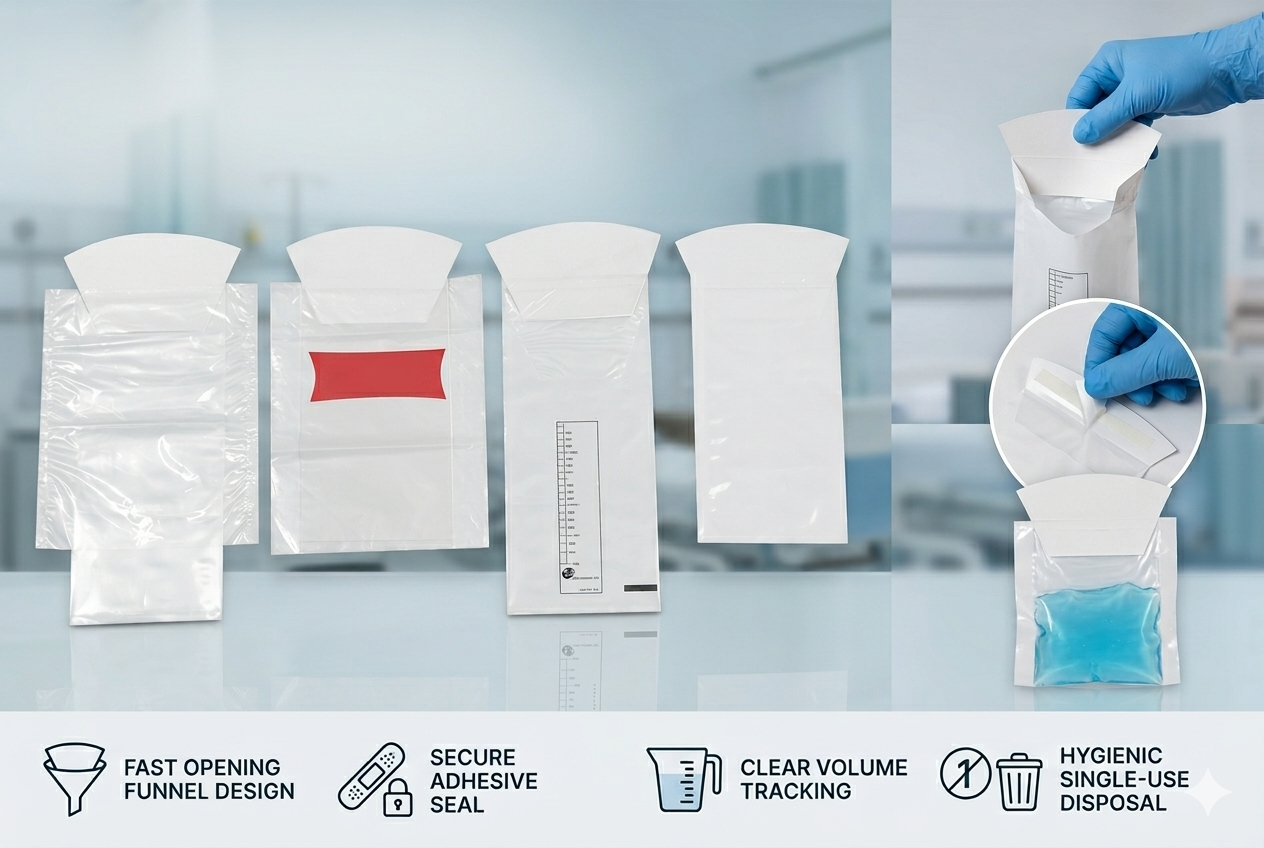
There are several distinct product designs on the market, each suited to different use cases. Knowing the differences helps you pick the right one rather than ending up with something that fails when you need it most.
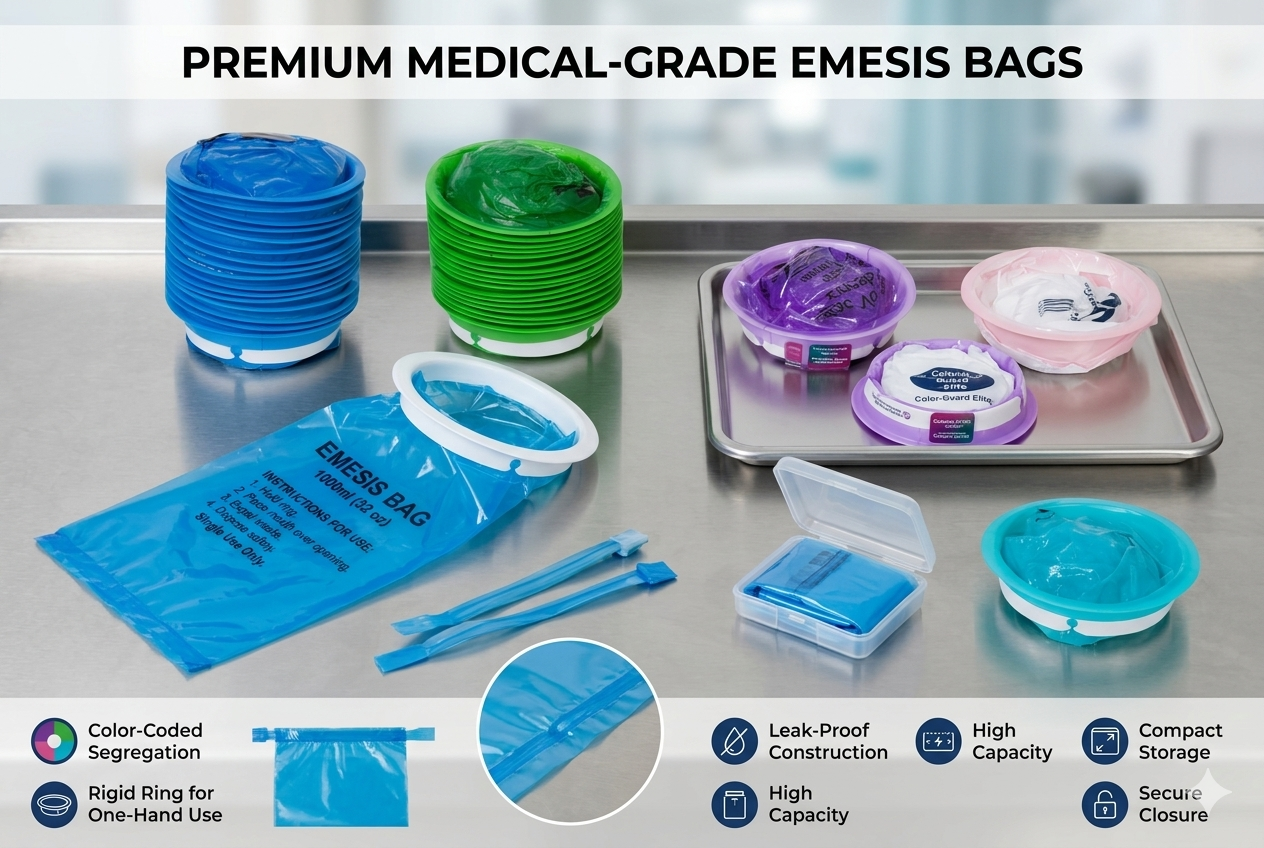
Standard Flat-Bottom Emesis Bags
The most common medical-grade option — a gusseted-bottom bag that expands when filled, with a wide opening and a twist-or zip-lock closure. Made from multi-layer polyethylene film, capacity typically runs 500–1,000 ml, and most include graduated volume markings for clinical output tracking. These are the workhorses of hospital wards, EDs, and ambulances.
Twist-Cap Emesis Bags
These feature a built-in flexible cap that seals the bag in a single twist — no need to touch the opening after use. A rigid ring keeps the bag open during use, which is essential when someone cannot hold a floppy bag steady. Widely used in chemotherapy units, PACUs, and ambulances where one-handed, hygienic sealing matters most.
Airline and Travel Sick Bags
The paper bags in aircraft seatback pockets are wax-coated, lightweight, and fold flat — fine for a single motion sickness episode but not leak-proof. For personal travel use, plastic film bags with proper closures are far more reliable and can be kept flat in a glove compartment or carry-on bag without taking up meaningful space.
Emesis Bags with Absorbent Gel
These come pre-loaded with a superabsorbent polymer that instantly solidifies liquid on contact — eliminating sloshing, cutting odor significantly, and making disposal much safer. Particularly valuable in moving vehicles and home care settings where spillage risk is high and caregivers are managing cleanup without clinical support.
Kidney-Shaped Emesis Basins
Rigid curved containers — reusable stainless steel or single-use cardboard pulp — used at bedsides and in procedure rooms. Not bags in the strict sense, but often used alongside bags - the basin catches the acute episode, then contents are transferred to a bag for sealed disposal. Disposable pulp versions are standard in most hospital settings today.
Key Features That Actually Matter When Buying Emesis Bags
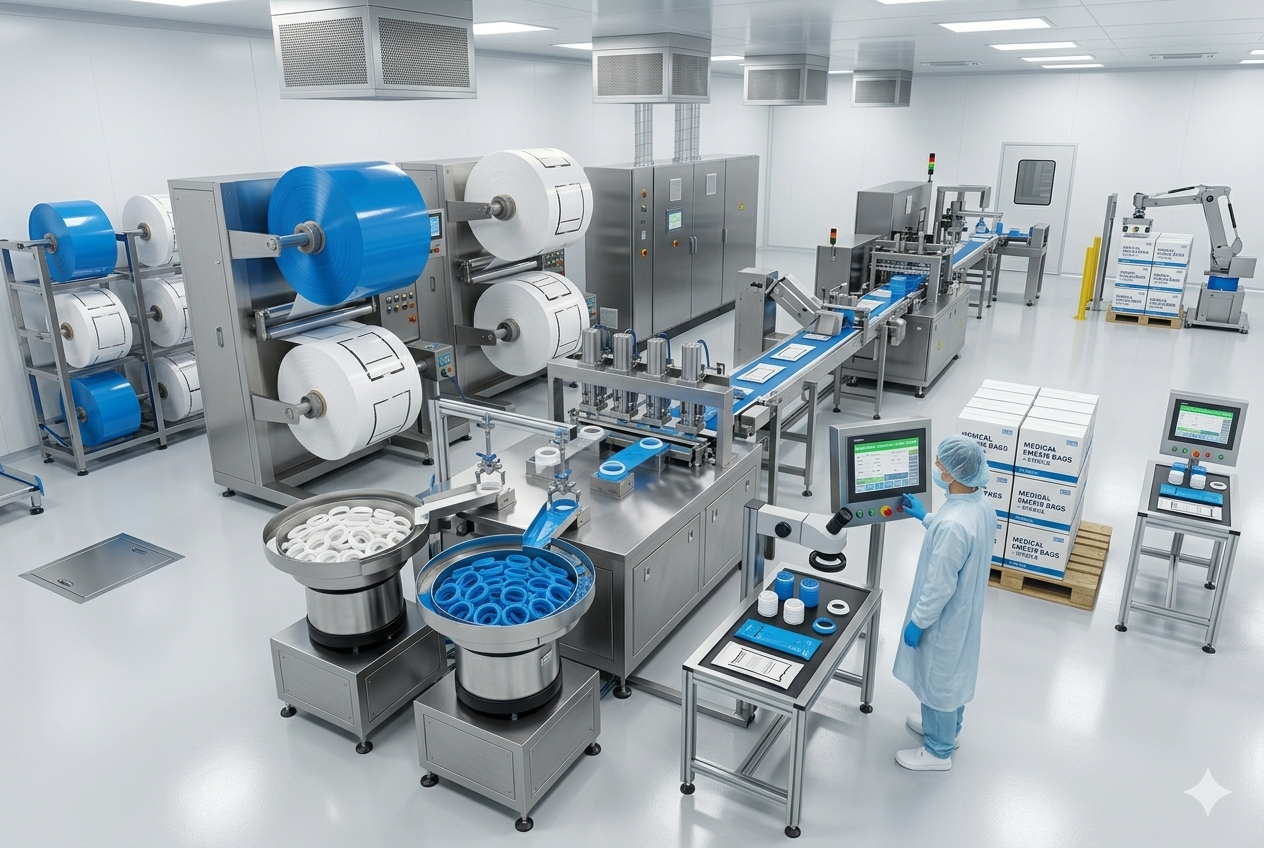
Not all emesis bags perform equally. These are the specifications worth paying attention to rather than just buying on price alone.
Leak-Proof Construction
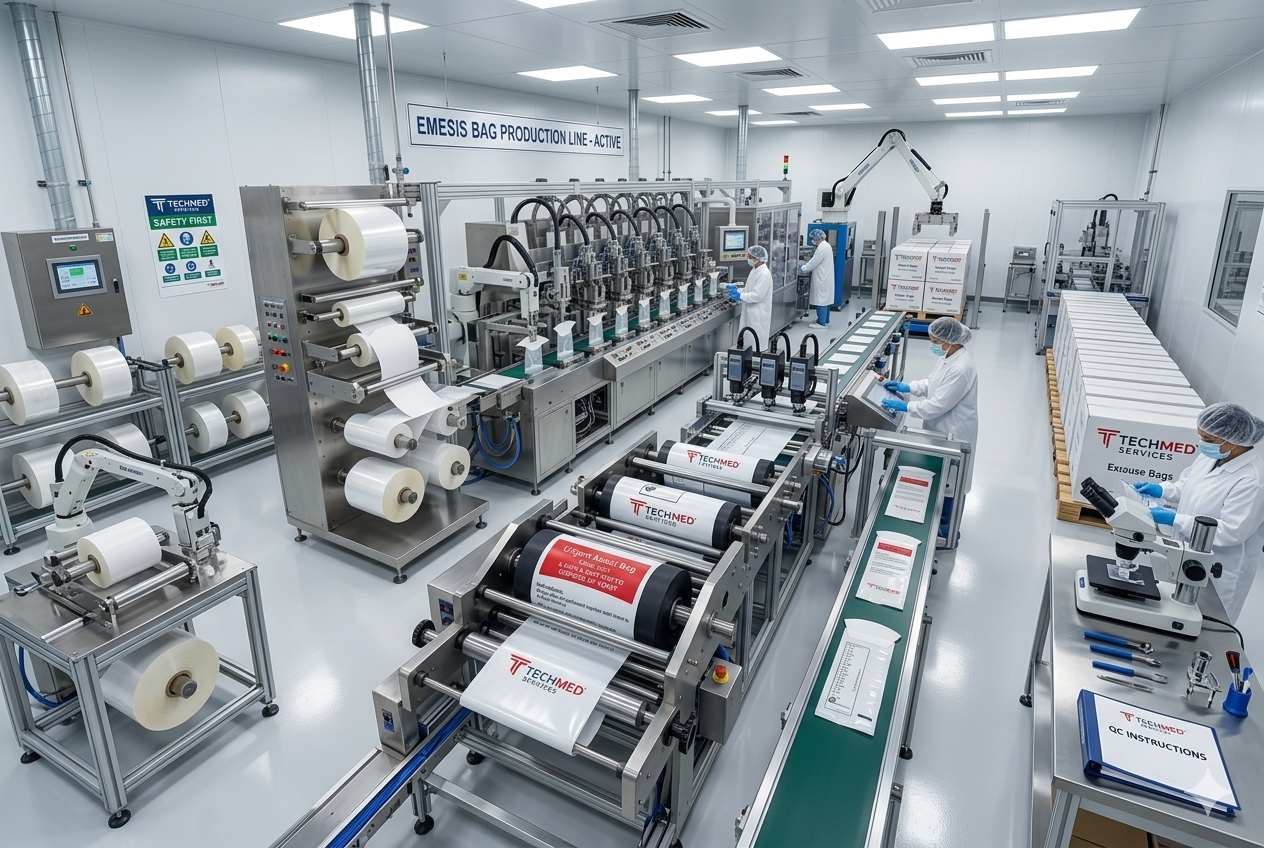
This is the most critical feature. A bag that leaks defeats its entire purpose and creates a biohazard situation. Look for multi-layer polyethylene film construction with heat-sealed seams rather than glued or press-fit joints. Reputable medical-grade emesis bags are tested to hold their contents under pressure — check for product data sheets or certifications that confirm leak resistance. If a supplier cannot provide this information, that is a red flag.
Opening Design and Rigidity
A floppy bag opening that collapses when held is almost impossible to use under real conditions. The best emesis bags have a reinforced, semi-rigid ring or collar at the opening — either a molded plastic ring or a rolled and heat-set film edge — that keeps the bag open and directed correctly without the user needing to hold it open with both hands. For pediatric patients or individuals with limited motor control, this feature is especially important.
Closure Mechanism
The closure system determines how hygienically and conveniently the bag can be sealed after use. Options include twist-and-tie tops (simple but require manual contact with the top of the filled bag), zip-lock closures (easy and reliable), twist-cap mechanisms (most hygienic — one-motion seal with no contact with contents), and self-sealing adhesive tabs. For clinical use and patient transport, twist-cap or zip-lock closures are strongly preferred. Simple tie-tops are adequate for basic home or travel use.
Capacity
Standard capacity for a medical emesis bag is 700–1,000 ml. For most adult patients, 700 ml is sufficient for a single episode. Pediatric versions are available at 300–500 ml. Bags with printed volume markings are useful in any clinical setting where intake/output charting is required. For travel or consumer use, 500–700 ml is typically adequate. Be wary of bags marketed at very low capacities (under 300 ml) for adult use — they are insufficient for most real situations and create overflow risk.
Odor Control
Standard polyethylene bags provide some odor barrier once sealed, but the difference between a basic bag and one with an activated carbon layer or superabsorbent gel fill is very noticeable — particularly in enclosed spaces like ambulances, hospital rooms, and vehicles. If odor management in a confined space is a priority, either choose bags with gel-forming inner fill or use bags with a multi-layer film that includes an odor-barrier layer.
Medical and Clinical Applications
In healthcare environments, emesis bags are a standard supply item stocked in virtually every department. The specific requirements differ somewhat by setting -
- Emergency departments and wards - High patient turnover means emesis bags must be immediately accessible at every bed space. Standard 700–1,000 ml bags with twist-cap or zip closures are stocked in bedside supply caddies or mounted near patient beds. Many ED departments also keep emesis basins at the bedside for immediate use, backed by bags for containment after the acute episode.
- Oncology and chemotherapy units - Nausea and vomiting are among the most distressing side effects of chemotherapy. Emesis bags are needed in large quantities, and patient dignity is a priority — twist-cap designs that can be sealed quickly and discreetly are strongly preferred. Some oncology units provide patients with a personal supply to take home for the days following treatment.
- Post-anesthesia care units (PACU) and recovery rooms - Post-operative nausea and vomiting (PONV) affects a significant proportion of surgical patients in the hours following anesthesia. PACU nursing staff need bags that are easy to grab, hold open one-handed, and seal quickly — twist-cap bags with rigid openings are the standard tool in this setting.
- Ambulances and patient transport - Emesis bags in pre-hospital and transport settings must be absolutely leak-proof and capable of being sealed without spillage in a moving vehicle. Gel-forming bags are particularly valuable here. Paramedic and EMT kits typically include several units in a convenient grab-and-go pouch.
- Pediatric settings - Children are more prone to vomiting episodes from illness, motion sickness, and procedural anxiety. Smaller-capacity bags with child-friendly designs and easy-grip openings are available specifically for pediatric use.
- Hospice and home care - Patients receiving palliative care at home often experience nausea as a symptom. Caregivers need bags that are easy to use without professional training, odor-controlling, and available in reasonable home-supply quantities. Gel-forming bags are highly recommended in this context.
Travel and Consumer Use Cases
Outside of clinical settings, emesis bags are primarily a motion sickness management tool. Motion sickness affects a significant portion of the population — estimates suggest around one-third of people are highly susceptible, with children between ages 2 and 12 being particularly vulnerable. Having appropriate sick bags on hand is a basic practical measure for any regular traveler, parent, or caregiver.
For car travel, plastic film bags with zip or twist-cap closures are vastly superior to paper airline bags — they seal completely, don't tear when wet, and can be stored in a glove compartment or door pocket without taking up meaningful space. Compact flat-packed designs that expand when needed are ideal for keeping in a family vehicle. For boat or sailing use, saltwater exposure and confined cabin spaces make odor control and absolute leak-proof performance essential — choose marine-rated sick bags or medical-grade plastic bags for this application.
For air travel, the paper bags in seatback pockets are a last resort rather than a reliable tool. Frequent fliers who are prone to motion sickness are well advised to carry their own plastic film bags in their carry-on — they are compact, lightweight, and far more reliable than the paper alternatives. The same applies to bus and coach travel, where the quality of provided sick bags (if any) is highly variable.
Emesis Bags vs. Emesis Basins - Which Should You Use?
|
Feature |
Emesis Bag |
Emesis Basin (Kidney Bowl) |
|
Form |
Flexible bag, disposable |
Rigid curved container, disposable or reusable |
|
Best For |
Independent patient use, transport, travel |
Bedside use with caregiver assistance |
|
Portability |
Excellent — flat, lightweight |
Bulky, not portable |
|
Sealing After Use |
Yes — can be sealed and discarded |
No — contents must be transferred for disposal |
|
Volume Measurement |
Yes (if graduated markings included) |
Yes (graduated markings standard) |
|
Ease of Use for Patient |
High (with rigid-opening designs) |
High — curved shape easy to hold to face |
|
Cost |
Low to moderate |
Low (disposable pulp) to moderate (reusable) |
In practice, many clinical settings use both - a kidney basin for the acute episode (easier to aim, rigid, supportive shape) and a bag for immediate sealed disposal. For travel and personal use, bags are always the more practical choice since they seal completely and can be disposed of without further handling.
Proper Disposal of Used Emesis Bags
Used emesis bags containing vomit are classified as clinical or infectious waste in healthcare settings and must be disposed of according to the facility's waste management policy — typically in yellow or orange clinical waste bags, not general refuse. Staff handling used emesis bags should follow standard infection control precautions including gloved handling, hand hygiene after disposal, and avoiding any action that could cause the sealed bag to open or rupture before it reaches the waste stream.
In non-clinical settings — travel, home use — used emesis bags should be sealed completely before disposal and placed directly into a sealed bin bag for general waste. They should never be left open, left in a vehicle, or disposed of in public spaces without sealing. The sealed bag design of modern emesis products is specifically intended to make this easy and hygienic, so using the closure mechanism fully before disposal is important even outside a clinical context.
Gel-forming bags simplify the disposal process by eliminating the risk of liquid sloshing or leaking even if the sealed bag is accidentally punctured during disposal handling. For settings where correct disposal cannot always be controlled — such as handing a bag to a patient in a vehicle or public area — gel-forming bags provide an additional level of security that standard liquid-containing bags do not.
Final Thoughts
Emesis bags are a small product with a big impact on patient comfort, caregiver confidence, and hygiene management. Whether you are stocking a hospital ward, outfitting an ambulance, or simply keeping a few bags in the car for a motion sickness-prone family member, the right choice comes down to matching the product design — closure type, capacity, material, and whether gel-forming is needed — to the specific situation. For clinical procurement, always verify regulatory compliance, leak-proof testing, and latex-free materials before approving a supplier. For personal and travel use, upgrading from paper airline bags to a proper plastic film bag with a reliable seal gives you a genuinely useful tool rather than a last resort. The best emesis bag is the one that is already open, in hand, and ready before it is needed.
Packing Solutions
Related Products


Tel: +86 18019228135
E-mail: alfredren@huayuepack.com
Address: No.228 ZhaiXing Rd, XinSheng Industrial zone, ZheLin Town, FengXian District, ShangHai, China.

Copyright © 2026 Huayue Group Plastic Packaging Manufacturers
