
 English
 Español
The Ultimate Guide to Disposable Patient Belonging Bags - Choosing, Using, and Sourcing Smarter
1. What they are and why they matter
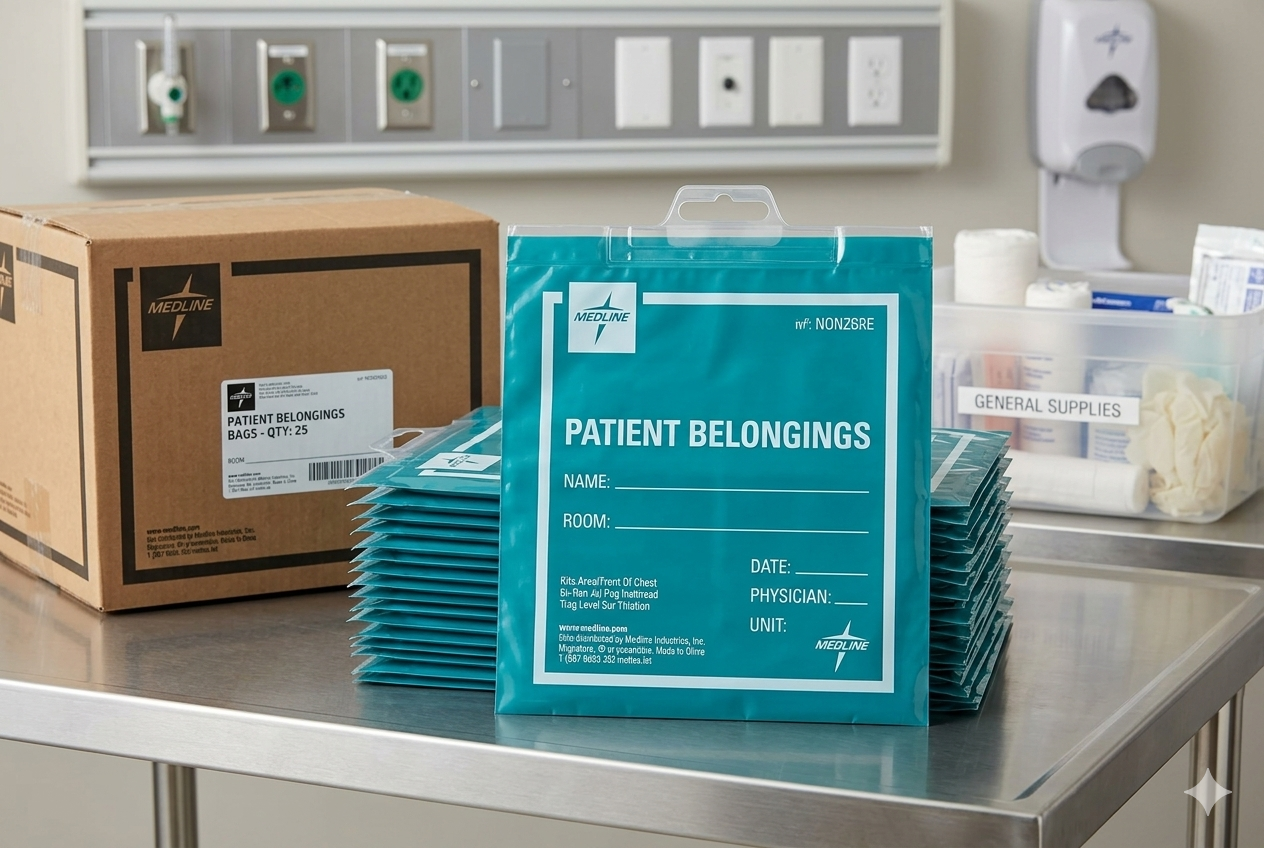
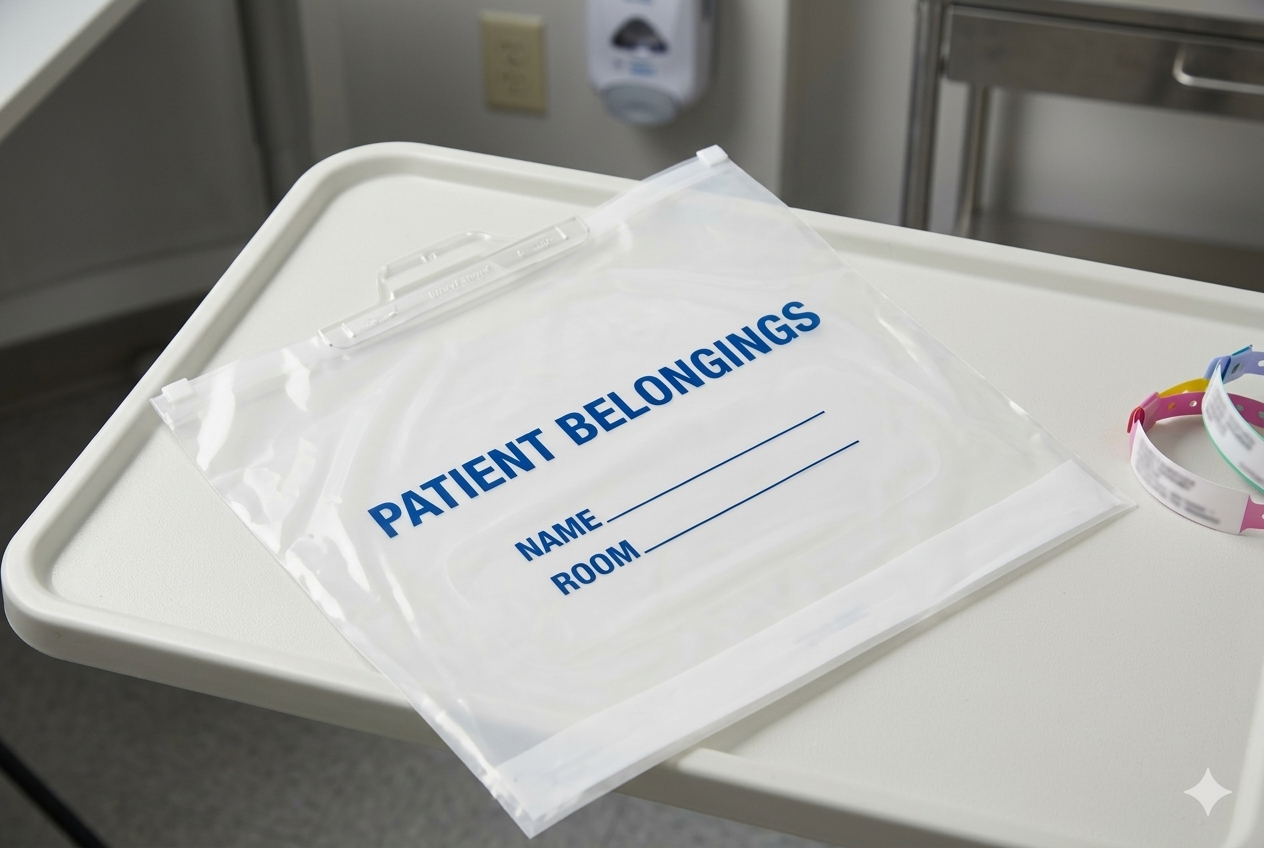
Disposable patient belonging bags are single-use containers — typically made from polyethylene, nonwoven fabric, or paper-based materials — used to store and transport a patient's personal items (clothing, documents, valuables) during a hospital stay or procedure.
Why it matters beyond storage - In the US, patient belongings lawsuits cost hospitals an estimated $500M+ per year. A clear, labeled, disposable bag creates accountability at point of admission — and eliminates cross-contamination risk that reusable bags cannot.
They serve four simultaneous roles - patient dignity (items are secure and organized), liability reduction (documented intake), infection control (no reuse between patients), and workflow efficiency (staff spend less time on belongings disputes).
2. Types and material comparison
|
Type |
Material |
Best for |
Typical cost/unit |
Drawback |
|
Draw-string poly bag |
LDPE / HDPE |
ED, general ward |
$0.10 – $0.35 |
Not tear-resistant; less dignified |
|
Nonwoven tote style |
PP spunbond |
Long-stay, rehab, maternity |
$0.40 – $0.90 |
Higher cost; disposal requires care |
|
Paper-laminate bag |
Kraft + PE liner |
Eco-focused facilities |
$0.25 – $0.55 |
Poor moisture resistance |
|
Zip-lock clear poly |
LDPE reclosable |
OR, valuables isolation |
$0.15 – $0.45 |
Contents visible — privacy concern |
|
Biohazard-rated bag |
HDPE + red pigment |
Infection isolation rooms |
$0.30 – $0.60 |
Overkill for routine belongings |
Costs vary significantly by order volume and supplier. Prices above reflect approximate mid-market retail.
3. Key features to evaluate
Functional features
- Self-adhesive label panel (patient ID, admission date, room)
- Minimum 10L capacity for clothing + footwear
- Tamper-evident or resealable closure
- Handles or carry strap — patient-portable
- Tear and puncture resistance ≥ 2 mil thickness
- Moisture barrier for laundered items
Compliance & safety features
- Printed inventory checklist on exterior
- Color coding by care unit (e.g., yellow = isolation)
- HIPAA-compliant label field (opaque covering)
- Non-PVC materials (reduces plasticizer off-gassing)
- Latex-free construction
- Legible font size ≥ 10pt on all printed text
Often overlooked - The label panel placement matters. Side-mounted labels get obscured when bags are stacked in storage carts. Opt for front-face placement with a write-on dry-erase surface if possible.
4. Infection control & compliance
This is the single strongest argument for disposable over reusable bags in clinical settings. Reusable fabric bags require laundering protocols that are frequently inconsistent. Studies in healthcare facility hygiene link contaminated surfaces — including soft goods — to pathogen transfer for MRSA, C. diff, and VRE.
Regulatory touchpoints
- The Joint Commission (TJC) Environment of Care standards implicitly cover patient belongings management
- CMS Conditions of Participation require facilities to protect patient property
- OSHA Bloodborne Pathogen Standard (29 CFR 1910.1030) governs bags used near bodily fluids
- State-level patient rights statutes (varies) often specify intake documentation
Practical tip - For isolation rooms (contact/droplet precautions), use a distinct-color bag to signal that contents require additional handling. Many facilities use yellow or red. Train staff that the bag color triggers the protocol — not just a label.
5. Impact on patient experience
Patient satisfaction scores (HCAHPS) increasingly reflect a holistic experience — and the handling of personal belongings is a measurable anxiety trigger. A 2022 Press Ganey analysis found that patients who reported belongings handled "well" scored their overall care experience 18% higher than those who reported confusion about their items.
What patients notice - A clearly labeled, clean bag they can carry themselves signals respect. Tossing items into an unmarked bag signals chaos.
Branding opportunity - Some health systems custom-print bags with the facility name, a QR code to their patient portal, and a contact number. Low cost, high recall.
For long-stay patients, consider a secondary smaller bag (zip-lock or drawstring) nested inside for valuables such as phone, wallet, and keys — separated and labeled distinctly.
6. Buying guide - what to ask suppliers
Not all suppliers serving healthcare can actually support healthcare procurement requirements. Use this checklist during vendor evaluation -
- Sample policy - Can they provide a physical sample pack before minimum order? Poor-quality bags feel thin, print fades on moisture, handles tear at seams — none of which shows in a spec sheet.
- Minimum order quantity (MOQ) - Most quality suppliers start at 500–1,000 units. Be wary of vendors with no MOQ — they often source inconsistently.
- Lead time and stock depth - Critical for healthcare. Ask - do they hold safety stock? What's the backup plan if a shipment is delayed?
- Custom printing capabilities - Can they print your facility's logo, color scheme, and patient-facing instructions? What's the setup fee?
- Compliance documentation - Do they provide a material safety data sheet (MSDS)? Are materials FDA 21 CFR compliant for indirect food contact (a useful proxy for safety)?
- Sustainability options - Can they supply recyclable or compostable alternatives? Many health systems have green procurement mandates.
- GPO contract participation - Are they on a Group Purchasing Organization contract (Vizient, Premier, Intalere)? This can bypass lengthy procurement approvals.
7. Frequently asked questions
Are disposable patient belonging bags recyclable?
It depends on material. LDPE/HDPE poly bags (the most common type) are technically recyclable at plastic film drop-off locations, but are rarely recycled in clinical waste streams. Nonwoven PP bags require specialized recycling. If sustainability is a priority, ask suppliers for certified compostable options or paper-laminate alternatives.
What size should a standard patient belonging bag be?
The most common standard is 18" x 20" to 20" x 24" — large enough to hold folded clothing, shoes in a secondary bag, and personal items. For bariatric patients, 24" x 28" is recommended. Always verify dimensions with your nursing staff before bulk ordering.
Can we use grocery-style plastic bags as a cost-saving alternative?
Not recommended. Generic bags lack label panels, carry no facility branding, provide no documentation chain, and signal poor patient care quality. They also typically fail at load-bearing seams under clothing weight. The liability and experience cost far outweighs the $0.10–0.20 savings per unit.
How should bags be stored on the unit?
Store flat in labeled dispensers at nursing stations or in admission carts — not loose in a drawer. Pre-printing or pre-stamping bags with the unit name and a blank patient field (to be filled on admission) speeds up the intake process significantly.
What's the best way to handle valuables separately?
Use a nested small zip-lock pouch (6"x9") inside the main bag, labeled "Valuables" in a contrasting color. Document contents on the intake checklist. For high-value items (jewelry, large cash), most facilities redirect to in-room safes or a cashier's office — note this on the bag exterior so patients and family don't search the bag expecting to find them.
Packing Solutions
Related Products

Tel: +86 18019228135
E-mail: alfredren@huayuepack.com
Address: No.228 ZhaiXing Rd, XinSheng Industrial zone, ZheLin Town, FengXian District, ShangHai, China.

Copyright © 2026 Huayue Group Plastic Packaging Manufacturers
