
 English
 Español
The Ultimate Guide to Commode Liners - Everything You Need to Know
For healthcare facilities, long-term care institutions, and medical equipment distributors, high-quality commode liners are essential tools for infection control and streamlined waste management. This guide provides a technical overview of material specifications, clinical advantages, and procurement benchmarks. Discover how integrating the right liner solution can reduce caregiver workload, enhance sanitary protocols, and provide a cost-effective alternative to traditional cleaning methods.
Key Technical Specifications
A commode liner's reliability starts with the physical properties of the bag itself. Film gauge is the baseline — a minimum of 3-mil polyethylene is standard for inpatient use, with 4-mil or above recommended for bariatric applications. Beyond thickness, the film needs to deliver on several fronts simultaneously - full waterproofing and leak resistance at the seams and base, sufficient tear and puncture resistance to withstand removal and sealing while wearing standard PPE, and enough flexibility to conform to the bucket interior without bunching or shifting during use. For SAP-integrated liners, absorbency capacity should be rated for a minimum of 500ml to cover typical incontinence volumes, and gelling consistency across different ambient temperatures is worth confirming — not all SAP formulations perform equally in variable ward conditions. Odor containment is the final practical requirement - the liner needs to manage odor from point of use through to disposal, a dwell period of 30–90 minutes in most care settings, which makes activated carbon or enzymatic deodorizer integration a functional necessity rather than an optional add-on in shared environments.
Who Actually Purchases From Us?
Our customers span a wide range of institutional and commercial buyers -
Healthcare Facilities & Hospitals
Inpatient wards, post-surgical units, and geriatric departments are among our most consistent buyers. Their procurement teams typically prioritize infection control compliance, staff handling efficiency, and reliable supply continuity over unit price alone.
Long-Term Care & Nursing Homes
Residential aged care operators represent our highest-volume accounts. Multi-facility groups often consolidate commode liner purchasing once they've standardized on a product that meets their equipment inventory and waste management protocols.
Medical Equipment Distributors & Wholesalers
Regional distributors frequently bundle our liners with commode units as part of a broader DME offering. We support OEM cross-referencing and maintain a full-range catalog to simplify their sourcing and resale operations.
Hospice & Palliative Care Providers
Procurement in this segment tends to focus on odor management performance and ease of handling — both of which directly affect the care experience in sensitive, patient-facing environments.
Government & Emergency Management Agencies
Public health authorities and relief organizations periodically source portable sanitation supplies for emergency stockpiling or disaster response deployment, where fast fulfillment and product reliability are the primary requirements.
Specialty Retailers & Online Platforms
Medical supply retailers and e-commerce operators list our products under branded or private-label SKUs, serving the home healthcare and caregiver market through their own channels.
Types of Commode Liners
Standard liners - Basic polyethylene, used with separate gelling agents. Lowest unit cost; suitable for high-volume units with established handling protocols. Check bucket dimensions carefully—some non-standard commodes may require custom sizing.
SAP-integrated liners - Pre-loaded with measured superabsorbent powder. Eliminates the step of adding gel packets, reducing the chance of missed dosing. Efficiency gains are most apparent in high-turnover wards. Verify that the stated absorbency covers peak void volumes.
Kit solutions - Shrink-wrapped bundles of liners, gel packs, and deodorizer tabs under a single SKU. Simplifies procurement and internal distribution. Price typically sits between standard and integrated options.
Heavy-duty/bariatric liners - Film gauge of 4-mil or above, designed for larger bucket capacities and higher load scenarios. If your facility runs multiple commode models, request a compatibility cross-reference from the supplier to prevent mismatches.
Biodegradable/compostable options - Plant-based or certified compostable films. Relevant for facilities with waste reduction mandates. Higher cost means they're typically adopted where policy or sustainability targets justify the premium.
Key Features to Compare When Buying
Regulatory Compliance and Certifications Procurement teams should verify that products meet applicable standards such as ISO 13485 for medical device quality management or relevant ASTM/EN material safety classifications. Request documentation for biocompatibility testing, particularly for facilities subject to CQC or Joint Commission audits.
Volume and Contract Pricing Institutional purchasers should negotiate tiered pricing based on monthly consumption volumes. Benchmark cost-per-liner across suppliers at minimum order quantities of 500, 1,000, and 5,000 units. Factor in storage footprint and shelf-life stability (typically 3–5 years for sealed polyethylene stock).
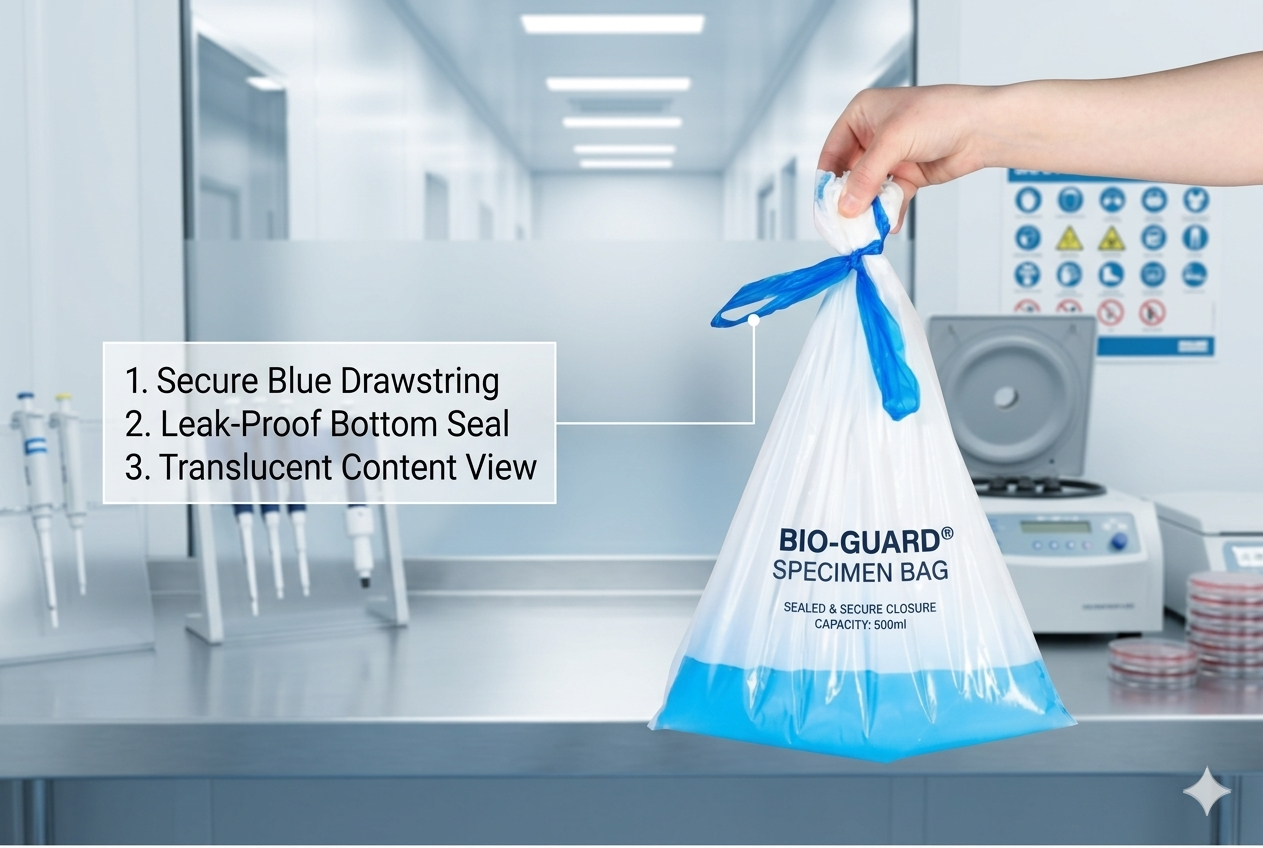
Material Specifications for Clinical Use Specify minimum 3-mil gauge film for inpatient and long-term care settings to mitigate puncture risk under mixed-use conditions. Superabsorbent polymer (SAP) gelling capacity should be rated for a minimum of 500ml to accommodate incontinence volumes. Request technical data sheets from suppliers to validate absorbency claims.
Compatibility Across Equipment Fleet Large facilities operate multiple commode models. Confirm liner dimensions against your facility's equipment inventory — standard bucket capacity ranges from 6.5 to 8 quarts, but bariatric and pediatric commodes require separate SKUs. Work with suppliers who offer a full-range catalog and can cross-reference to equipment OEM specifications.
Infection Control Integration Evaluate whether liners support your facility's waste segregation and disposal protocol. Products with color-coded sealing systems (e.g., yellow for infectious, clear for standard) can reduce handling errors and support compliance with healthcare waste management regulations such as HTM 07-01 (UK) or 40 CFR Part 259 (US).
Odor Management in Shared Environments In multi-bed wards or shared-facility spaces, activated carbon or enzymatic deodorizer integration is a clinical priority, not merely a comfort feature. Assess odor neutralization duration under realistic dwell times (30–90 minutes post-use before disposal).
Supplier Reliability and Lead Times For high-consumption departments (geriatrics, oncology, post-surgical wards), assess supplier fulfillment rates and safety stock policies. Prefer suppliers with documented redundant manufacturing capacity and a track record of on-time delivery during supply chain disruptions.
Evaluating Suppliers - Performance and Reliability Before Price
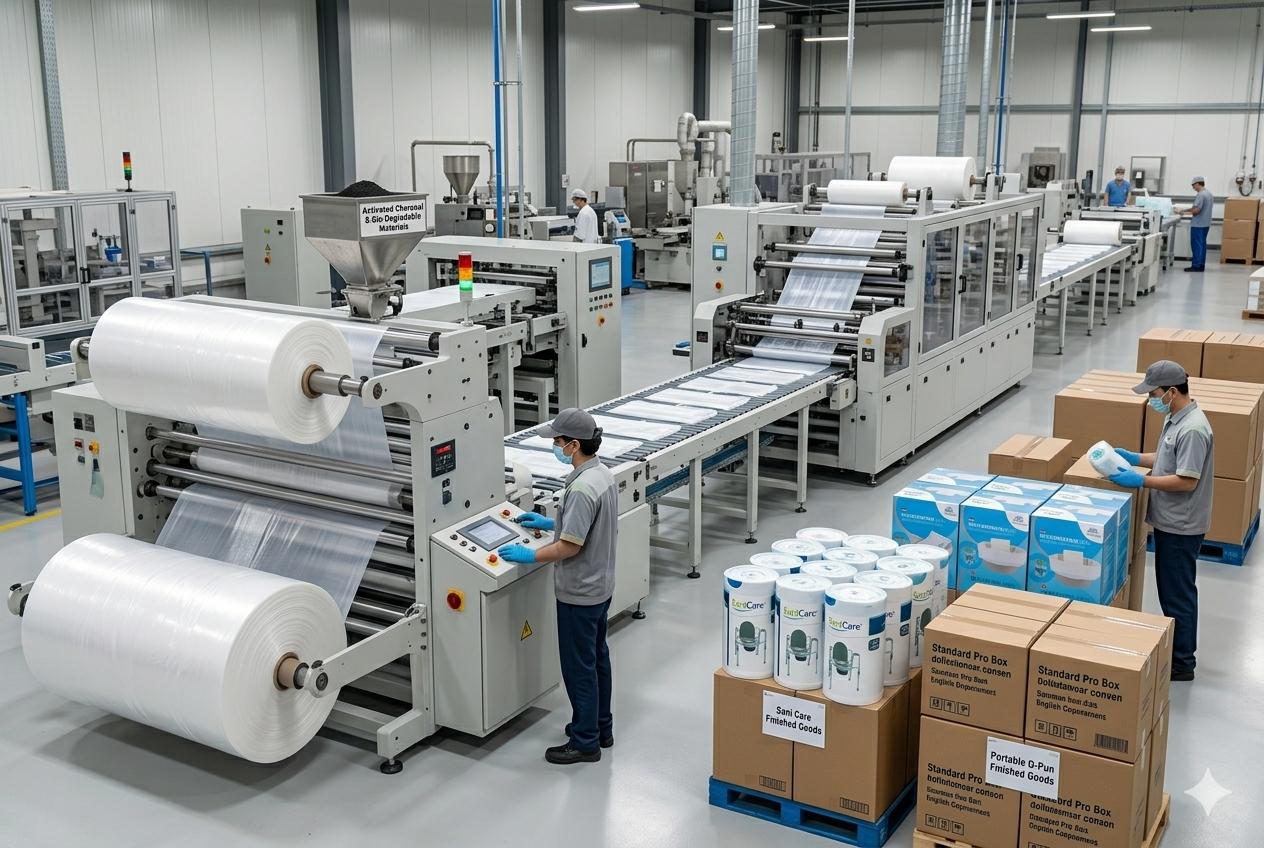
Some suppliers compete primarily on unit price, and it is worth understanding what that price point often reflects. Lower-cost liners frequently involve trade-offs in raw material quality, film gauge, SAP absorbency rating, or manufacturing hygiene standards — trade-offs that are not visible on a spec sheet but become apparent in use.
Thin-gauge film fails more often during handling. Under-specified SAP gels incompletely. Products manufactured in facilities without documented hygiene controls introduce contamination risks that are difficult to detect before deployment in a care setting.
Before price becomes the basis of comparison, confirm the following with any prospective supplier - actual film gauge and tensile strength data, third-party absorbency test results, production facility hygiene certifications, and realistic lead times under both normal and high-demand conditions. Request samples and test them against your actual commode equipment under realistic handling conditions — have staff use and seal the liners while wearing standard PPE, and assess failure rates across a meaningful sample size before drawing conclusions.
Once you have confirmed that a supplier meets your material and operational requirements, price comparison becomes a legitimate and productive exercise. Comparing price before confirming these fundamentals means optimizing the wrong variable — and the downstream costs of product failure in a clinical setting consistently exceed whatever was saved on unit cost.
Final Thoughts
Commode liners may represent a modest share of the consumables budget, but they directly affect infection control outcomes, regulatory compliance, and operational efficiency. A correctly specified liner — matched to the required film gauge, absorbency, and equipment model — reduces clean-up time, lowers the risk of waste-handling errors, and protects both staff and patients. For procurement and clinical teams, the recommendation is straightforward - validate liner specifications against your facility's commode fleet, confirm whether integrated SAP or separate gelling agents deliver better workflow efficiency, and consolidate purchasing under volume agreements once performance is proven. In this category, getting the specifications right has a measurable impact on the cost and quality of daily care delivery.
Packing Solutions
Related Products

Tel: +86 18019228135
E-mail: alfredren@huayuepack.com
Address: No.228 ZhaiXing Rd, XinSheng Industrial zone, ZheLin Town, FengXian District, ShangHai, China.

Copyright © 2026 Huayue Group Plastic Packaging Manufacturers
