
 English
 Español
Zip-Seal Food Bags for Grocery Retail and Everyday Storage
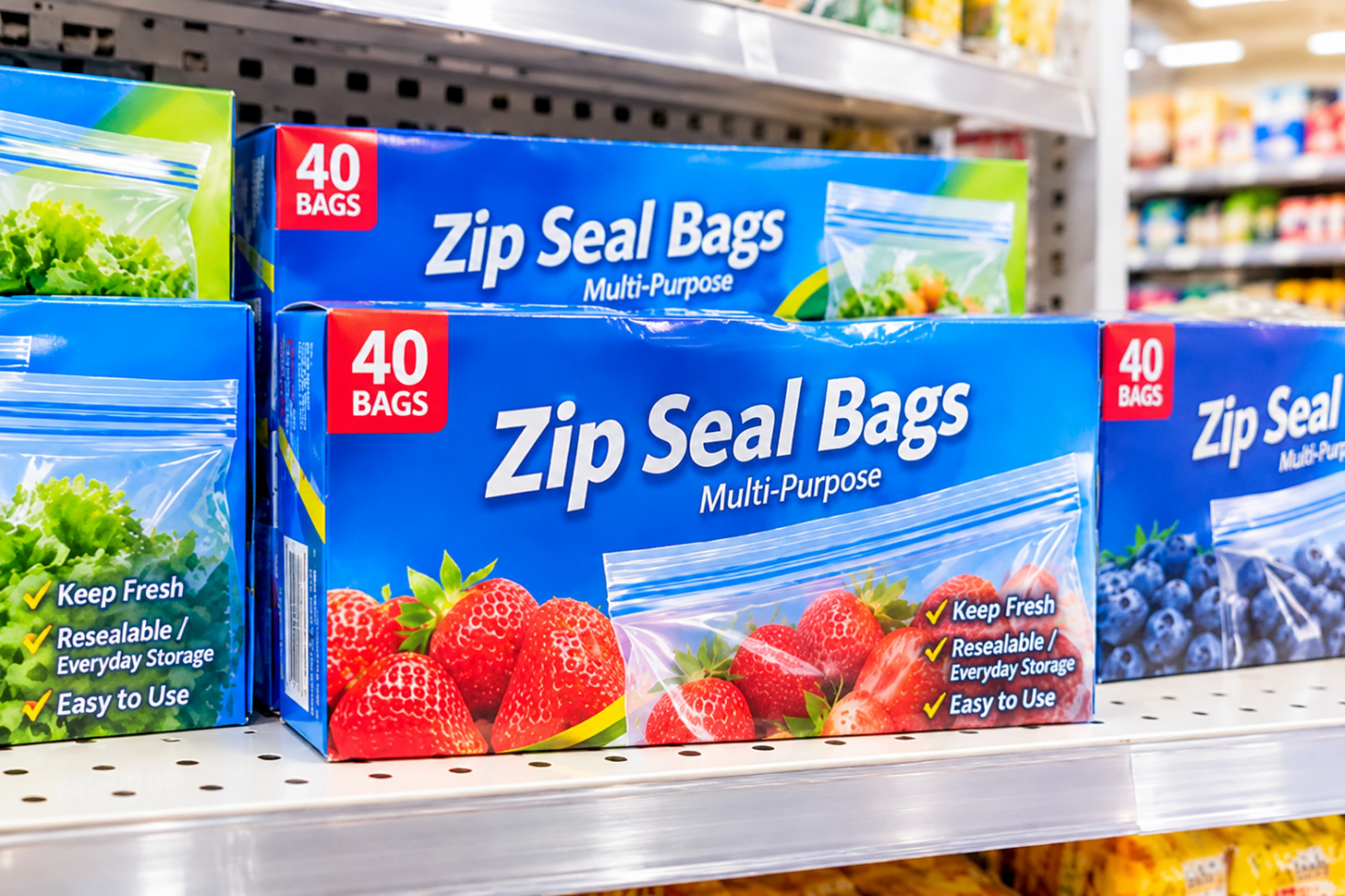
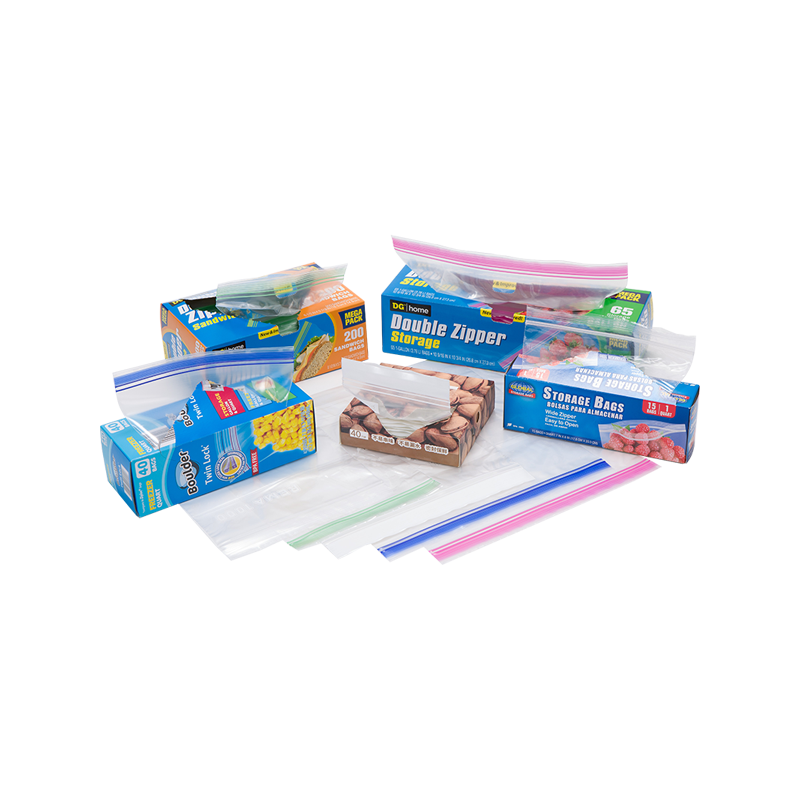
A shopper in the food storage aisle usually has one small job in mind - split a block of cheese, pack carrot sticks for school, or keep half a sandwich together until lunch. The [zip-seal food bag] on the shelf has a few seconds to tell that shopper which job it suits and how it closes. For grocery buyers and storage-product brands, the packaging task comes down to two choices - which everyday uses to name, and which closure details to show.
The everyday jobs shoppers actually buy these bags for
Most purchases fall into a handful of repeat tasks. Naming two or three of them on the pack is more useful than a long list.
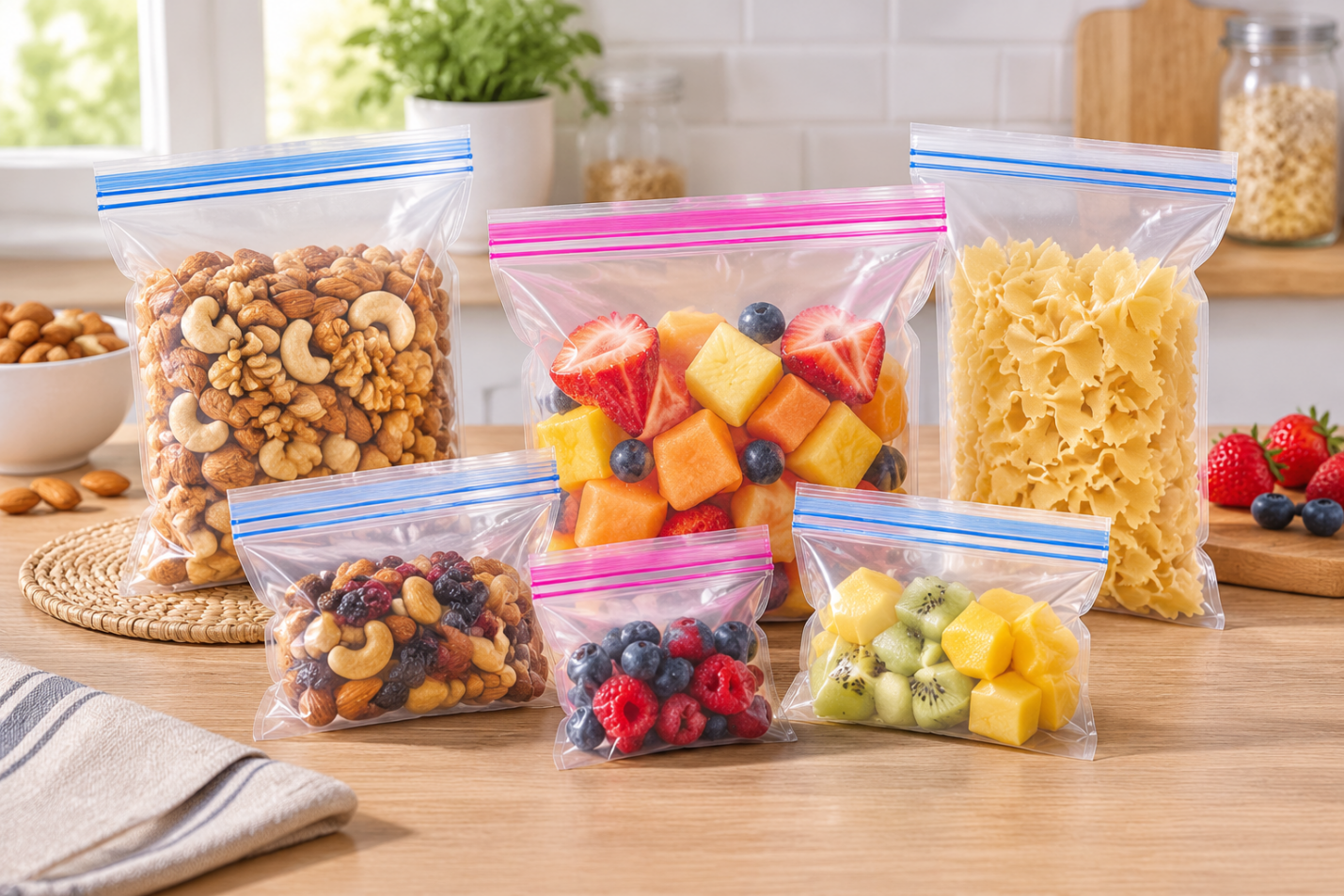
- Portioning snacks and dry foods. Nuts, dried fruit, crackers, and trail mix get divided into single servings.
- Lunch packing. Sandwich halves, sliced fruit, and cut vegetables go into the same bag size week after week.
- Refrigerator organizing. Shredded cheese, deli slices, and leftover portions are separated so they are easy to find.
- Pantry sorting. Rice, pasta, baking ingredients, and loose spices move from open packages into labeled bags.
These are plain, daily uses. A pack that says "snacks, sandwiches, leftovers" matches how shoppers already think about the task.
What the front of the pack should help a shopper recognize
Shoppers compare several boxes in seconds, so the front panel should answer a few questions without making them turn the box over.
Bag type. Say "zip-seal" in plain words and show the bag itself, not only an illustration of food. If a range also includes slider bags, the wording should make clear which closure is in this box.
Size name, count, and bag features. Print the standard retail size name—such as snack, sandwich, or [gallon and quart food bags]—and the exact bag count in the same position across every box in the range. If the bags include a white write-on label strip for dates or contents, note that clearly on the front panel so shoppers know they can label portions for fridge or pantry sorting.
Use cues. Two or three short phrases tied to the jobs above. Avoid a paragraph of suggestions; the shelf is not the place for it.
Show the closure, not just the claim
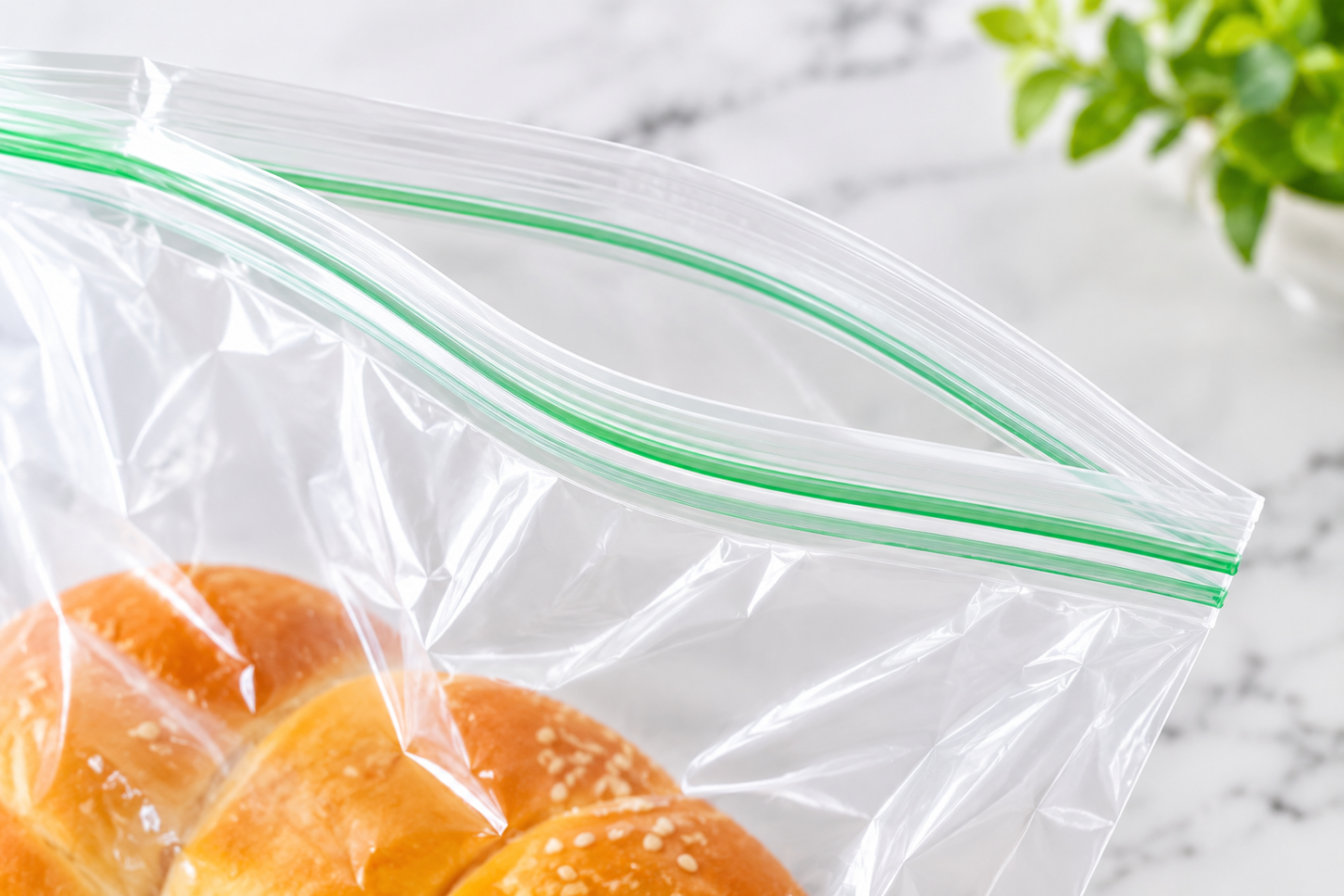
The zipper is the feature shoppers care about most, and it is hard to judge from a flat box. A clear close-up of the closure track on the pack, or a window showing the bag edge, does more than a line of copy.
If the pack includes a short closing instruction, such as pressing along the track from one end to the other, keep it to one line. Avoid wording like "leak-proof" or "airtight" unless the specific product has been confirmed for that claim. Likewise, avoid freshness or shelf-life statements; they depend on the food, not just the bag.
Keep freezer and heating uses separate
Everyday portioning and storage is one conversation. Freezer storage, microwave reheating, and similar uses are another, and they need to be checked against the specific product before they appear on the pack. If a bag has not been confirmed for those uses, leave them off rather than implying them through a freezer-style image or a steaming-bowl photo. Where a use is confirmed, give it its own short line so it does not blur into the general use cues.
Laying out a range on the shelf
When one line has several sizes, consistency matters more than variety. Keep the size name, bag count, and closure image in the same places on every box. A simple color band or corner tag per size helps shoppers who already know which one they use. Packs sold as multi-box bundles should still show one box face clearly, so the product does not disappear behind a bundle wrapper.
What to gather before briefing a supplier
Before asking for a quote or a sample, collect -
- The two or three everyday uses you want named on the pack.
- The sizes in the range and the bag count per box.
- A clear photo of the closure to use on the front or side.
- A list of any claims, such as freezer use, that you intend to make and need confirmed.
- The bag dimensions, closure style, and inner box or master carton format your retail partners expect—you can review standard configurations on our [zip-seal food bags] page before finalizing your spec list.
FAQ
Does the pack need to say the bags are food-safe? Food-contact wording depends on the market you sell in and the documentation behind the material—for example, aligning with [FDA food-contact substance guidelines] in the U.S. Confirm the exact statement with your supplier and your compliance contact before it goes on the pack.
Should a range include both zip-seal and slider bags? That is a range decision. If it does, name the closure type on each box so shoppers do not have to guess. See our guide on [slider food bags for everyday food organization] for how those are usually described.
Can the same pack copy work for a store brand and a national brand? The use cues can usually be shared. The brand name, logo placement, and any claims should be set per product.
Final Takeaway
For zip-seal food bags, the clearest shelf packs name a few everyday uses, show the closure, keep size and count in a fixed position, and leave freezer or heating claims off unless the product has been confirmed for them. If you are preparing a range, start by listing the uses, sizes, and claims you need, then contact Huayuepack with that list so we can match it to the right bags.
Packing Solutions
Related Products

Tel: +86 18019228135
E-mail: alfredren@huayuepack.com
Address: No.228 ZhaiXing Rd, XinSheng Industrial zone, ZheLin Town, FengXian District, ShangHai, China.

Copyright © 2026 Huayue Group Plastic Packaging Manufacturers
