
 English
 Español
What to Print on Custom Shopping Bags - A Simple Content Hierarchy
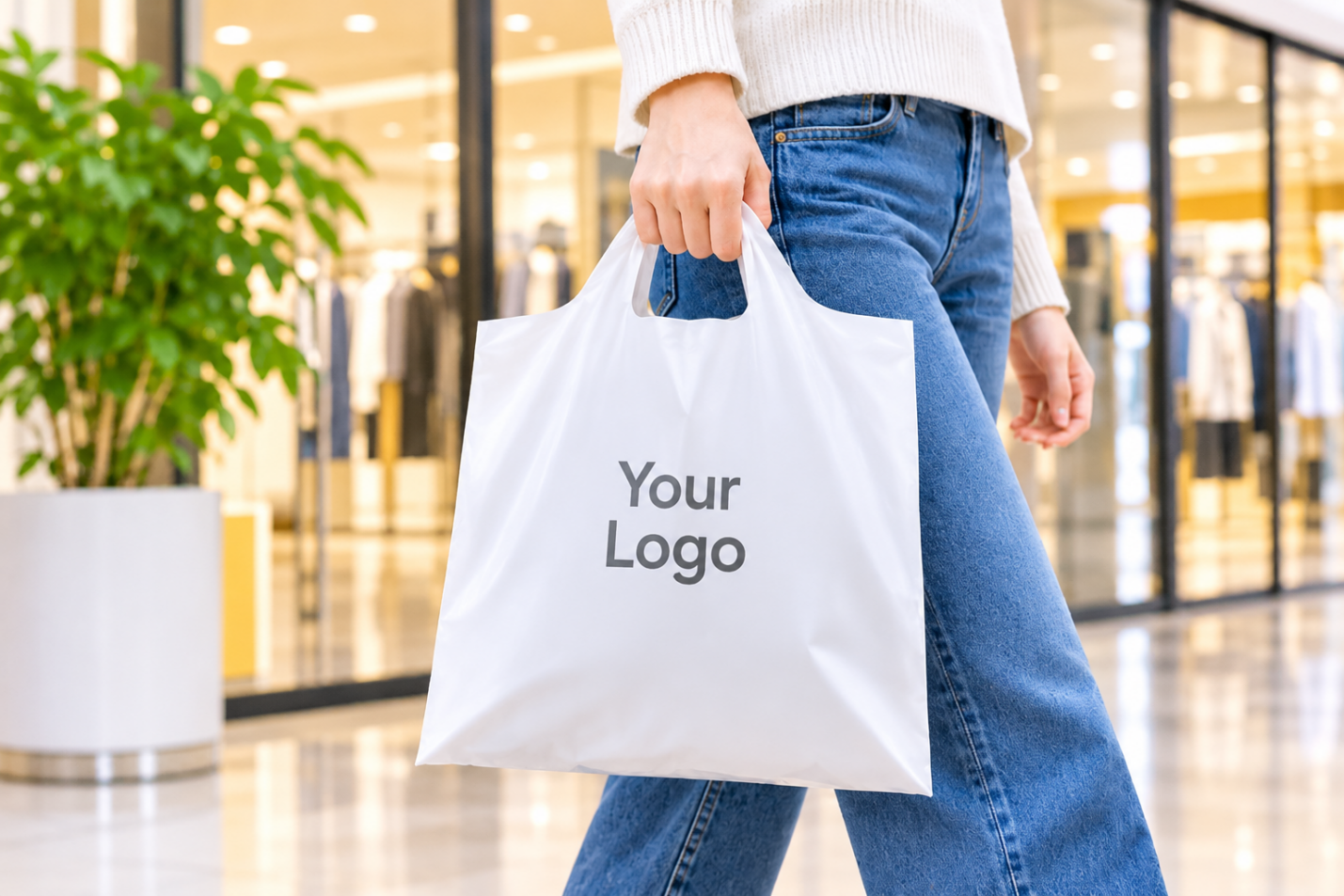
A [custom shopping bag] is read in motion. A customer carries it out the door, and the people who see it do so from several feet away, for a second or two, at hand height. Whatever you print has to work at that distance. The practical question for a retail brand or store buyer is not "what can we fit on the bag?" but "what goes on it, and which one item should be seen first?"
Start with one item that must be seen first
Pick a single primary element before anything else is placed. For most retailers this is the logo or store name. Everything else is arranged around it and sized smaller.
If two items compete for first place, such as a logo and a seasonal slogan, the bag usually ends up with no clear first read. A passerby then remembers neither. Decide in advance which one wins, and let the other move down a level or come off the bag.
A three-level content list
A simple way to sort content is to put each item into one of three levels.
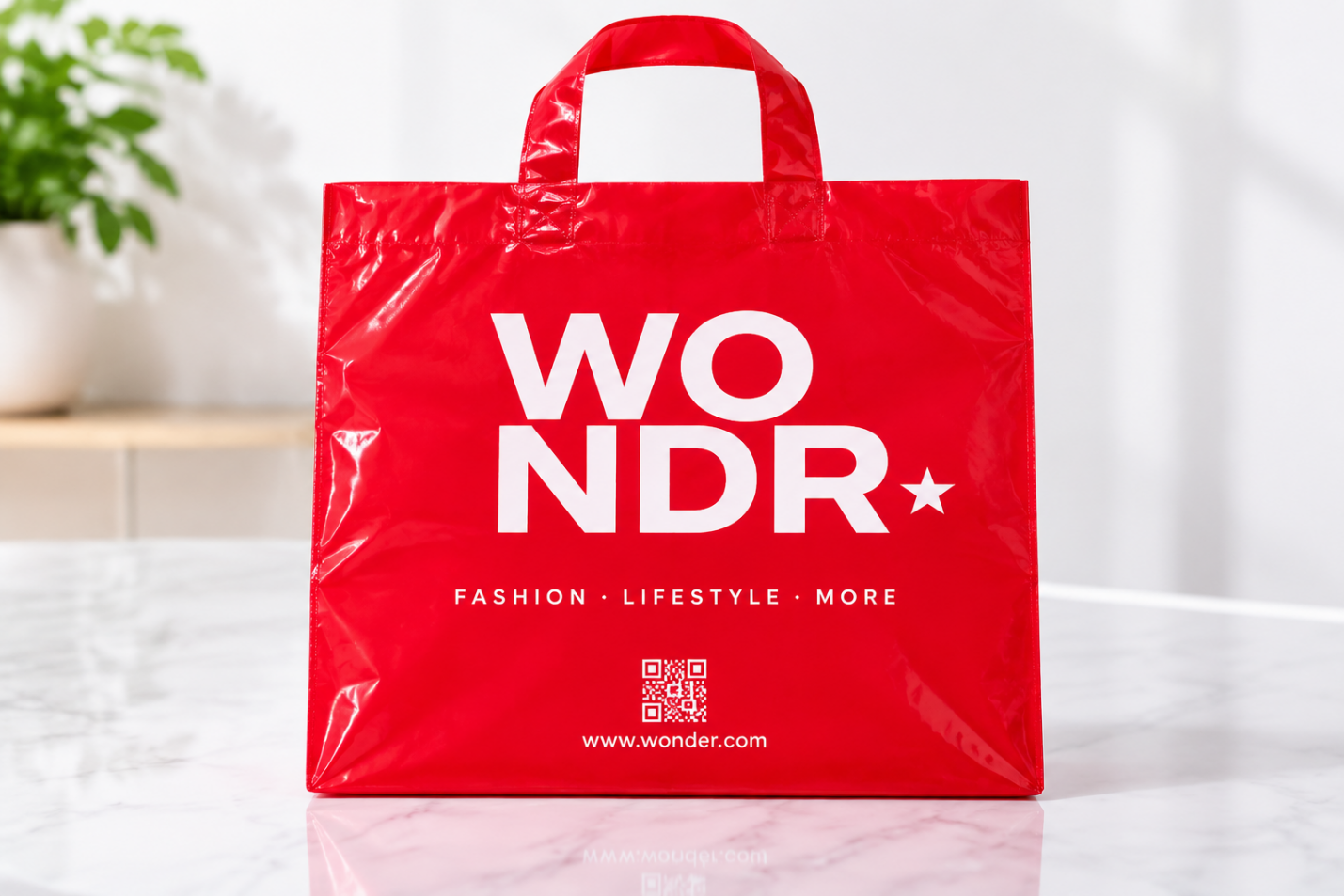
Level 1 - who you are. Logo or store name. This is the only item that gets the largest size and the most open space around it.
Level 2 - one supporting line. A short descriptor of what the store sells or where it is, such as "Fresh bread and pastries" or "Women's apparel, since 1998." Choose one line, not several. Alternatively, use the website address here if that is how customers find you.
Level 3 - practical details. A social handle, a phone number, a street address, or a QR code. These are for people who are already interested, so they can be small. Choose one contact route rather than listing every channel.
When a bag has all three levels, the eye moves from the logo, to the line, to the detail. When it has ten items at similar sizes, the eye has nowhere to start.
Items that often do not belong on the bag
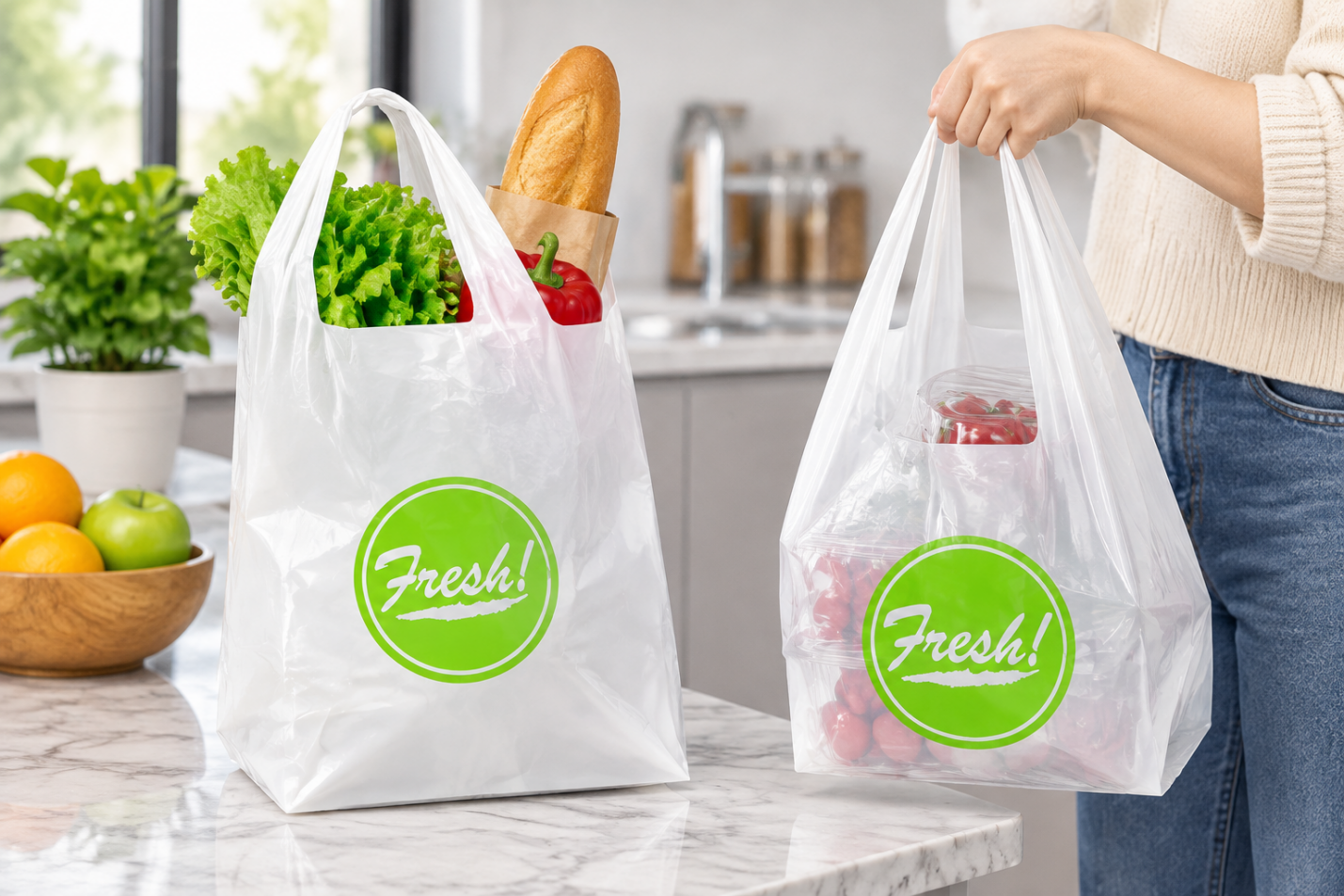
Bags last longer than most promotions, so some content ages quickly.
- Sale dates and discounts. The bag may still be in use months after the offer ends.
- They change; the bag does not.
- Several logos at once. A parent brand, a sub-brand, and a partner mark together dilute each other.
- Store hours. These change, and they are easy to find online.
- Long taglines. If it needs two lines at small size, it will not be read from a distance.
If you do want a seasonal message, treat it as a replacement for the Level 2 line for that run, not as an addition on top.
Check any claims before they go on
Statements such as "recyclable," "eco-friendly," or "biodegradable" need to match the actual product and the [rules] where you sell. Confirm the wording with your supplier and compliance contact before it is added to the artwork. If the claim cannot be confirmed, leave it off; a clean bag is better than an unverified one.
A quick check before you send artwork
Tape a printout of the design to a wall, step back about six feet, and look for two things. First, can you tell what the brand is? Second, can you say what the one supporting line is without moving closer? If either answer is no, make Level 1 larger, remove something from Level 3, or both.
What to prepare for a bag brief
- Your logo files and your chosen primary element.
- One supporting line, with a backup option.
- One contact route - website, handle, or QR destination.
- A list of any claims you want to print, marked as confirmed or still to check.
- The bag style you are considering—whether a [soft-loop handle bag], die-cut handle bag, or T-shirt bag—so the layout can be planned around its shape. Our [custom plastic shopping bags] page shows the styles available.
FAQ
Should the front and back carry the same content? They can, but they do not have to. How to split roles between the two sides is covered in our guide on [front and back designs for shopping bags].
Is a QR code worth printing? Only if the destination page will stay live and works well on a phone. Print it at Level 3 and keep a clear margin around it. If you are not sure the link will last, a website address in text is safer.
Who should approve the content list? Ideally the person who owns the brand, plus someone who can confirm any claims. Settling the list before design starts avoids rounds of revisions later.
Final Takeaway
A well-planned custom shopping bag has one item to see first, one supporting line, and one practical detail, with promotions, prices, and unverified claims left off. Write that three-level list before you brief a designer or request a quote, then contact Huayuepack with the list and the bag style you have in mind so we can help match them.
Packing Solutions
Related Products

Tel: +86 18019228135
E-mail: alfredren@huayuepack.com
Address: No.228 ZhaiXing Rd, XinSheng Industrial zone, ZheLin Town, FengXian District, ShangHai, China.

Copyright © 2026 Huayue Group Plastic Packaging Manufacturers
