
 English
 Español
The Ultimate Guide to Wave Top Plastic Bags - Features, Materials & Custom Options
If you're sourcing bags at volume, you already know the baseline requirements - they need to hold weight, survive the trip, and not embarrass your brand at the point of handoff. What's less obvious is how much the bag design itself — not just the material or the gauge — determines whether those requirements are actually met.
Wave top plastic bags are built around a different set of design priorities than standard T-shirt or flat-top bags, and the differences are practical rather than cosmetic.
What Makes Wave Top Plastic Bags Different
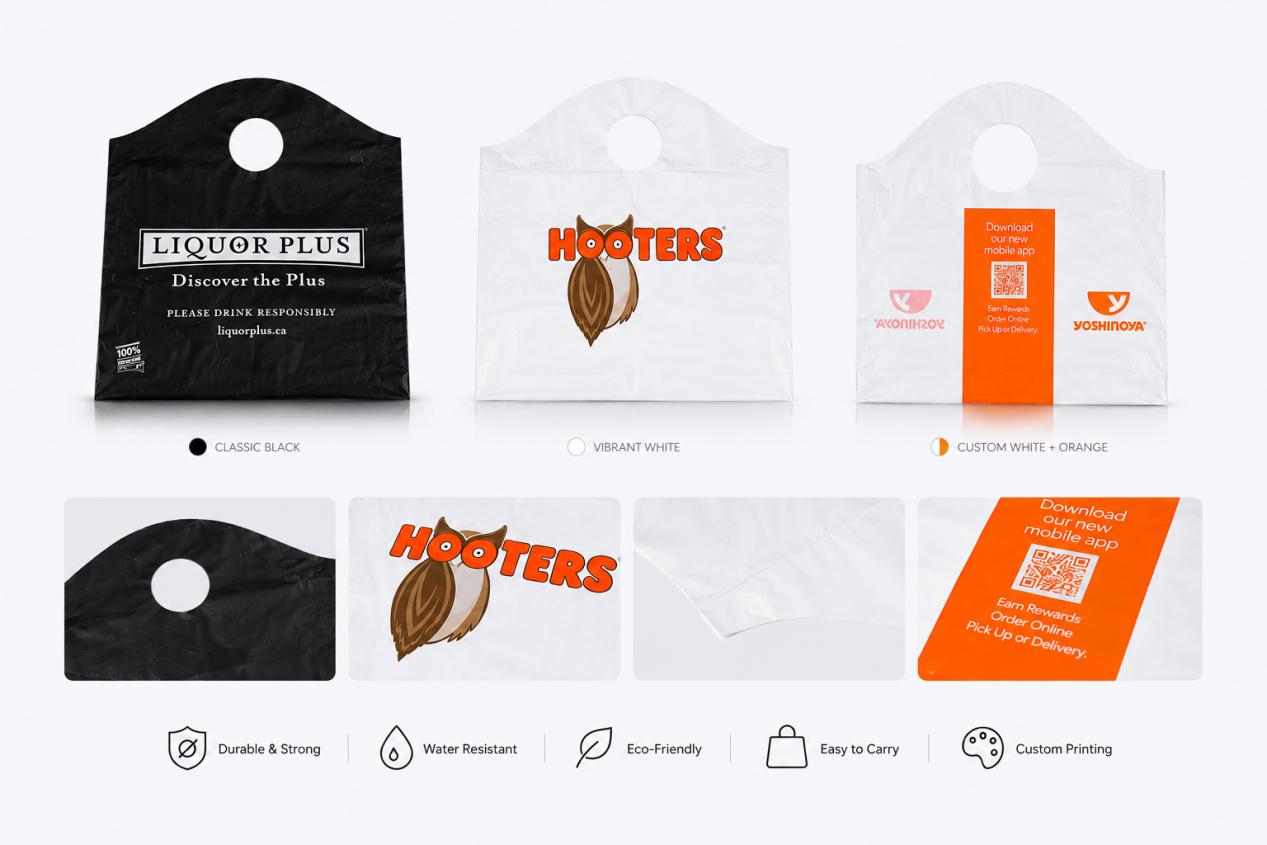
The name comes from the curved wave-shaped opening above the integrated die-cut handles — a wider mouth that makes loading tall containers and stacked trays noticeably easier than a standard flat-top bag.
The bottom gusset is the more important feature. This folded base panel unfolds when the bag is filled, letting the bag stand upright and distribute weight evenly across a stable flat base — eliminating the tipping and shifting that causes spills in transit. The die-cut handles are punched from the same heavy-gauge sheet as the bag body, giving them load-bearing strength that thin loop handles can't match.
Key Benefits for Retail and Food Service
Wave top bags consistently outperform standard T-shirt bags and thank-you bags across several practical measures -
- Load capacity - Heavy-gauge HDPE construction allows wave top bags to carry double or triple the weight of a generic plastic bag, handling everything from bulk grocery items to multi-container restaurant orders.
- Spill prevention - The flat, gusseted base keeps containers level during transit. This matters enormously for soups, beverages, and sauce-heavy dishes that tip easily in a soft-sided bag.
- Fast loading - The wide wave opening accommodates most standard food containers—half-pans, platters, and stacked trays slide straight in without repositioning.
- Temperature compatibility - Wave top bags handle both hot and cold food safely, making them suitable for everything from hot rotisserie chicken to frozen goods.
- Self-standing storage - When bags are pre-opened at a packing station, the gusset bottom allows them to stand without assistance, speeding up packing operations during peak service.
For high-volume operations—quick-service restaurants, grocery delis, catering companies—these advantages add up to measurably fewer spills, fewer complaints, and faster throughput at the counter.
Common Applications Across Industries
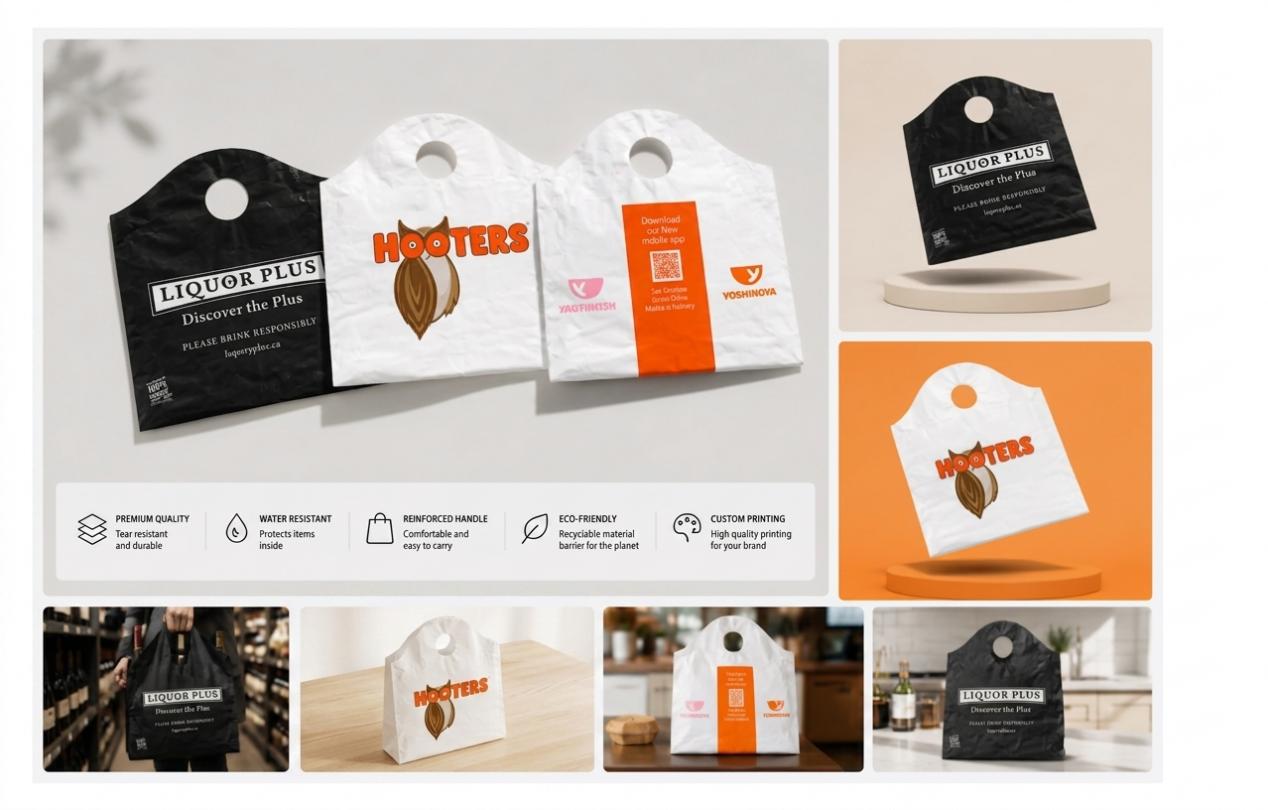
The design's versatility is one of its strongest selling points. Wave top bags serve a remarkably wide range of industries without modification -
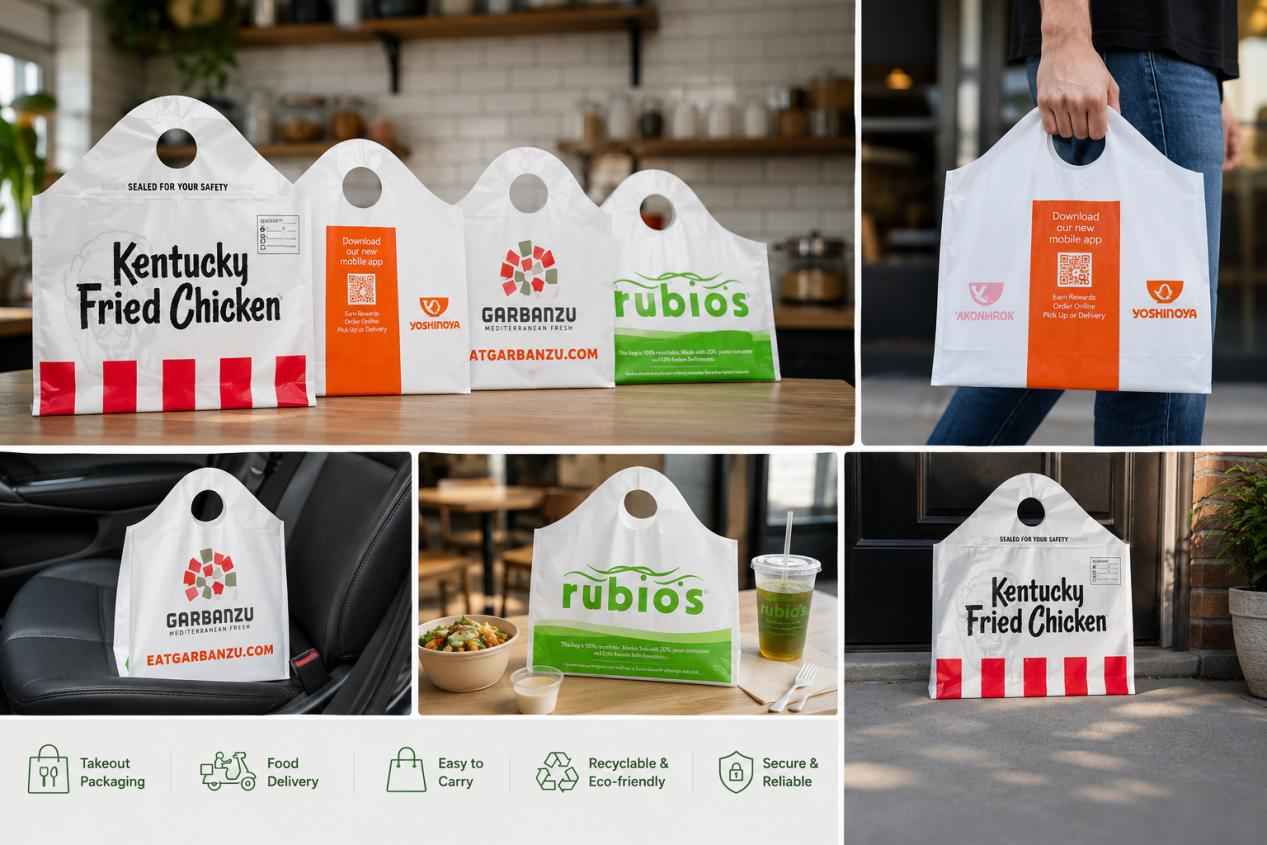
- Restaurants and takeout - The most common application. The wave top design was built for exactly this---carryout orders that need to arrive intact. Food-safe packaging solutions for takeout and delivery require bags that can handle heat, weight, and the variable conditions of third-party delivery.
- Grocery and supermarket - Produce departments, delis, and prepared-food sections all benefit from a bag that can hold irregular loads and stand at checkout.
- Retail stores - Clothing boutiques, gift shops, pharmacies, and general merchandise retailers use wave top bags as a step up from standard shopping bags—offering customers a noticeably sturdier carry experience.
- Catering and event services - For off-site food delivery, the self-standing base and reinforced handles make wave top bags the practical choice for multi-bag orders.
- Healthcare and pharmacy - The clean, professional appearance and durability make these suitable for dispensary and pharmacy use where presentation matters alongside function.
HDPE vs. LDPE - Choosing the Right Material
Most wave top bags are produced in one of two polyethylene resins, and the choice affects performance in ways that matter for sourcing decisions.
|
Property |
HDPE (Resin #2) |
LDPE (Resin #4) |
|
Density & Rigidity |
Higher density, stiffer feel |
Lower density, softer and more flexible |
|
Tear Resistance |
Excellent—resists puncture and tearing |
Good, but less resistant under sharp loads |
|
Transparency |
Translucent/milky appearance |
Clearer, better for see-through presentation |
|
Print Quality |
Good surface for flexographic printing |
Excellent ink adhesion, vibrant colors |
|
Typical Thickness |
Thinner gauge achieves high strength |
Requires thicker gauge for equivalent strength |
|
Best For |
Heavy-duty grocery, restaurant carryout |
Retail merchandise, boutique shopping |
For most food service applications, HDPE is the standard choice—it delivers superior load-bearing performance at thinner gauges, reducing material cost per bag. LDPE is more common in retail settings where a softer hand feel and crisper print presentation justify the additional material weight.
Custom Printing and Sizing Options
Wave top bags are one of the most customizable packaging formats available. For businesses ordering at volume, the options extend well beyond simply choosing a size.
Size range - Standard wave top bags run from compact 12" × 11" formats suited to single-meal orders up to large 24" × 20" configurations for catering and bulk retail. Bottom gussets typically extend from 4" to 10", and the right depth depends on the container footprint being packed.
Custom printing - Flexographic printing on HDPE or LDPE film allows full-color logo application, brand messaging, and compliance text. Single-color imprints are the most economical; two- to four-color printing is standard for branded retail applications. custom printed plastic bags for retail businesses typically require a minimum order quantity (MOQ) that varies by size and print complexity—working directly with a factory source significantly lowers per-unit cost compared to reseller pricing.
Thickness (mil gauge) - Wave top bags are commonly specified between 1.15 mil and 1.50 mil for standard applications. Higher-mil bags are specified for heavy merchandise or where regulatory requirements demand a thicker film to qualify as "reusable" under local ordinances.
For buyers, sourcing directly from a manufacturer provides full control over specifications---size, gusset depth, material grade, thickness, and multi-color print---while eliminating distributor markups. This results in a lower total cost of ownership, particularly for high-volume orders.
Sustainability and Recyclability
The recyclability of wave top plastic bags depends primarily on the resin used. Both HDPE (#2) and LDPE (#4) polyethylene films are technically recyclable, and both are accepted at most store drop-off collection programs. According to U.S. EPA materials and waste data, plastic bags, sacks, and wraps represent a significant segment of the municipal solid waste stream — making responsible sourcing and end-of-life planning increasingly important for businesses purchasing at scale.
Several practical steps improve the sustainability profile of wave top bag programs -
- Specifying bags that contain a minimum percentage of post-consumer recycled (PCR) content — typically 25% or more — reduces virgin resin demand without compromising bag performance.
- Sourcing thicker-gauge bags (2.0 mil+) that meet local definitions of "reusable" extends product life and reduces per-use material impact.
- Working with manufacturers that hold recognized environmental certifications provides independent verification of production standards.
At Huayue, sustainability is not an afterthought — it is built into the product itself. We have developed wave top bags engineered for 100% recyclability, as well as a fully biodegradable line designed to break down at end of life without leaving persistent plastic residue. Both options maintain the same load-bearing performance and customization capabilities as our standard range, meaning businesses do not have to choose between durability and environmental responsibility. For distributors and retailers operating in markets with tightening single-use plastic regulations, Huayue's eco-conscious wave top bags offer a ready-made compliance path alongside a genuine product differentiator.
For forward-thinking distributors and retailers, specifying durable, reusable-grade wave top bags transforms sustainability from a compliance requirement into a product advantage — future-proofing your product line against tightening regulations and changing market expectations.
Packing Solutions
Related Products

Tel: +86 18019228135
E-mail: alfredren@huayuepack.com
Address: No.228 ZhaiXing Rd, XinSheng Industrial zone, ZheLin Town, FengXian District, ShangHai, China.

Copyright © 2026 Huayue Group Plastic Packaging Manufacturers
