
 English
 Español
The Ultimate Guide to Garbage Bags - Materials, Durability, and Bulk Sourcing Tips
Garbage bags are a recurring operating consumable for retailers, hospitality groups, facility managers, healthcare buyers, and industrial sites. A poor fit, weak seal, or inconsistent gauge can cause leaks, cleanup delays, complaints, and emergency replenishment. This guide explains material and bag-type options, performance criteria, and the information buyers should confirm when comparing garbage bags manufacturers and sourcing garbage bags in bulk.
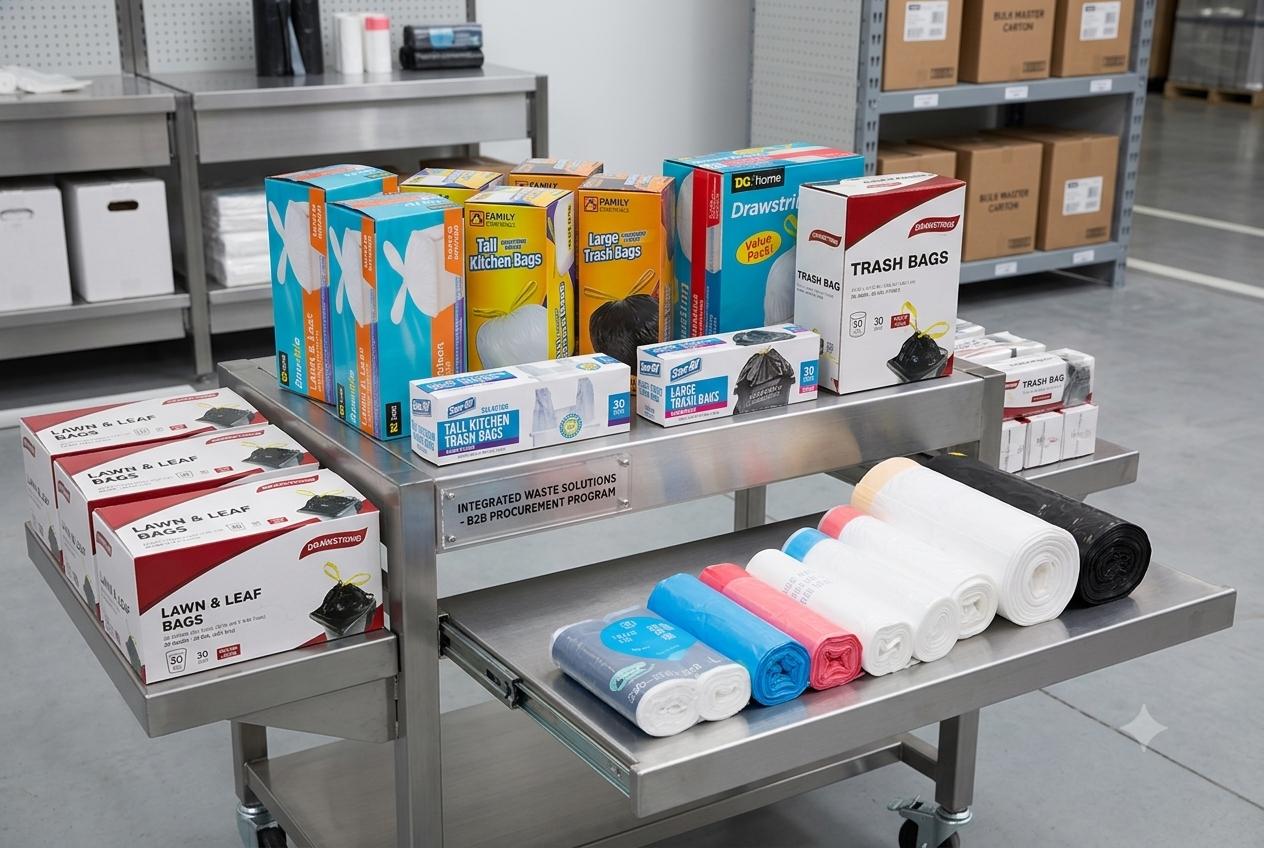
Common Types of Garbage Bags
Draw String Garbage Bags
A pull-cord woven into the rim lets users cinch and knot the bag shut in one motion. This suits kitchen and office bins that are removed frequently and need a secure closure during lifting. Buyers should check cord strength and anchor point quality before ordering.
Flat-Top and Flat-Seal Bags
These bags are sealed straight across the top and bottom with no added closure hardware, keeping unit cost low. This makes them a frequent stock item for household trash bags suppliers serving bulk and economy-format packaging sold on rolls or in high-count cases. The key purchasing check is seam strength, since a weak seal is the main failure point in this format.
Gusseted Bags
Folded side panels expand as the bag fills, giving a stable box-like shape that matches rectangular or square bins. This structure suits situations where volume capacity and bin fit matter more than minimizing material use. Buyers should confirm the expanded gusset dimensions against actual bin shape before bulk ordering.
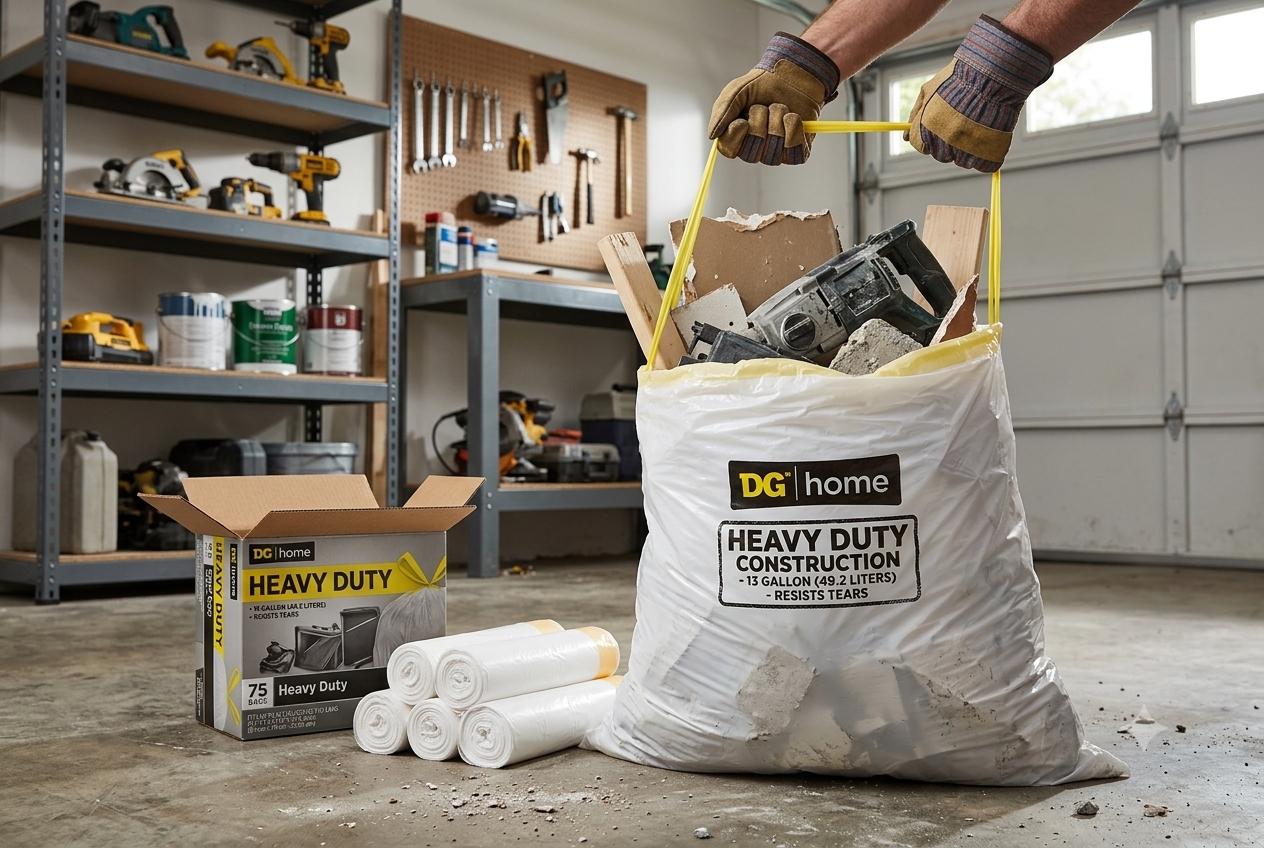
Garbage Bag Materials - HDPE, LDPE, Recycled, and Biodegradable Options
HDPE (High-Density Polyethylene)
HDPE film is thin and light for its strength, resisting tearing under steady load but more prone to puncture from sharp objects. It suits household and office trash where waste is mostly soft or uniform, keeping cost per bag low at high volumes. Buyers should confirm puncture resistance against the actual waste stream.
LDPE (Low-Density Polyethylene)
LDPE stretches further and absorbs impact better than HDPE, at the cost of thicker film and higher price per bag. It suits heavier or rougher waste such as construction debris or yard waste with branches or rocks. Buyers should verify gauge and seal performance on an approved production sample.
Recycled Material
Recycled-content bags keep mechanical properties close to virgin film when the resin ratio is consistent. Batch consistency can vary more, so buyers should request PCR ratio and batch data before large orders.
Biodegradable Material
Biodegradable bags perform comparably to standard film for light to medium loads but typically require industrial composting rather than home or landfill breakdown. Buyers should confirm a documented standard such as ASTM D6400 or EN 13432 before ordering.
What to Look for When Choosing Garbage Bags
Size and Bin Fit
Bag size should closely match bin dimensions — undersized bags slip or tear at the rim, oversized bags waste material and bunch at the bottom. North American sourcing spans roughly 4 to 55 US gallons across household, office, and industrial containers, a range most household trash bags suppliers list by container type.
Thickness (Gauge/Micron)
Lighter gauge suits soft household waste while heavier gauge is needed for sharp or dense loads. Heavy Duty Garbage Bags should be sized to the sharpest or heaviest item expected, since one puncture point can compromise the whole bag.
Color and Printing Customization
Color coding supports waste sorting, and printed logos support brand consistency for hotels, restaurants, and municipal programs. These affect appearance and organization rather than structural performance, and should be confirmed alongside the specifications above.
Film Quality
Film quality covers consistent thickness across the roll and resistance to leaking, puncture, tearing, and load under real-use conditions. A documented sample test before bulk order is the main safeguard against inconsistent quality between batches.
Closure and Bottom-Seal Structure
The closure and base should match how the bag is filled, carried, and disposed of — draw string garbage bags for frequent removal, flat-seal for economical bulk formats, star-seal for even weight distribution, and gusseted sides for expanded volume. Buyers with non-standard needs, such as reinforced Custom Heavy Duty Garbage Bags, should confirm closure and seal type before finalizing an order.
Sourcing in Bulk - What Businesses Should Know
Sample and Specification Confirmation
A pre-production sample should be checked against the mass production run rather than approved once and assumed to carry through, confirming gauge, color, and printing match within an agreed tolerance. Buyers with specific requirements — unusual bin sizes, extra thickness for medical or industrial waste, or custom heavy duty garbage bags for construction and demolition sites — should include these details in the initial inquiry.
Tolerance and Film/Seal QC
Factories typically work within a stated tolerance for size, thickness, and per-carton count, which buyers should request in writing. Acceptance criteria for film and seal quality should be agreed before mass production, with incoming, mid-production, and outgoing checks recorded against those criteria.
Repeat-Order Consistency
Reorders should be checked against the original approved specification rather than only the previous shipment, since small drifts can accumulate over several cycles. Keeping a reference sample from the first order gives both sides a fixed benchmark for future runs.
MOQ, Capacity, and Export Execution
Minimum order quantity, production capacity, and lead time should be confirmed early to support both a trial order and recurring volume. Established garbage bags manufacturers with export experience can confirm packaging, carton configuration, labeling, and shipping documentation before production begins. When volume is the priority, wholesale plastic garbage bags orders can reduce cost per bag — buyers should partner with the right plastic garbage bags suppliers and compare landed cost rather than unit price alone.
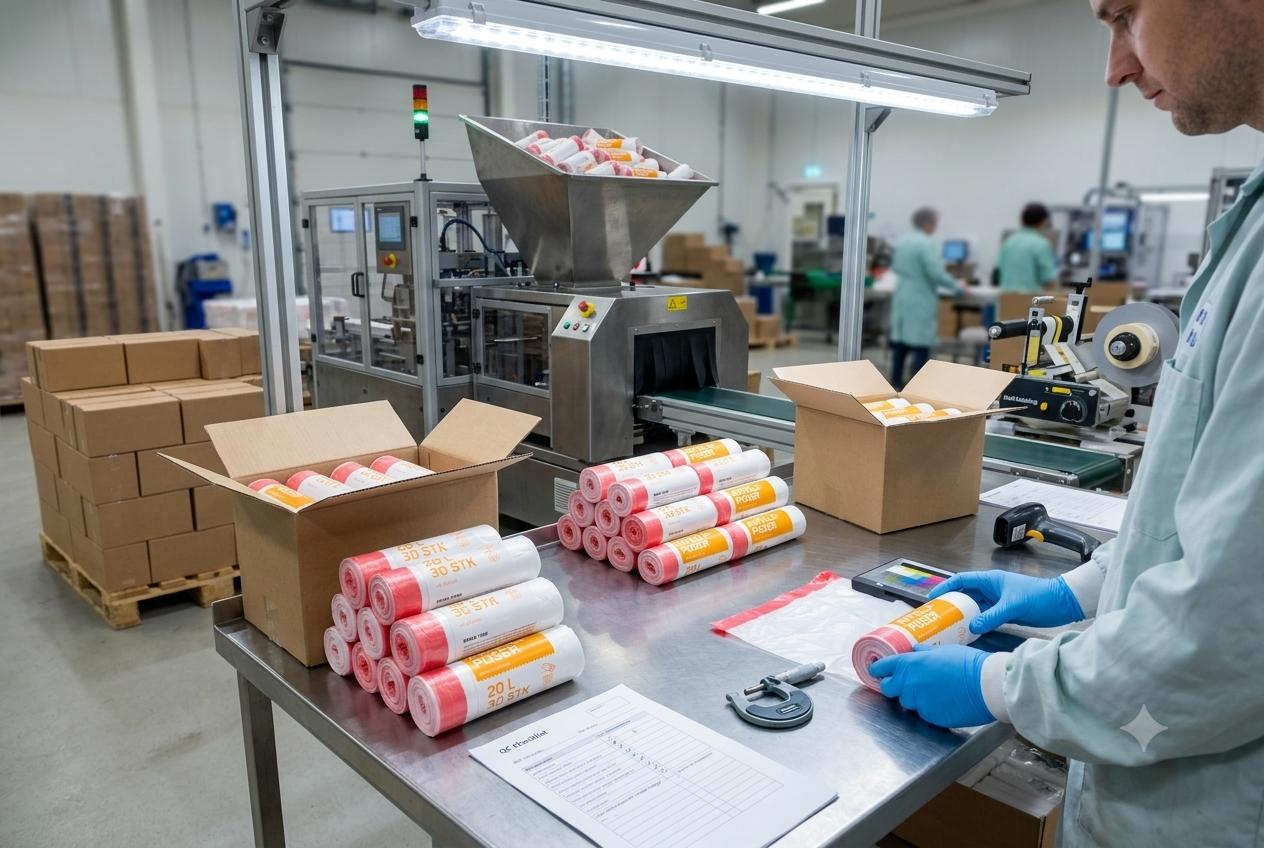
Why Choose Huayue Group
Huayue Group holds ISO 9001 certification with incoming, in-process, and outgoing inspection at each stage of production. Buyers can request inspection records tied to a specific run, reducing the risk of relying on a single approved sample to represent an entire order.
Over 70% of Huayue's output is exported to European and North American markets, so packaging, labeling, and documentation for these destinations are part of routine production. This lowers the risk of packaging or paperwork mismatches at the destination port.
Huayue Group holds BSCI and Sedex certifications, involving independent audits of labor and management practices. For buyers evaluating plastic garbage bags suppliers, current audit reports provide a verifiable compliance checkpoint during vendor approval.
Final Takeaway
Choosing the right garbage bag comes down to matching material, thickness, and size to the actual job — whether that's daily household use or heavy-duty industrial waste. For businesses, partnering with an experienced manufacturer like Huayue Group means consistent quality, flexible customization, and pricing that scales with real needs, from small trial orders to ongoing wholesale contracts.
To discuss samples or receive a quotation, send your bag dimensions or bin size, material and thickness, seal or closure type, color or printing requirements, order volume and target delivery schedule.
Packing Solutions
Related Products

Tel: +86 18019228135
E-mail: alfredren@huayuepack.com
Address: No.228 ZhaiXing Rd, XinSheng Industrial zone, ZheLin Town, FengXian District, ShangHai, China.

Copyright © 2026 Huayue Group Plastic Packaging Manufacturers
