
 English
 Español
Ultimate Guide to Pet Waste Bags - What Every Buyer Should Know
For retailers, distributors, and pet-service brands, bag failures translate into customer complaints, refunds, negative reviews, and weaker repeat sales. Buyers therefore need to evaluate film strength, seal integrity, perforation, bag size, and dispenser compatibility—not just unit price.

Bag Format - Rolls, Single Bags, or Bulk Packs?
Bag format should be matched to how and where the bags will actually be used and restocked, not chosen on unit price alone. Each format carries its own bags-per-roll count, core design, perforation, dispenser fit, and pack-out method, and getting any of these wrong shows up later as display problems, channel mismatches, slow roll-changes, or restocking headaches.
- Daily-use dispenser rolls– perforated rolls, typically 15–20 bags per roll, coreless or thin-core to fit standard leash-mounted dispensers. Roll diameter and core spec must match the dispenser exactly, since a mismatch is a common cause of jammed dispensers and roll-change complaints; clean perforation keeps one-hand tear-off fast on walks.
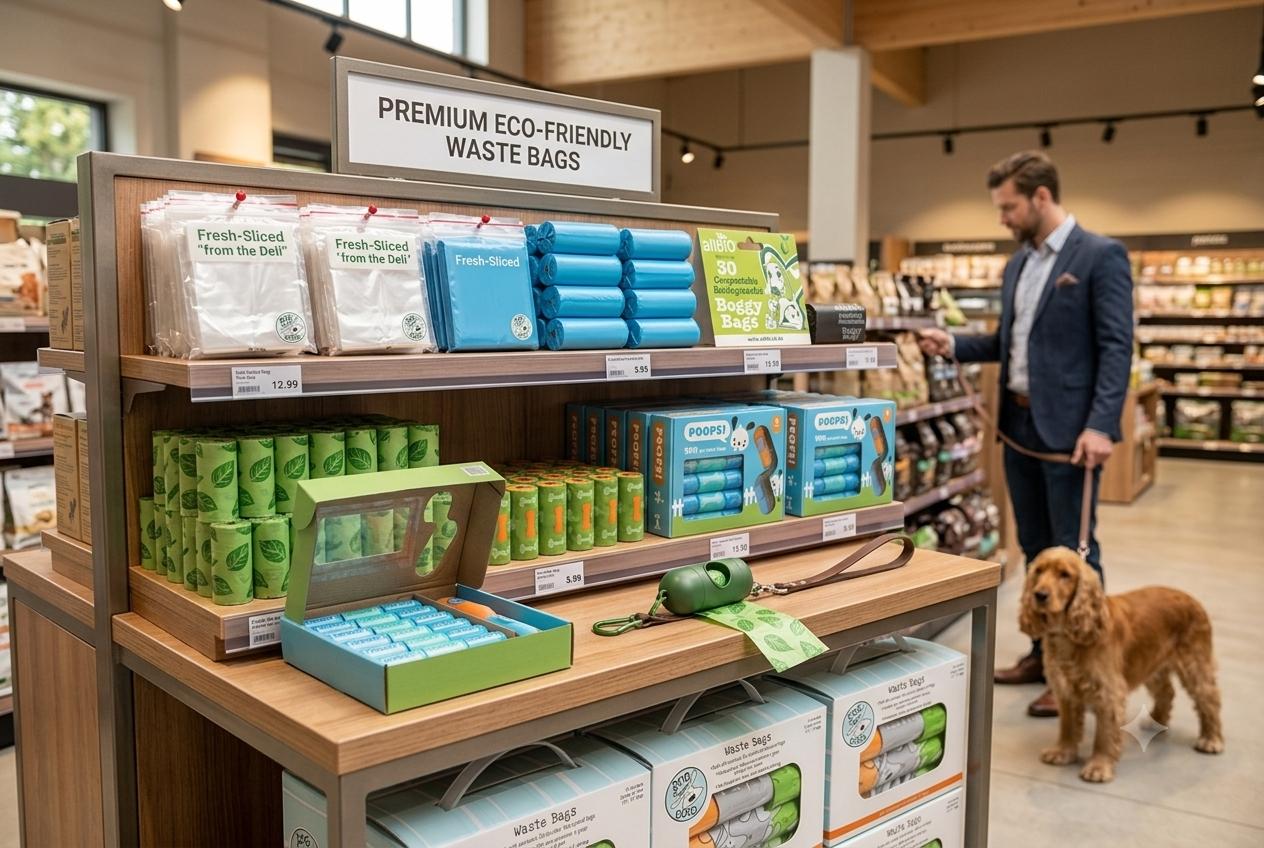
- Retail shelf single bags– short rolls or individual bags on printed header cards for peg-hook display, usually coreless, with case packs shrink-wrapped for shelf reset. Header-card sizing and print consistency across production runs affects how the display looks on shelf and how fast staff can restock without a visible mixed-batch appearance.
- Institutional bulk rolls– bulk rolls of 200 or more bags on cardboard cores sized for wall- or post-mounted dispensers at dog parks, apartment complexes, and pet waste stations, with reinforced perforation for outdoor durability and pack-out by roll-count-per-case for pallet shipping. Because these dispensers are already installed on site, any drift in core diameter or roll width can halt the whole fleet until a matching batch arrives, so every reorder needs to hold the original spec exactly.
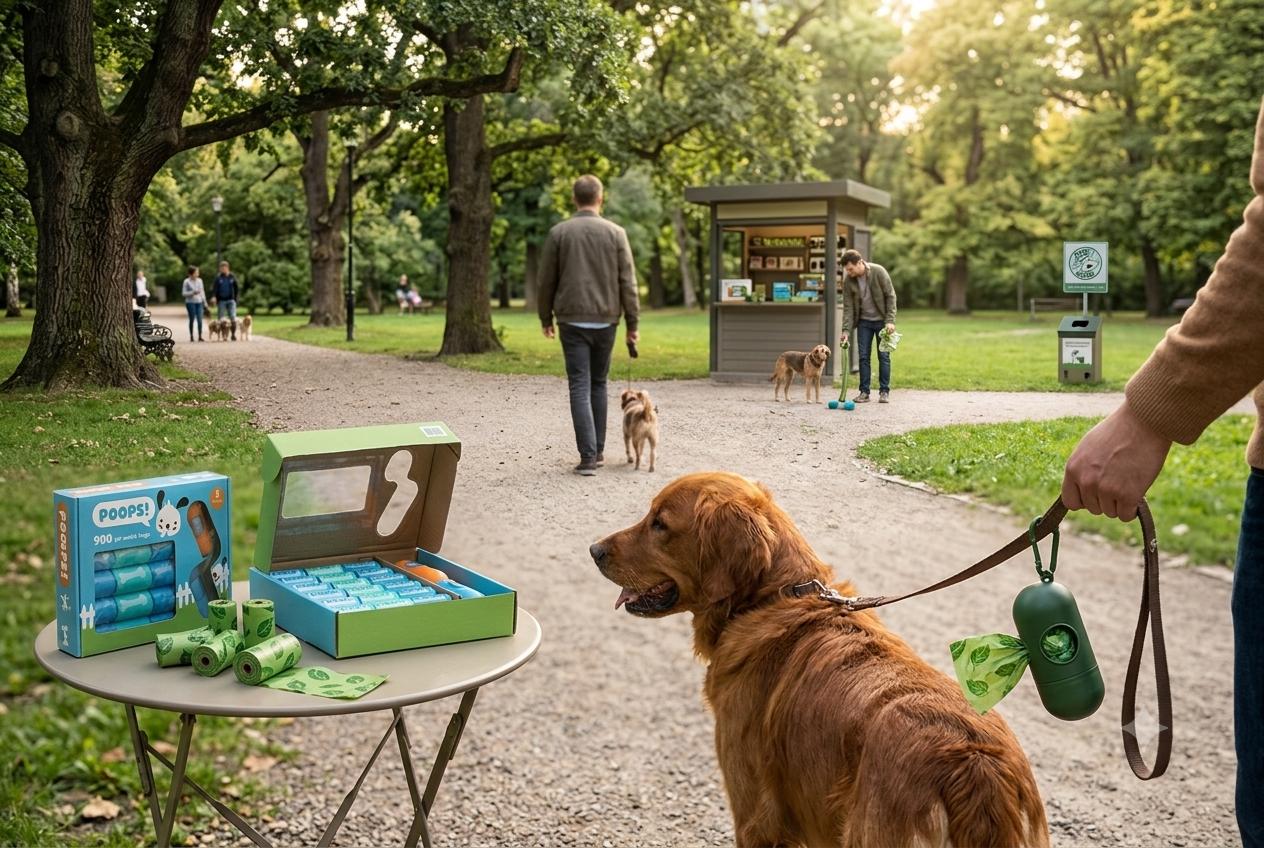
- Portable box / pocket packs (market observation)– a compact box or pouch holding a folded, coreless stack of individually perforated bags sized for pocket or bag carry rather than dispenser mounting, typically packed in small window-box or blister units suited to retail impulse or DTC/online channels. This format has spread widely since it was popularized in Japan's market, where its core appeal is portability; some buyers also use similar folded-pouch formats for everyday on-the-go waste beyond pet care, though this is best treated as a market pattern worth watching rather than a habit that applies across all buyers. Restocking here tracks unit sell-through rather than roll-change cycles, so pack count per box and case configuration matter more than roll specs.
Matching format to procurement scenario upfront — rather than choosing on unit price alone — reduces channel-fit mismatches, restocking friction, and rework once a production run is already underway.
Quality Factors That Drive Complaints, Returns, and Reorder Risk
Beyond format, the actual material performance is what determines whether customers come back. A dependable pet waste bag should hold up under basic real-world stress -
|
Quality Factor |
Procurement Consequences |
|
Film thickness |
Complaints/returns caused by tearing or leakage |
|
Bag size |
Coverage complaints and SKU inconsistency |
|
Sealing strength |
Leakage claims and returns |
|
Perforation/roll design |
Dispensing and roll-change efficiency |
|
Material type |
Claim compliance and disposal-route risk |
PLA/biodegradable film is the primary material direction, with HDPE as a secondary, lower-cost option — each requiring different disposal claims. PLA needs industrial composting (controlled heat, moisture, microbes) and won't reliably break down in home compost, landfill, or standard recycling, so labeling should say "industrially compostable" rather than unqualified "eco-friendly." HDPE carries no compostability claim; once soiled, it belongs in general trash, not recycling. Buyers should confirm local disposal infrastructure before approving either claim.
Retailers sourcing from dog poop bags suppliers should run a documented sample test before committing to bulk orders, since inconsistent quality is one of the most common complaints in this category — checking measured size and thickness against tolerance, full-load lift and drop resistance, seam seal and leak-proofing, and clean perforation tear-off, with results recorded against set acceptance criteria rather than judged by feel.
Private Labeling - Turning a Basic Product Into a Branded One
Custom pet waste bags earn shelf attention through packaging, not just a logo — a printed retail box or header card helps shoppers spot the product and drives purchase decisions, while sharp multi-color printing signals quality before the pack is opened. Buyers can request portable cases/dispenser shells, retail boxes or header cards, print colors and coverage (including complex multi-color designs), roll count, and core or coreless construction. A well-made carrying case also works for everyday on-the-go trash beyond pet use, letting the same SKU reach non-pet shoppers — turning a plain consumable into a displayable, repeat-purchase retail item.
Questions to Ask Before Selecting a Manufacturer
Before placing a bulk order, it's worth getting clear answers on a few key points -
- Can they maintain consistent thickness across large production runs?
- What are their minimum order quantities for wholesale dog waste bags?
- Do they support custom printing or private label packaging?
- What's their typical lead time for reorders?
- Can they provide samples before a full production commitment?
Compare suppliers by approved specifications, sample-test results, QC records, pack-out consistency, and documented reorder lead times—not by general assurances alone.
How Huayue Group Supports This Category
Buyers sourcing custom pet waste bags need a supplier who can align on material positioning (PLA vs. HDPE with correct disposal claims), hold size/thickness/roll specs steady across repeat runs, and support portable-case packaging plus shelf-differentiating print — not just quote a per-unit price.
Huayue Group can produce custom boxes and cases and supports complex multi-color printing across those packaging formats, covering both the portable-carry format and retail box/header-card display needs. For orders at this stage, buyers should confirm with Huayue directly on material certifications, achievable color count/coverage per format, sample turnaround, MOQ by format, and QC/inspection records, so evaluation is based on documented specs rather than general assurances.
Getting these points right is what lets a retailer differentiate on shelf, convert a browsing customer into a buyer, and avoid the reorder mismatches and complaints that come from spec drift between production runs.
Final Takeaway
Pet waste bags might look like a simple everyday item, but format, durability, and branding options all shape how well a product performs on the shelf and in daily use. Whether sourcing standard rolls or exploring custom pet waste bags for brand visibility, working with a manufacturer among pet products suppliers that understands these details matters.
Send your required bag size, PLA/biodegradable or HDPE material option, thickness, bags per roll, core/dispenser specification, print colors and coverage/artwork, retail box or other casing/pack-out requirements, order quantity or monthly forecast, destination market, sample needs, and target delivery date for sample review and quotation.
Packing Solutions
Related Products

Tel: +86 18019228135
E-mail: alfredren@huayuepack.com
Address: No.228 ZhaiXing Rd, XinSheng Industrial zone, ZheLin Town, FengXian District, ShangHai, China.

Copyright © 2026 Huayue Group Plastic Packaging Manufacturers
