
 English
 Español
The Ultimate Guide to Air Inflatable Bags - Air Column Protection, Applications & Sourcing
What Are Air Inflatable Bags?
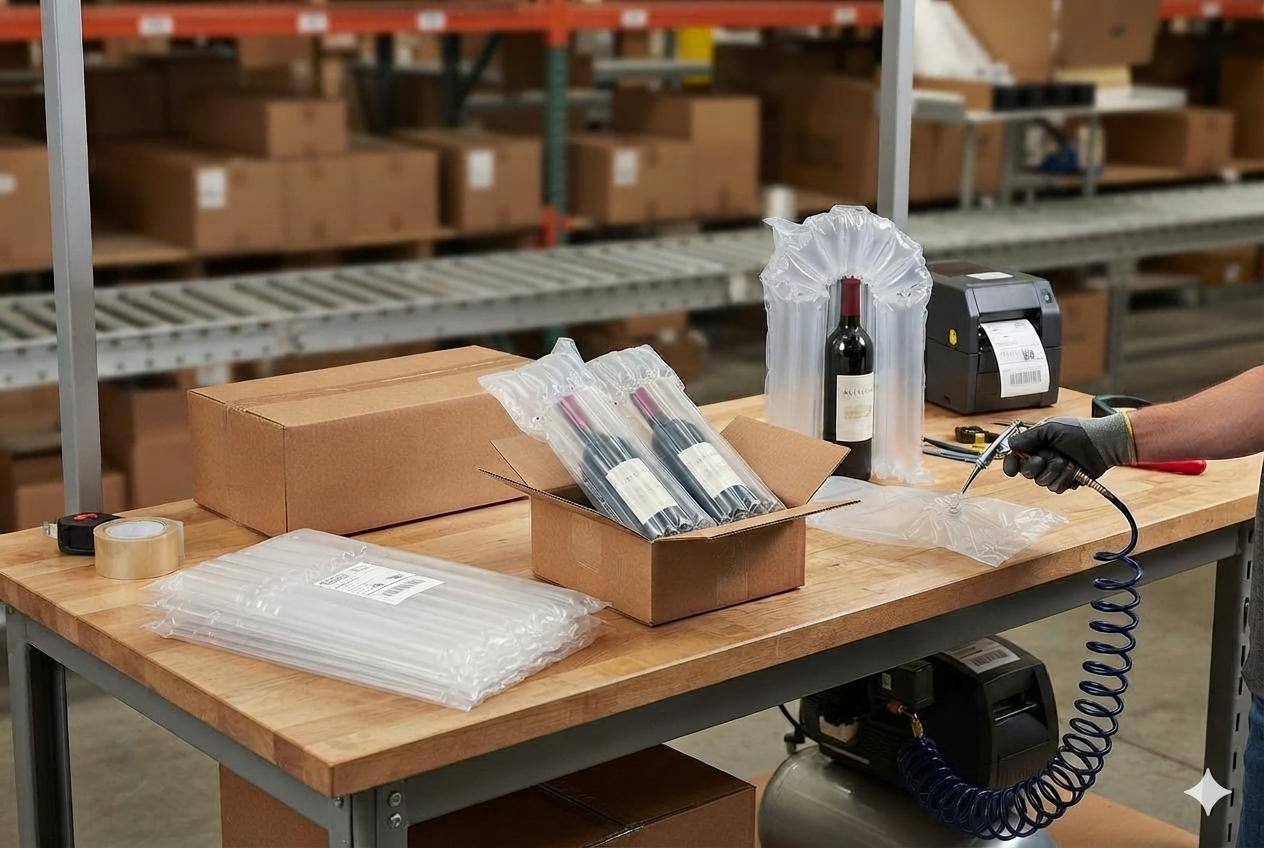
Air inflatable bags are protective packaging cushions made from durable plastic film, formed into connected air columns or multiple independent air chambers and inflated on demand right before packing. Because each column or chamber holds air independently, a single puncture won't collapse the whole cushion — the surrounding chambers still provide protection, which is why this structure works well for products needing sustained cushioning against drops, vibration, and pressure changes in transit. Compared to foam or paper filling, they also save storage space (shipped uninflated as flat rolls), reduce shipping weight, and cut down on material waste — which is why more companies are switching to them.
Why Businesses Choose Air Inflatable Bags
Cost is usually the starting point. Air columns are priced by film weight and roll length rather than finished cushion volume, so protection costs typically run lower than molded foam once packing volume is factored in — and because bags ship flat and uninflated, a pallet of rolled film takes far less truck or container space than an equivalent volume of pre-formed foam, which matters most for businesses paying dimensional-weight freight rates.
Storage follows the same logic - uninflated rolls stack on standard shelving instead of requiring a dedicated foam-inventory room, letting seasonal sellers stock up ahead of peak periods without renting extra warehouse space.
Fit is where customization pays off. Film thickness (commonly 60–120 microns for standard use, heavier for automotive or industrial parts), chamber width, and column length can all be adjusted so the bag conforms to irregular shapes — a lamp base, a bottle neck, a circuit board edge — without needing a new mold for every product variant, which also shortens lead time when packaging specs change.
On the shop floor, a single operator with a compact air pump or inflation machine can typically inflate and seal a bag in a few seconds, cutting the per-package labor time compared to fitting and taping foam inserts by hand.
Common Applications
Air inflatable bags deliver the most value where breakage risk and per-unit product value are both high — where a failed shipment costs far more than the packaging.
Glassware and wine bottles – Bottles, stemware, and ceramic tableware break from small drops. Column layout depends on bottle size - standard 750ml wine bottles typically use a wrap-around sleeve isolating each bottle from its neighbors, while stemware needs a taller, narrower column supporting the stem separately from the bowl. Bags are inflated at the packing station just before boxing. Given tight breakage tolerances, request a fitted sample built to the exact bottle dimensions and run a drop test at target carton weight before committing to production.
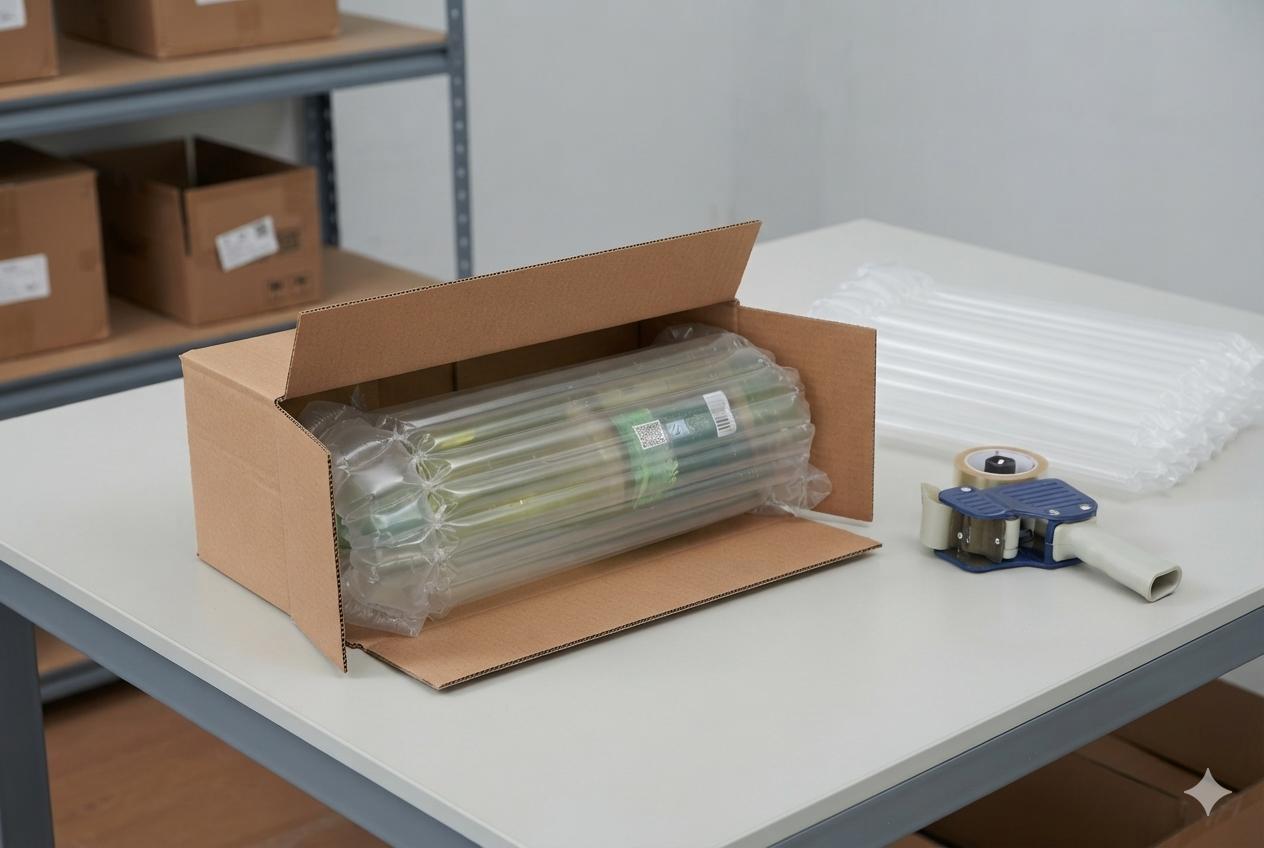
Electronics – Devices must stay centered to prevent screen damage. Column size and layout scale to the unit's outer dimensions and weight; heavier items (e.g., monitors) require denser 4-5cm columns to prevent settling. Inflate on the packing line pre-insertion using automated machines or Q-valve compressors. Validate fitted samples at actual box weights, conduct altitude pressure tests, and run carrier-specific drop tests.
Cosmetics – Multi-chamber bags are cut to specific container dimensions and weights, with offshoot chambers protecting irregular caps. To prevent over-inflation of these delicate sections, bags are inflated at the kitting station using low-pressure precision hand nozzles. Provide suppliers with full product-mix specs, and validate fitted samples across the heaviest/lightest items via drop and burst tests before bulk production.
Choosing the Right Air Inflatable Bags Manufacturers & Custom Solutions
When evaluating air inflatable bags manufacturers, judge them on four product-specific criteria, not generic "quality" claims -
- Column/chamber layout matched to your product.Give the supplier your product's exact dimensions and weight and ask them to spec column width and chamber pitch accordingly — a layout built for a wine bottle won't protect a monitor corner the same way.
- Valve and inflation equipment compatibility.Confirm the valve type works with your existing air pump or inflation machine, and get target inflation pressure and per-bag fill time in writing — a mismatch means re-tooling your line, not just re-ordering bags.
- Film and seal/leak consistency.Ask for seal peel-strength data, actual film gauge tolerance, and which leak test (water immersion or pressure-decay) runs on production batches — this is what determines whether a puncture actually stays isolated in real batches.
- Sample fitting and drop/pressure test conditions.For any custom inflatable protective cushion bag, request a fitted sample at your exact carton weight, then drop-test at the height and orientation your carrier uses, locking in shared pass/fail standards before bulk production.
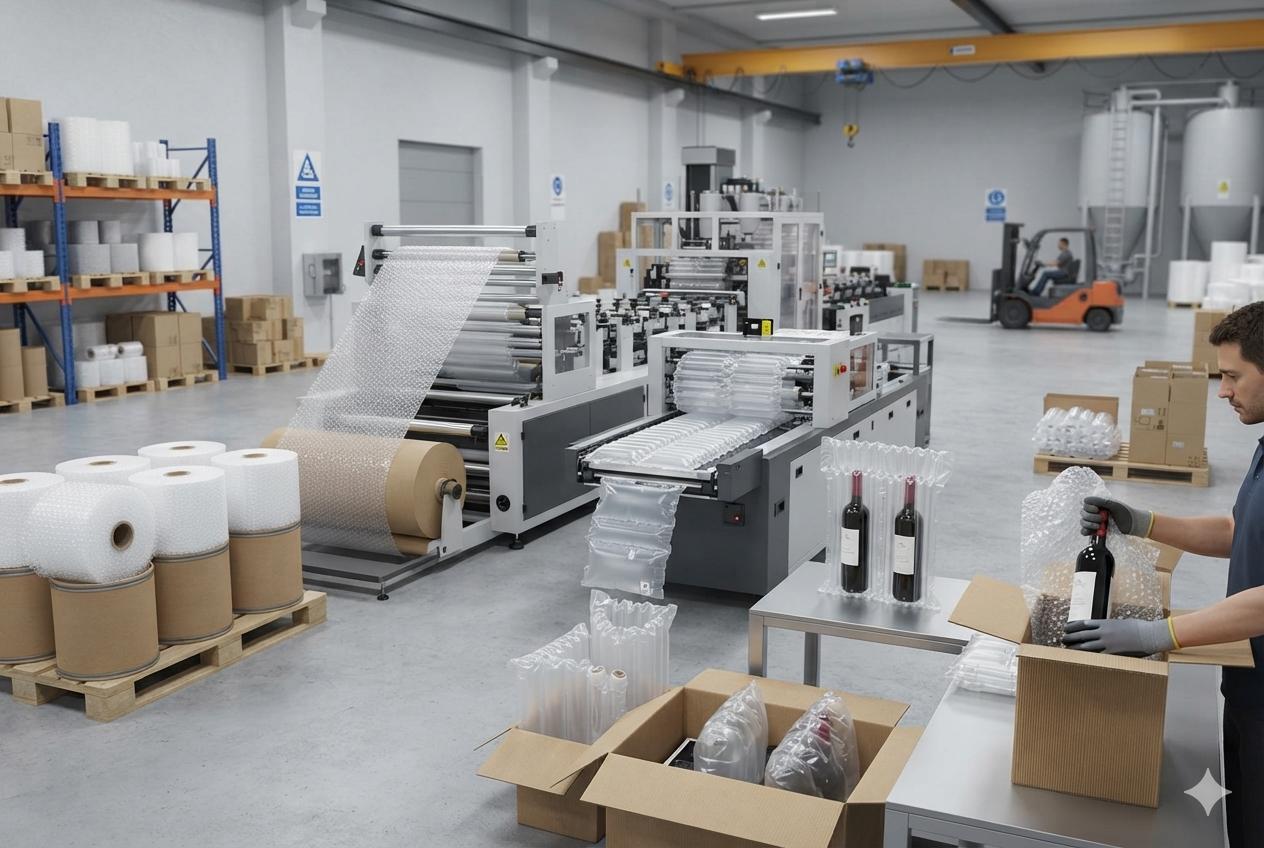
Huayue handles custom fitted-sample and large-scale wholesale air inflatable orders across 50+ countries, supported directly by New York and Hong Kong marketing centers. Air columns and multi-chamber layouts are fully customizable, utilizing adjustable-thickness PA/PE co-extruded films. The bags feature high-retention one-way valves compatible with standard automated machines and manual compressors. To guarantee reliability, Huayue provides rapid fitted-sample prototyping with in-house drop and pressure-retention testing. Dedicated production lines ensure scalable capacity, flexible MOQs, fast lead times, and export-grade QC on seal and valve integrity for every batch.
Bulk Sourcing & Supplier Proof
When comparing air inflatable bags suppliers, ask for MOQ by column width and film gauge rather than a single blanket number — pricing and minimums usually shift with bag structure, not just order volume. Get lead time in writing for both first-run production (including sample approval) and repeat orders, since these often differ by 1–2 weeks. For wholesale air inflatable bags, confirm pack-out format — roll length per case, cases per pallet — so it matches your packing-line intake, not just a total unit count. On repeat orders, ask inflatable protective cushion bag suppliers what QC checks run batch-to-batch (seal strength, film thickness, chamber count) so quality doesn't drift once you're past the initial sample approval.
Final Takeaway
Air inflatable bags offer a practical, affordable way to protect products while cutting shipping costs and material waste. To request a quote, send the product dimensions and weight, required bag or column layout, target protection or drop-test conditions, inflation method, order quantity, destination, and any logo or packaging files; request a fitted sample before bulk production.
Packing Solutions
Related Products

Tel: +86 18019228135
E-mail: alfredren@huayuepack.com
Address: No.228 ZhaiXing Rd, XinSheng Industrial zone, ZheLin Town, FengXian District, ShangHai, China.

Copyright © 2026 Huayue Group Plastic Packaging Manufacturers
