
 English
 Español
The Ultimate Guide to Biodegradable Shopping Bags - Handle Types, Materials, and Sourcing Tips
Retailers, distributors, and private-label buyers are evaluating biodegradable plastic shopping bags as alternatives to conventional polyethylene carry bags. End-of-life performance depends on the complete formulation, disposal environment, and substantiated test or certification evidence. This guide explains handle formats, material claims, sourcing checks, and quotation inputs for business buyers.
What Are Biodegradable Plastic Shopping Bags?
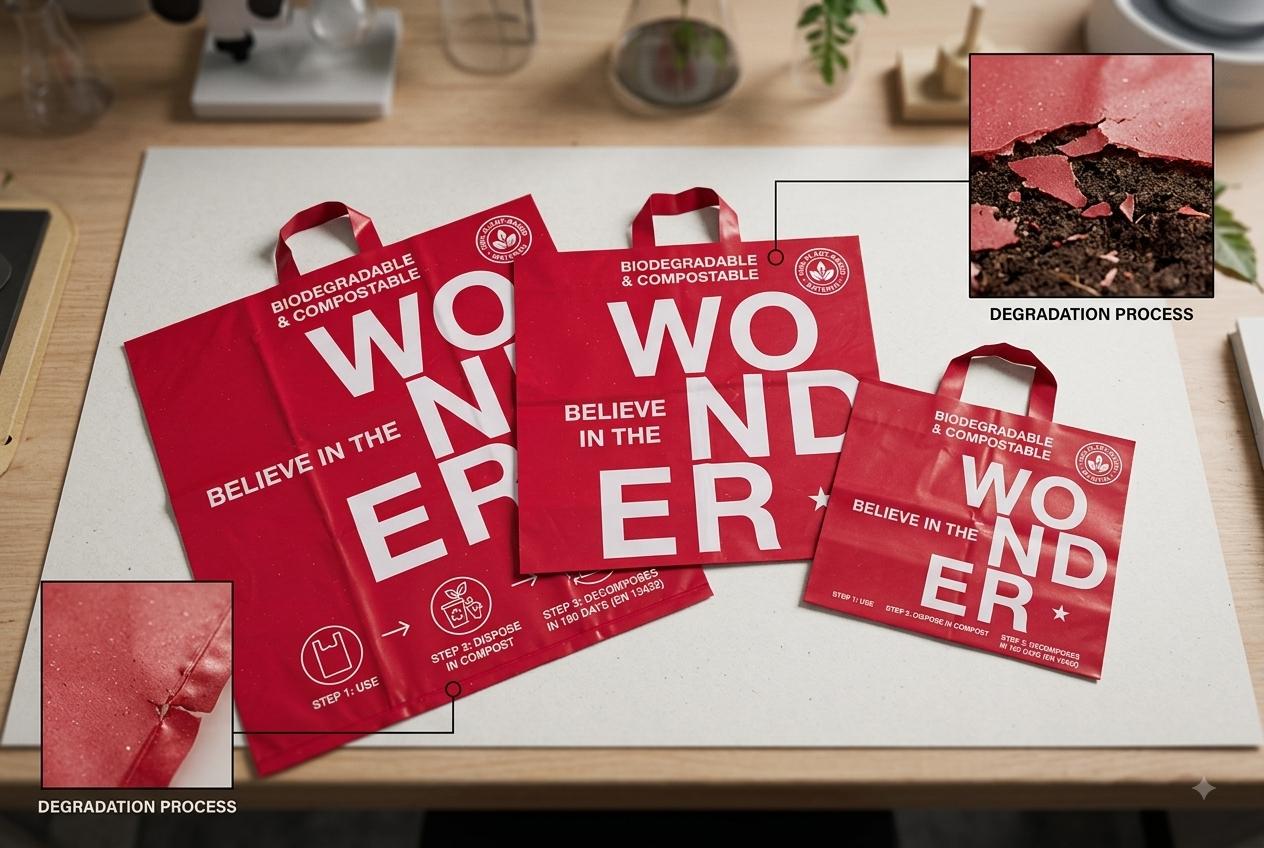
Made from a blended formulation of PLA, PBAT, and corn starch, these bags break down into water, CO2, and biomass in wet soil within roughly 6–12 months — unlike standard polyethylene, which leaves permanent microplastics behind. Certified compostable bags meet standards like EN 13432 or ASTM D6400, requiring ~90% breakdown within 180 days under industrial composting conditions (around 58°C). Biodegradable bags degrade eventually, but without a standardized test, environment, or guaranteed timeframe. Confirm which claim — and which certification report — applies before ordering.

Common Types on the Market
- Soft loop handle bags– Soft loop handle bags use a separate flexible plastic strip attached to the bag body by heat sealing or welding. This construction keeps cost low and the bag flat for easy stacking at checkout, making it a common fit for apparel stores, pharmacies, and gift shops carrying light to mid-weight items. Because the handle relies entirely on the weld bond, buyers should confirm whether it's a simple surface weld or a reinforced patch weld — the latter holds up better under repeated use and heavier fill weights.
- Hard loop handle bags– The handle is a separately formed rigid strip (often thicker-gauge PE or a molded/extruded handle), attached via plastic welding with a reinforcement patch, or riveted through the bag panel. This adds unit cost and slightly bulkier storage per bag, but the rigid handle distributes weight more evenly and resists stretching, which is why supermarkets and retailers packing heavier goods tend to specify it. Buyers should confirm the attachment method — rivets can pull through thin film under load, while a properly reinforced weld generally offers better long-term durability.
Gauge (thickness, in microns) doesn't determine load capacity or tear resistance on its own — it interacts with resin formulation, bag dimensions, gusset, bottom seal, and handle weld strength, and production tolerance around the nominal thickness matters too. RFQs should specify nominal thickness plus tolerance (e.g. "35 microns ±10%"), and samples should be tested against actual target weight and handling conditions.
Gusset design is a separate structural choice - a side or bottom gusset lets the bag expand for bulkier items without stressing the seams, and should be specified based on product volume — not folded into gauge or bag style.
Plastic Shopping Handle Bags in particular have become popular for branding, since customers tend to reuse a well-printed bag long after the purchase — effectively turning packaging into free advertising.
Why Retailers and Distributors Evaluate These Bags
- Regulatory fit varies by market. Bag type, thickness, labeling, and required certifications differ by jurisdiction, as do fee or restriction rules on conventional plastic bags. Verify these against the target market before finalizing a spec.
- Environmental claims need evidence. Terms like "biodegradable" or "compostable" in private-label or retail communication should be backed by the certification or test data covered earlier — unsubstantiated claims carry green-claim risk, including regulatory or advertising scrutiny.
- Landed cost is more than unit price. A fair comparison factors in sample performance, pack-out, freight, storage, and expected defect/replacement rates — not just the quoted per-bag price.
How to Choose the Right Supplier
Not all "biodegradable" bags are created equal, so it pays to vet Plastic Shopping Handle Bags Manufacturers carefully before committing to an order -
- Request the certification report itself, not just a claim citing a standard. Confirm it covers this specific bag and current formulation, states the applicable disposal environment, is still valid, and matches labeling requirements for the target market.
- Check whether the bags can be customizedwith your logo, colors, and size specifications — this matters if you're ordering Custom Biodegradable Plastic Shopping Bags for a retail chain or franchise.
- Compare minimum order quantities and lead times, especially if you're sourcing Wholesale Plastic Shopping Handle Bags for large-scale or recurring orders.
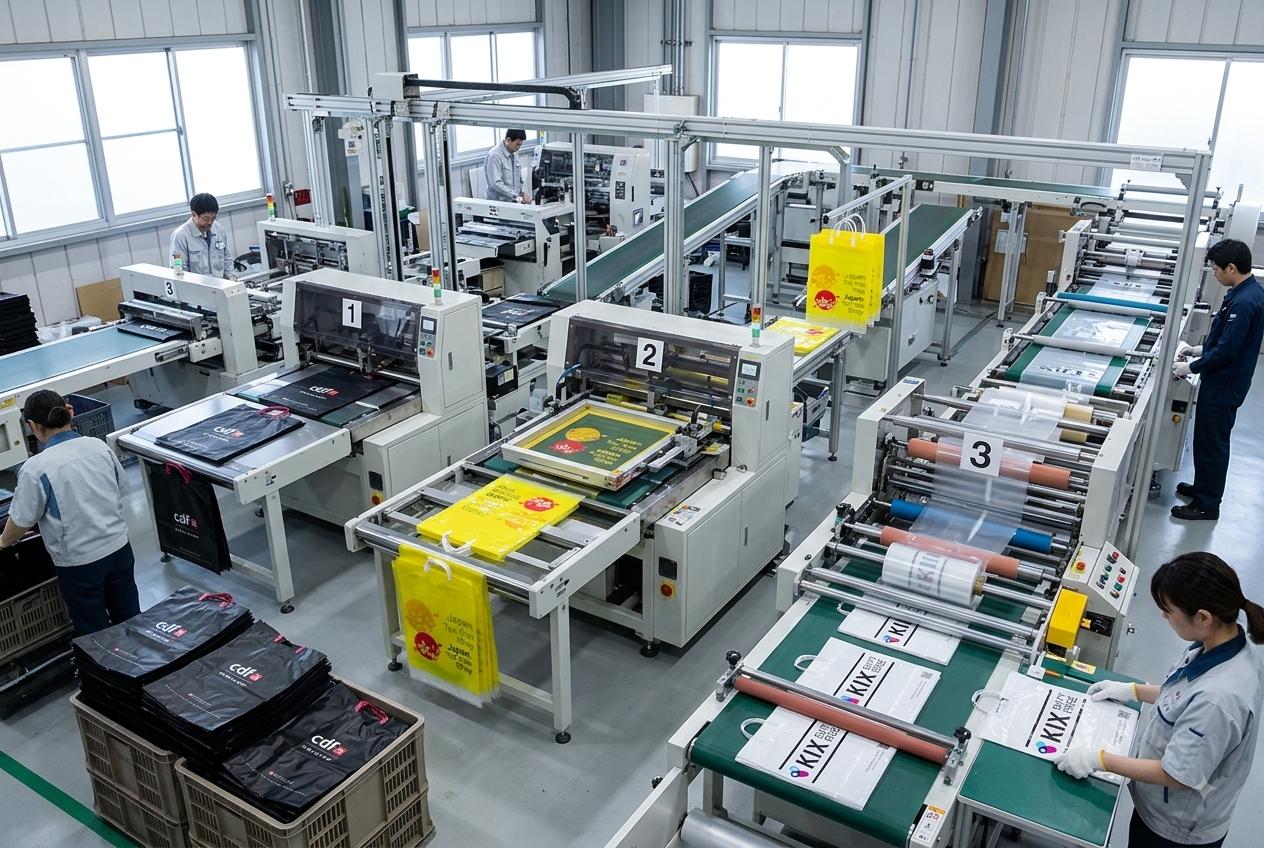
- Confirm the manufacturer has the production capacity and quality control to keep bag thickness, handle strength, and printing consistent across large batches.
This is where working with an established manufacturer makes a real difference. Founded in 1998, Huayue Group is one such trusted supplier, providing biodegradable and traditional plastic bags to clients across more than 50 countries. As one of the prominent biodegradable plastic shopping handle bags Manufacturers in the industry, they utilize verified PLA, PBAT, and corn-starch formulas to ensure reliable product quality. Moreover, Huayue Group offers full customization tailored to specific brand needs—ranging from soft and hard loop handle styles to personalized logos, packaging, and graphic designs.
Final Takeaway
Biodegradable plastic shopping bags are rapidly transitioning from a niche eco-product to an essential retail packaging solution. Whether you are sourcing Custom Biodegradable Plastic Shopping Bags or placing a Wholesale Plastic Shopping Handle Bags order, Huayue Group is equipped to deliver to your exact specifications. To request a precise quotation or sample, simply send Huayue your requirements - handle type (soft or hard loop), bag dimensions and gusset, material and certification claims, printing artwork, unit and carton pack-out, order quantity or forecast, destination market, and target schedule.
Packing Solutions
Related Products

Tel: +86 18019228135
E-mail: alfredren@huayuepack.com
Address: No.228 ZhaiXing Rd, XinSheng Industrial zone, ZheLin Town, FengXian District, ShangHai, China.

Copyright © 2026 Huayue Group Plastic Packaging Manufacturers
