
 English
 Español
Slider Bags vs Press-to-Close Bags: When Is the Slider Worth Choosing?
Pick slider food storage bags if the people using the bag struggle with press-to-close: small hands, gloves, a bag that gets opened ten times a day. If your press-to-close sample already closes without fuss, keep it.
That is really a question about hands and habits, not price, and the only way to answer it is to put finished samples of both in front of the people who will use them. The rest of this article shows how to do that in an afternoon, and what to ask your supplier before you commit.
The “Zipper bag” naming trap
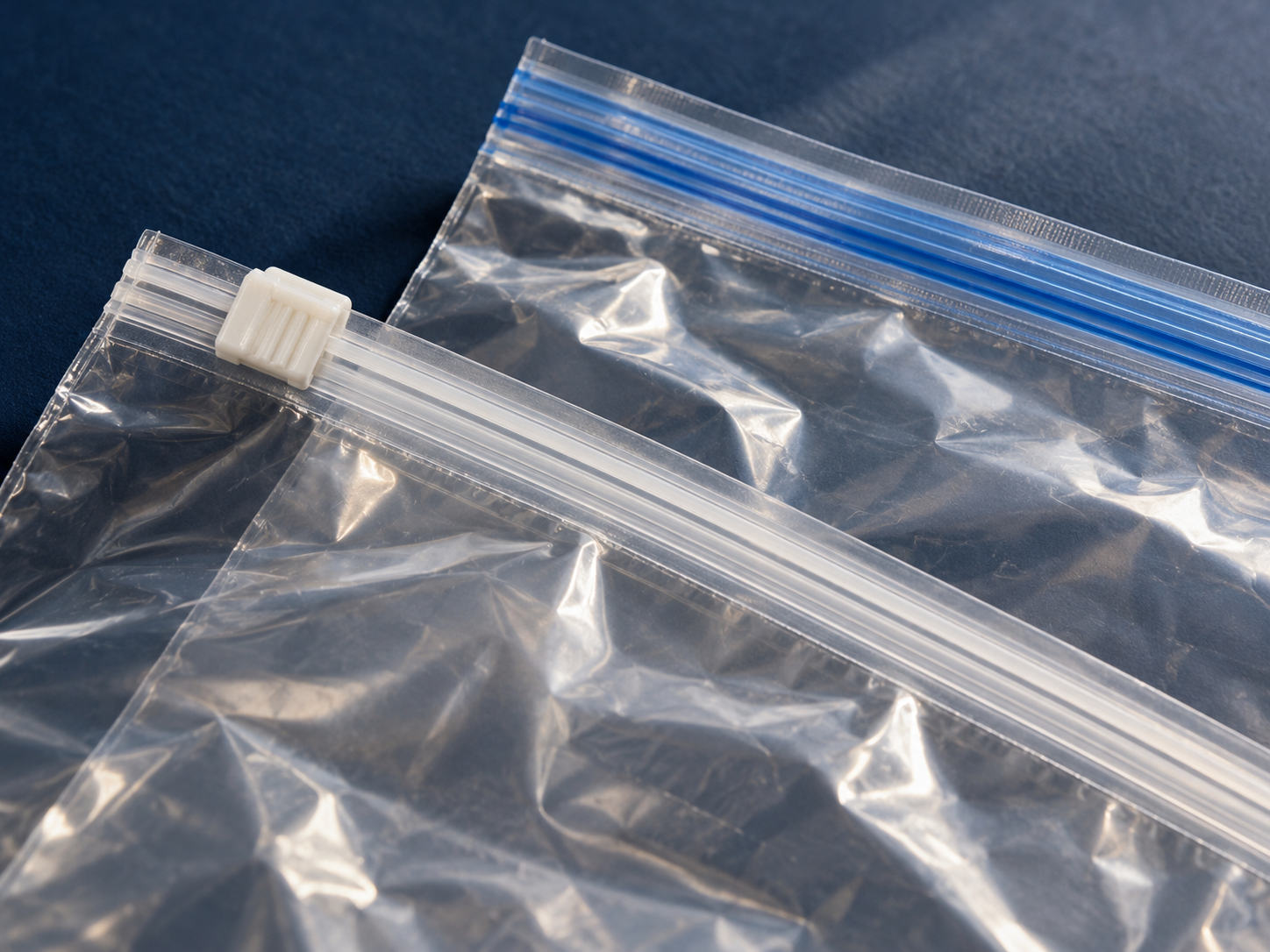
Search for slider bags vs zipper bags and you will run into a naming problem. “Zipper bag” and “zip-top bag” are loose labels that get used for both closures, because both are built on zipper structures. The split that matters is how the bag gets closed.
With a press-to-close profile, the user presses two interlocking elements together, working along the width of the bag. With a slider, a small tab rides along the track and brings the two sides together for them (IMPAK’s zipper glossary describes this mechanism difference). Huayuepack makes both: slider bags and zip seal bags.
So the useful question is not “which closure is better?” It is “can the people who will use this bag finish the closing action on the real, filled sample?” A closure name or a spec-sheet adjective can’t answer that. Only a sample in someone’s hands can.
What to watch for on each closure
These are things to look for when you hand over a sample, not claims about every product on the market.
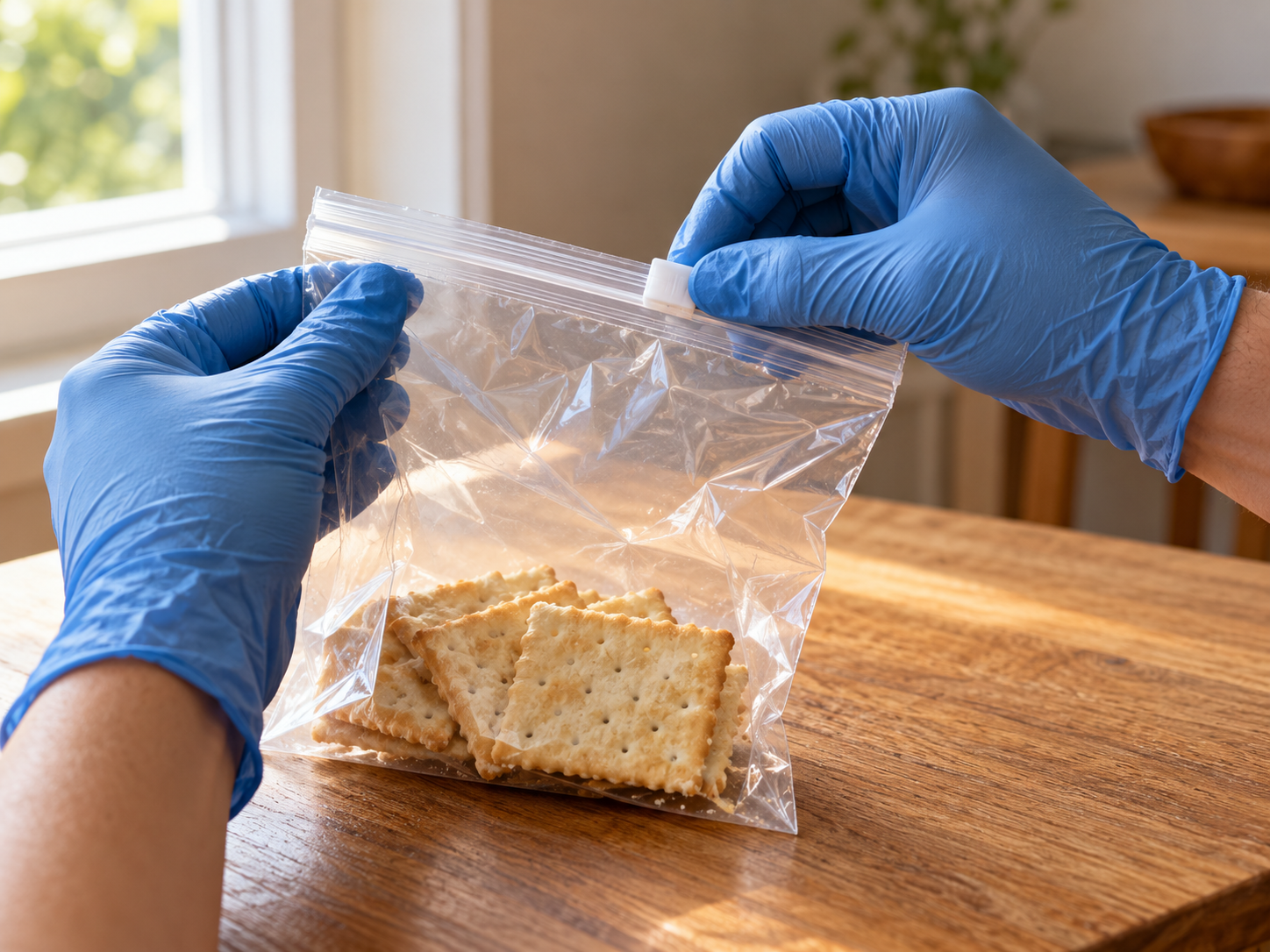
On a press-to-close bag, watch whether the user lines up the profile and presses all the way across. A bag closed with one skipped stretch looks shut and isn’t. Notice what happens with a narrow mouth, with gloves, or with hands that are busy holding the bag.
On slider food storage bags, watch the tab. Can the user find it and grab it? Does it travel smoothly the whole length? What happens at the end of the track: does it stop firmly, and can the user tell the bag is fully closed? Does closing take both hands? And because the tab and track sit in the mouth, check how much opening is left for filling.
Run the comparison
You don’t need a lab. You need matched samples, a few real users and a pencil.
- Write down the job. What goes in the bag, how much, who handles it, where, and how often it is opened.
- Get matched finished samples. Same size, same film construction, same fill, so the closure is the only thing that changes. If something can’t be held constant, write it down.
- Watch a handful of real users. Ask them to fill, close, open and reclose the way they would on the job. Watch; don’t coach.
- Count what happened. For each sample, note missed sections, retries, anyone who couldn’t finish, and how each person decided the bag was closed.
Then record one of three outcomes: slider candidate, press-to-close candidate, or neither qualified yet.
Two rules keep it honest. First, a sample that fails an essential task is out, however good it looks elsewhere. A pleasant opening can’t rescue a closure the user can’t finish. Second, if both samples pass and nobody shows a handling difficulty with press-to-close, you have no handling reason to pay for a slider. Compare quotes on the same quantity and decide on commercial grounds.
The same comparison as a quick checklist
|
What you’re testing |
On the slider |
On the press-to-close |
|
Opening and reclosing |
Does the user handle the tab reliably, and does it fix a difficulty you saw with the other sample? |
Does the user align and close the full width reliably? Frequent use alone doesn’t rule it out. |
|
Grip and hand conditions |
Can the intended user grip and move this tab? Test with gloves if gloves apply. |
Can the intended user align and press this profile? Test with gloves if gloves apply. |
|
Filling and usable opening |
How much mouth is left with the tab and track in place? |
How much mouth and gripping area is left above the profile? |
|
Knowing it’s closed |
How does this design show the end of travel, and do users trust it? |
How do users check the full width? |
Don’t infer anything from age or from a closure label. Use the hand conditions that really apply to your users.
A made-up example: the dry-snack bag
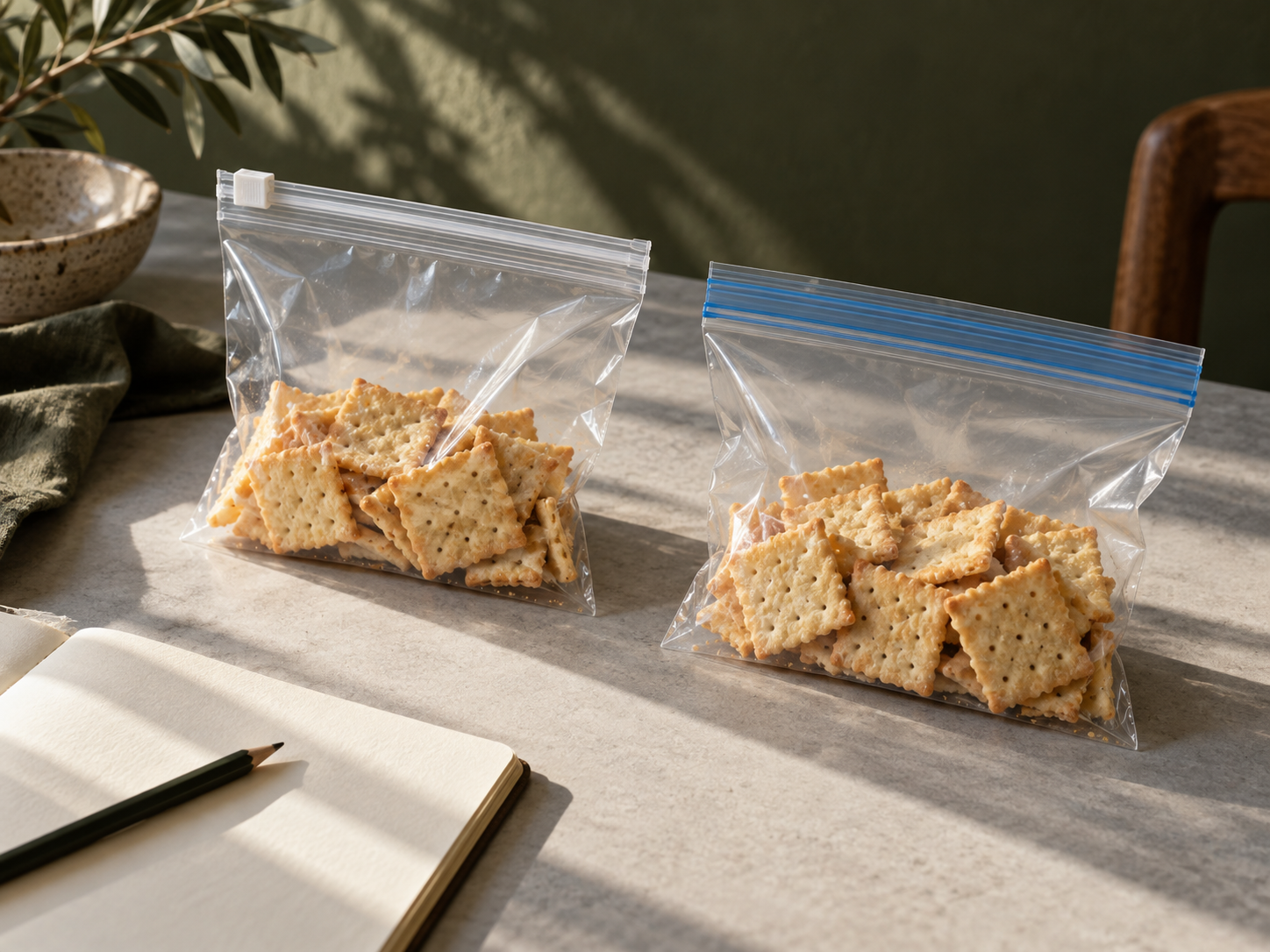
A distributor wants one closure for a dry-snack storage bag that households will open and close repeatedly at room temperature. They get finished samples of both closures with the same size, film and fill, and let five people from their target group use them. The numbers below are invented to show how the decision falls out. They are not test data.
- Three of five people skip a stretch on the press-to-close bag, and all five close the slider cleanly. The slider goes on the shortlist, because it fixes a problem the team actually saw.
- All five close both bags fine. There is no handling reason to pay for a slider. Keep press-to-close and compare quotes.
- Two people can’t manage either one. Don’t force a choice. Look at the bag’s size, its opening or the profile before choosing again.
Questions to ask your supplier
Bring these to the specification conversation:
- Which slider or profile is on this exact bag, and will production use the same one as the sample?
- Can you send finished samples of both closures in the same size and film, so only the closure differs?
- How wide is the usable opening with the closure in place?
- How does the slider end, what stops it, and how can a user tell the bag is fully closed?
- If I need liquid containment, airtightness, food-contact suitability or freezer use, has this exact finished bag been checked for it, and under what conditions?
- Does choosing custom slider bags change the sampling time, minimum order or lead time?
- Can you quote both versions for the same quantity?
Take it to a specification review
To talk through slider food storage bags for your program, contact Huayuepack or email alfredren@huayuepack.com. Send the contents and fill amount, who will use the bag and how, the bag dimensions or a current sample, and your destination market.
Packing Solutions
Related Products

Tel: +86 18019228135
E-mail: alfredren@huayuepack.com
Address: No.228 ZhaiXing Rd, XinSheng Industrial zone, ZheLin Town, FengXian District, ShangHai, China.

Copyright © 2026 Huayue Group Plastic Packaging Manufacturers
