
 English
 Español
Why Do Zip-Seal or Slider Bags Stop Closing Properly?
“The bag won’t close” is one complaint hiding at least five different problems. Maybe the zipper never engages. Maybe it closes halfway and quits. Maybe it shuts fine and pops open on the shelf, or the slider comes off in someone’s hand, or the bag looks sealed and still leaks. Each one points to a different cause, and to a different conversation with your supplier.
This guide to zip seal bags and slider bags goes through the usual causes by symptom, shows what to record before anyone touches the sample, and covers what to settle in the spec before your next order.
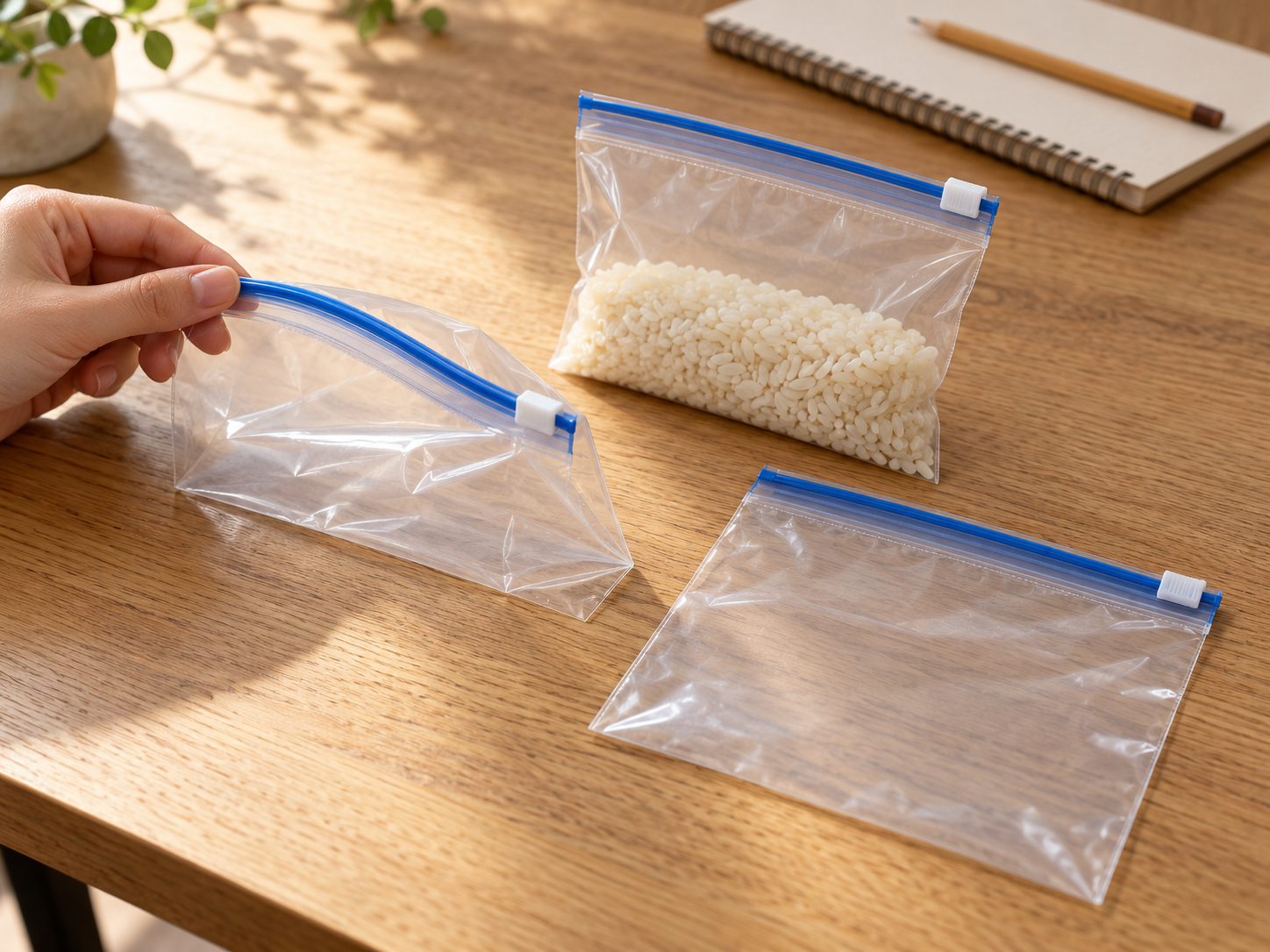
Two terms first. Zip-seal here means a press-to-close zipper you pinch shut along its length. Slider means a zipper track closed with a slider. Exact designs vary from one supplier to the next, so always name the specific closure you approved.
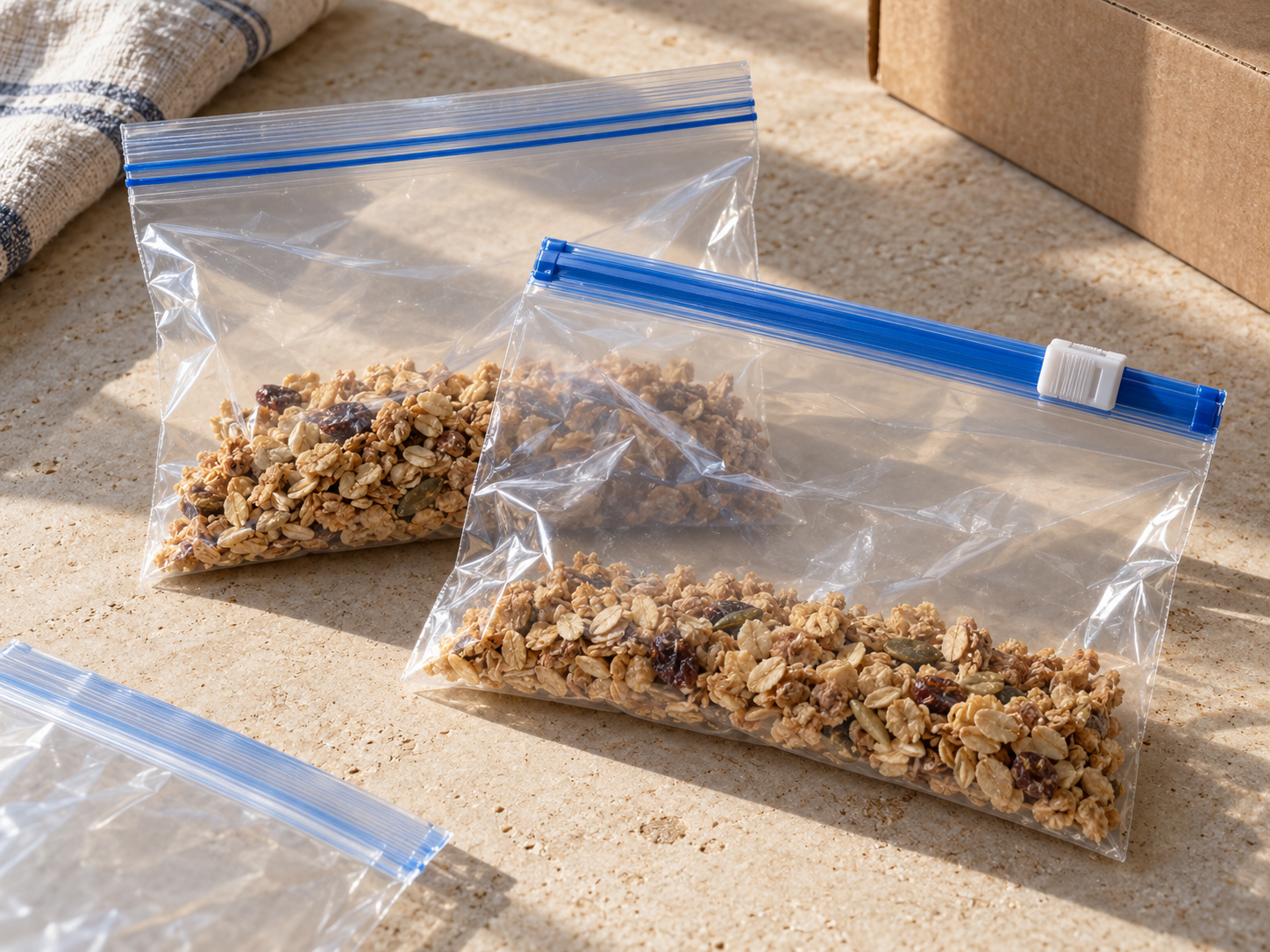
First, work out when it went wrong
The most useful single fact is when the bag first misbehaved:
- Empty, straight from the carton: the problem was built in at bag making.
- After filling: look at what went in, how much, and how it was filled.
- After storage or shipping: look at temperature, stacking and handling.
- After the customer opened and reclosed it a few times: look at wear, or a closure that isn’t strong enough for the job.
If you don’t know, write “unknown.” An honest blank is more useful to a supplier than a guess.
Five symptoms and what usually sits behind them
1. The empty bag won’t close, or fails at the same spot every time
Think manufacturing. The two halves of the zipper profile may be misaligned, so the ribs and grooves never meet. Or a stretch of the profile was squashed or stretched during bag making. Look at where it fails. If it’s always the same place on several bags (an end, a corner, a certain point along the length), that points to the machine, not to how the bag was used.
What to do: photograph both sides and both ends, keep an unused bag from the same lot, and ask the supplier to compare it with the approved closure sample.
2. It closed fine empty, but won’t close after filling
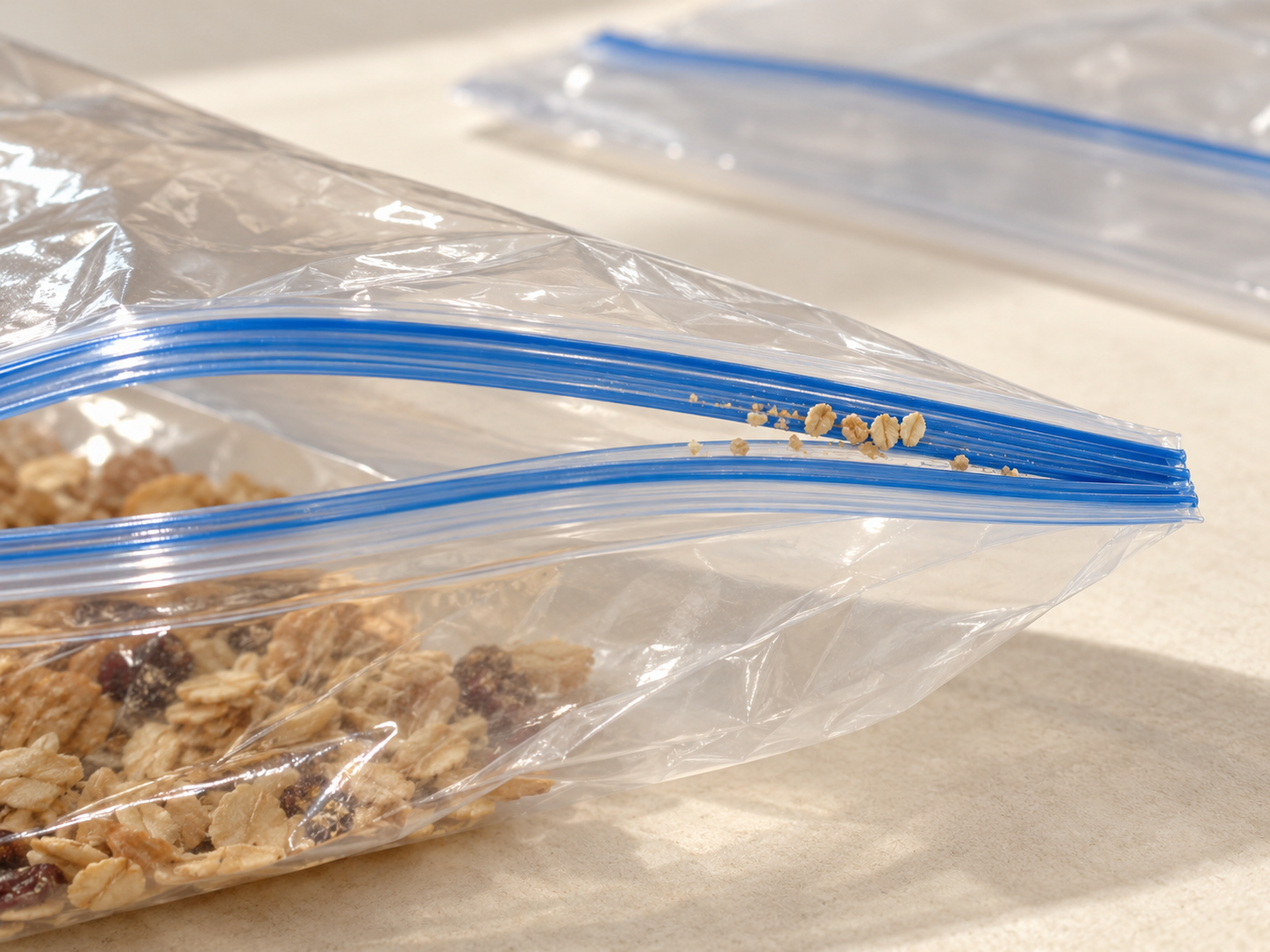
The usual suspect is product in the track. Powder, crumbs, oil, sugar or sauce landing between the ribs stops them from seating. It often happens at the filling step, when product dusts or splashes onto the bag mouth. A mouth that got stretched or wrinkled during filling can do the same.
What to do: photograph the residue before you wipe anything, because wiping destroys the evidence. Note what’s in the bag and how it’s filled (by hand, scoop, auger, and how the mouth is held open). Then ask the packer and the bag maker how product is getting into the closure.
3. The slider jams, skips or comes off
A slider is matched to a specific track. If the slider and track don’t match, or the end stops that hold the slider in place are weak or damaged, you get jamming, skipping, or a slider that slides right off the end. Forcing it makes things worse and wipes out the evidence.
What to do: keep any loose parts and show where the slider stops, without forcing it. Ask your slider bag supplier to confirm that the slider, track and end stops are the matched set in your specification.
4. It closes, then pops open later
A press-to-close zipper has limits. A heavy or overfilled bag pulls hard on the mouth. Heat can soften the closure, and cold can stiffen it so it never fully seats. A closure that’s too light for the contents will give way under their weight. Sometimes the profile was simply damaged during handling.
What to do: record the fill amount, how the bag was handled and stored, and the temperatures it met. Then ask which closure and fill level suit the way the bag will really be used.
5. It looks closed, but leaks
First find where the leak actually is. It could be the zipper, but it could also be where the side seals cross the zipper, the point where the zipper is attached to the film, another seam, or a pinhole in the film. On slider bags, the area around the slider and the ends of the track deserve a close look.
One thing to know up front: standard zip-seal and slider closures on resealable plastic bags are made for reclosing, not for a guaranteed airtight or liquid-tight seal. If you need that, put it in the specification and agree a leak test for the exact finished bag.
What to do: mark where you saw the leak on a photo, or write “not located.”
The two-minute record
Before you email anyone, write down:
- Bag and lot: SKU, lot or carton number, closure type, and the specification or closure revision if you have it.
- Symptom and timing: which of the five above, and when it first appeared.
- Location: marked on a photo (left end, middle, right end, full length).
- Contents and conditions: what’s in the bag, fill amount, how it was filled, and how it was stored, handled and at what temperature.
- Numbers: how many bags were affected out of how many you checked, and how you picked them.
- What you’ve already tried: wiping, forcing, reclosing. Ideally, nothing yet.
If you can, keep three samples and label each one: an affected bag, a bag that works, and an unused bag from the same carton. Photograph all three before cleaning or retrying anything.
A worked example
A private-label slider bag. It closes fine empty. After filling with dry granules, a short section near the left end stays open, and granules are visible in the track. The record reads:
Closure: slider bag, SKU and lot as printed on the carton. Symptom: about 4 cm at the left end won’t close. First seen: after filling. Contents: dry granules, 500 g, filled by scoop. Residue in track: yes (photo 3). Affected: 6 of 20 checked, taken from the first carton opened. Already tried: nothing; samples untouched. Comparison: unused bag from the same carton closes normally.
Question for packer and bag maker: how are granules getting into the track during filling, and how should we check for it?
That takes a few minutes to write, and it gives the supplier something to act on straight away.
Settle it in the spec, not in the complaint
Most closure problems with zip seal bags are cheaper to prevent than to investigate. Before you approve the next sample or reorder, match the closure to the contents. These are starting points for the conversation, and the right answer depends on your exact product and bag:
|
Contents |
Main risk |
Raise with the supplier |
|
Dry, free-flowing (snacks, granola) |
Light load; wear from repeated use |
Standard zip-seal is often fine; agree how many recloses real use involves |
|
Fine powder (flour, spices, supplements) |
Dust in the track |
A closure designed to resist powder, and a filling method that keeps the mouth clean |
|
Oily, sticky or wet (nuts, sauces, marinated food) |
Residue; leaks |
How residue will be controlled, whether a closure alone can contain the product, and an agreed leak check |
|
Heavy (pet food, rice) |
Load pulling on the mouth |
Closure strength, fill level and headspace |
|
Hot or cold supply chain |
Closure stiffens or softens |
Testing at the temperatures the bag will actually meet |
Then write the rest down:
- Name the exact closure (profile or track, and slider reference, plus the revision), so “the zipper” can’t quietly change between orders.
- Agree the checks, using your real product: reclose cycles that match real use; a fill-and-hold check at your real fill weight, stored and handled the way your supply chain will treat it; and a leak check if leaks matter.
- Say who owns what: the bag maker for the closure and conversion, the packer for filling.
- Ask what gets re-checked if the closure or bag size changes.
What this record can and can’t do
A good record gets you to the right question quickly. It won’t prove the root cause, and a closure that clicks or a slider that reaches the end of its travel tells you nothing about airtightness, liquid containment, food-contact suitability or shelf life. Those need proper testing agreed with your supplier for the finished bag.
Send the record, not a guess
If you’re choosing or reviewing a closure, start with Huayue’s zip seal bags and custom slider bags. To discuss a specification or have samples looked at, use the Huayue contact page or write to alfredren@huayuepack.com with:
- Closure type and bag or specification reference
- Marked photos or video of the affected and working samples
- Contents, fill, use conditions and when it first failed
- Lot or carton reference, and affected and examined counts if you have them
You don’t need every field first. Send what you have.
Packing Solutions
Related Products

Tel: +86 18019228135
E-mail: alfredren@huayuepack.com
Address: No.228 ZhaiXing Rd, XinSheng Industrial zone, ZheLin Town, FengXian District, ShangHai, China.

Copyright © 2026 Huayue Group Plastic Packaging Manufacturers
