
 English
 Español
Flexo vs Gravure Printing for Custom Printed Plastic Bags: Which One Fits Your Order?
Two quotes land in your inbox, one for flexo and one for gravure. The numbers are far apart and you can't tell why.
Often the print process isn't the reason. One quote assumed a slightly different film. Another assumed a different order plan, or treated your color reference as "close enough." Once the inputs differ, the two prices can't be compared.
For custom printed plastic bags, the short answer has two parts. First, there is a general tendency: gravure usually pays off on large, stable, long-running designs, and flexo usually fits shorter runs, many SKUs, and artwork that changes. Second, your own quantity and how often the design changes decide it, so give both routes the same brief and compare what comes back.
What actually differs
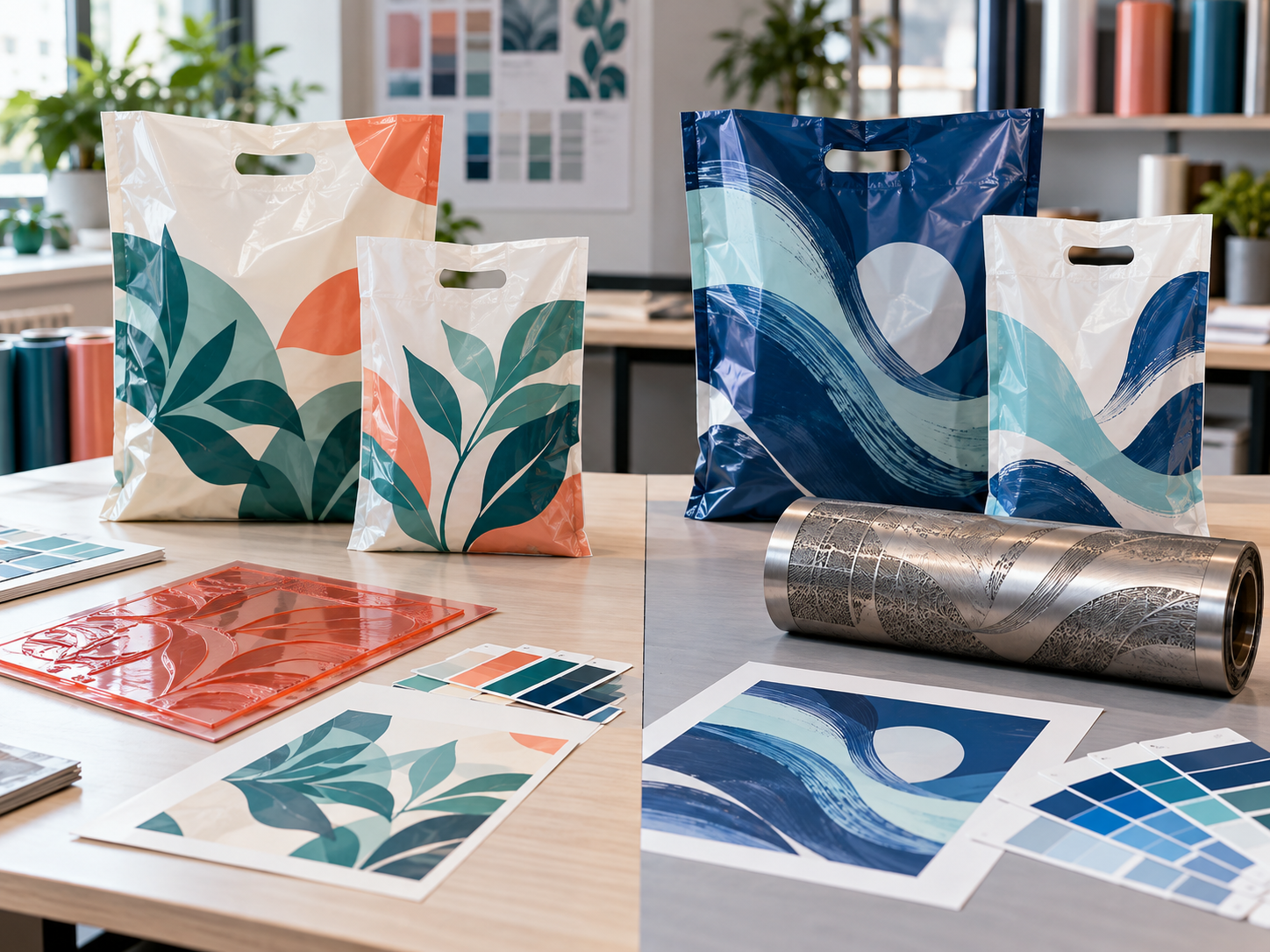
Flexographic printing uses a raised plate. Gravure printing uses a metal cylinder with the image engraved into it. For a buyer, that difference shows up in three places.
|
|
Flexo |
Gravure |
|
Upfront tooling |
Plates, generally cheaper to make. Engraved cylinders can cost 3x to 5x more per color than flexo plates. |
Engraved cylinders, generally more expensive to make |
|
Changing the artwork |
Make a new plate. Usually quicker and cheaper |
Re-engrave or replace the cylinder. Usually slower and costlier |
|
Tool life on repeat orders |
Plates can be stored and reused, but typically wear sooner |
Cylinders last a long time, so big repeat orders spread the tooling cost thin |
|
Fine detail and gradients |
Good, and modern plates have improved a lot |
Often very strong on fine detail and smooth gradients |
|
Usual best fit |
Shorter runs, many SKUs, designs that may change |
Long runs, stable designs, high volume |
Where the rule of thumb breaks
- Your forecast is uncertain. Gravure looks cheap per bag at high volume, but if the first run is small or the design might change, the cylinder cost lands on too few bags.
- Color is critical. Both processes can hit a target color, but the film, the ink and, for flexo, the anilox roll (the roller that meters ink onto the plate) all affect the result. Bring a physical color reference, not just a screen file.
- The film is unusual. Not every film prints equally well on both routes. Name the exact film when you ask for quotes.
- The bag format matters. T-shirt bags, soft-loop-handle bags and die-cut-handle bags are converted differently. Ask which route the converter normally runs for your format.
Send both routes the same brief
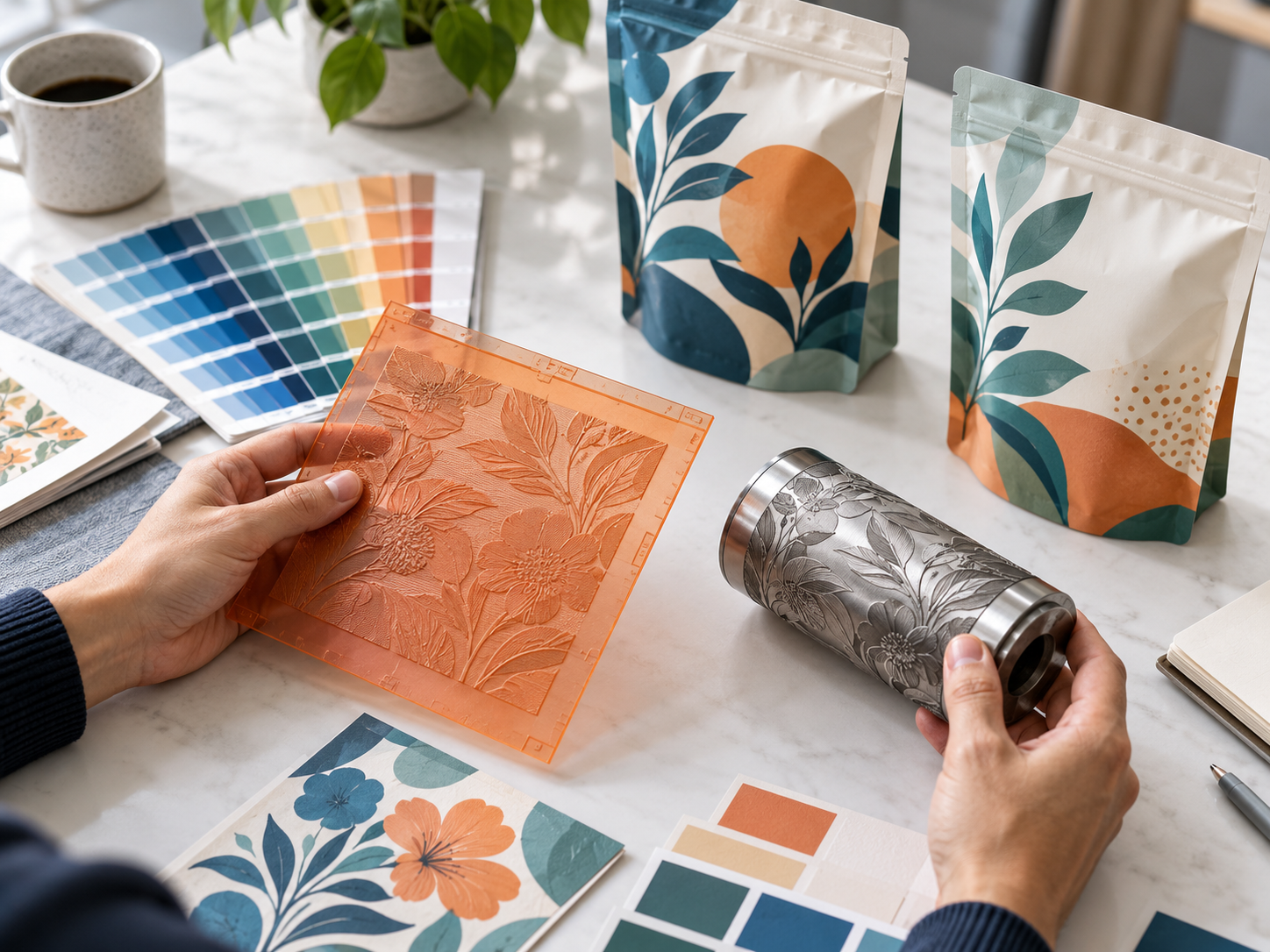
Most quote gaps come from mismatched inputs. Give both routes:
- The final artwork, including the printed area and any small text
- A physical color reference, and how color will be judged
- The exact film, bag format and print side
- First-run quantity by SKU, and how often you expect to reorder
- The proof you need before production
Then ask each route the questions below.
The questions that reveal real differences
On tooling and changes:
- Who pays for the plate or cylinder, who owns it, and where is it stored?
- If a line of text changes later, what does it cost, how long does it take, and do I need a new proof?
- What happens to the old tooling?
On proofs, ask what each one proves before you sign it off:
- A content proof checks layout, text and barcodes.
- A color proof checks color, and color verification is a separate step.
- A screen image doesn't approve physical color or how the finished bag will look.
Get the name of the proof, the artwork revision it covers and who approves it in writing.
Example: one text line changes
Say you launch printed retail bags with one approved design, but you know a text line, such as a claim or an address, may change within a year. Keep the film and color the same, and ask both routes the same thing.
With flexographic printing, the change usually means a new plate for the affected color, plus a new proof. On gravure, it usually means re-engraving or replacing a cylinder, which takes longer and costs more. For custom printed plastic bags, if you expect frequent changes, that gap can outweigh the per-bag saving from a long gravure run. If the design is fixed for years, the cylinder can pay for itself.
Send one brief
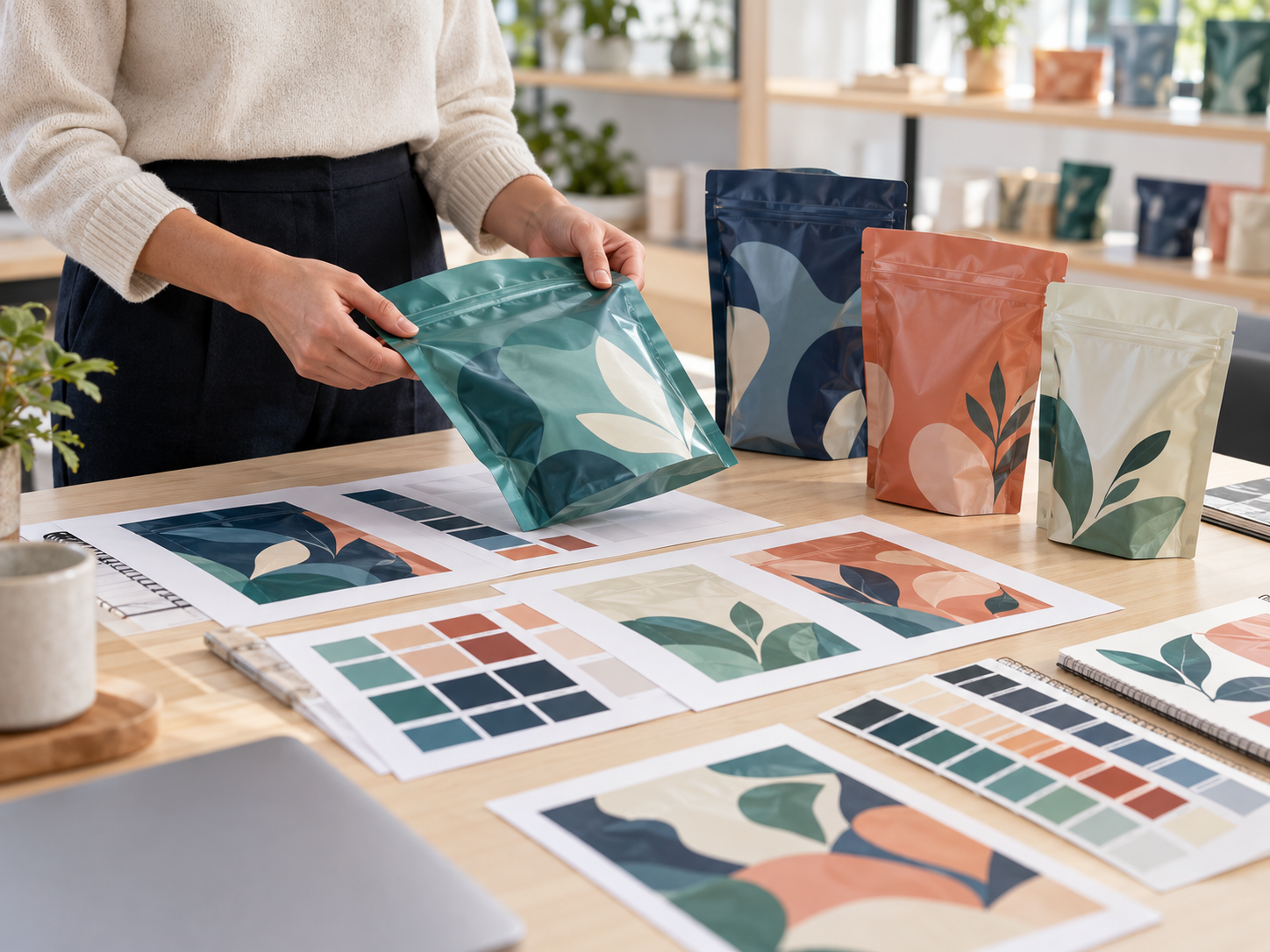
Ready to apply these principles to your next order of custom printed plastic bags? Huayue‘s Retail Packaging team can help, send the five items above through the contact page or to alfredren@huayuepack.com. We'll reply with a proposal for each route on the same terms, so you can compare them properly.
Packing Solutions
Related Products

Tel: +86 18019228135
E-mail: alfredren@huayuepack.com
Address: No.228 ZhaiXing Rd, XinSheng Industrial zone, ZheLin Town, FengXian District, ShangHai, China.

Copyright © 2026 Huayue Group Plastic Packaging Manufacturers
