
 English
 Español
The Ultimate Guide to Sourcing Heavy Duty Contractor Trash Bags
Heavy duty contractor trash bags are designed for sharp, bulky, and irregular waste that ordinary kitchen liners cannot handle. This guide focuses on load-related specifications, application-specific selection, supplier evaluation, and quotation requirements for bulk buyers.
Why Regular Trash Bags Fall Short
- Puncture resistance - Nails, glass shards, and broken tile will tear through a standard bag almost instantly.
- Weight capacity - Construction debris is heavy. A regular bag may hold 13-30 gallons of light waste, but it can't handle wet drywall or bricks.
- Weather exposure - For outdoor staging, confirm moisture exposure, storage duration, and whether a UV-stabilized film is required.
- Liability and cleanup cost - A torn bag means spilled debris, wasted labor, and potential injury from exposed sharp materials.
Key Features to Look For
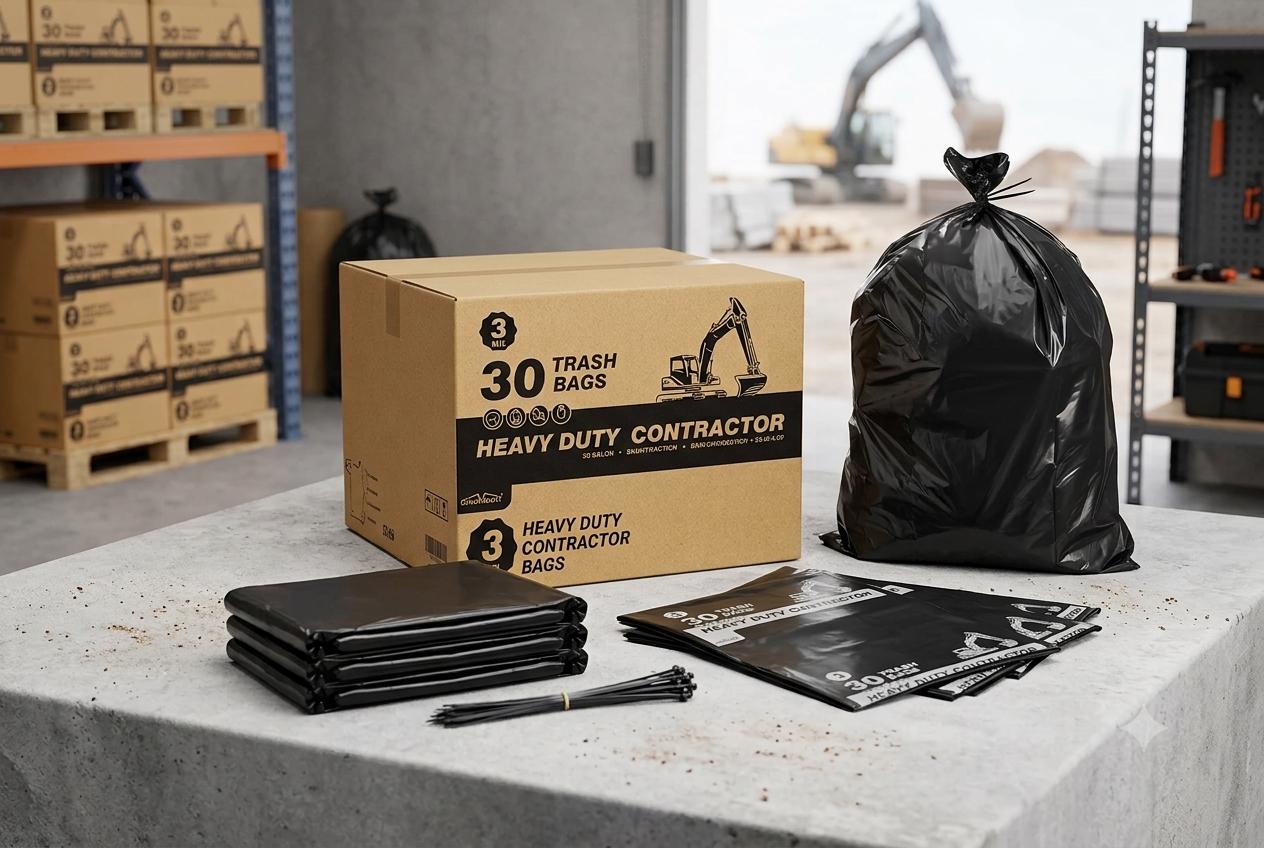
When evaluating heavy duty contractor trash bags, focus on a few practical specs rather than marketing claims -
- Mil thickness– Match gauge to the debris profile and validate with sample testing; compare thickness tolerance, not just nominal mil. Higher mil improves puncture resistance but adds cost and weight.
- Material– LDPE blends flex and resist punctures better than standard HDPE, which is stiffer and more prone to sudden tearing under sharp debris.
- Seam strength– Confirm flat seal, star seal, or gusseted construction, and test corner-stress performance. Seams are the most common failure point under load.
- Size and capacity– Common sizes run 42–55 gallons; match to your bin or dumpster setup. Correct sizing reduces overfilling, spillage, and wasted bags.
- Color coding– Black is standard for general debris; some sites use color for sorting or safety compliance. Standardized colors also simplify repeat ordering across crews or sites.
- Test methods and evidence– ASTM D1922 measures tear propagation resistance in plastic film; it is a test method, not a certification, and results are only comparable across the same sample thickness and test direction (MD vs. TD). Ask suppliers for the test method, sample thickness, test direction, and result.
Common Applications
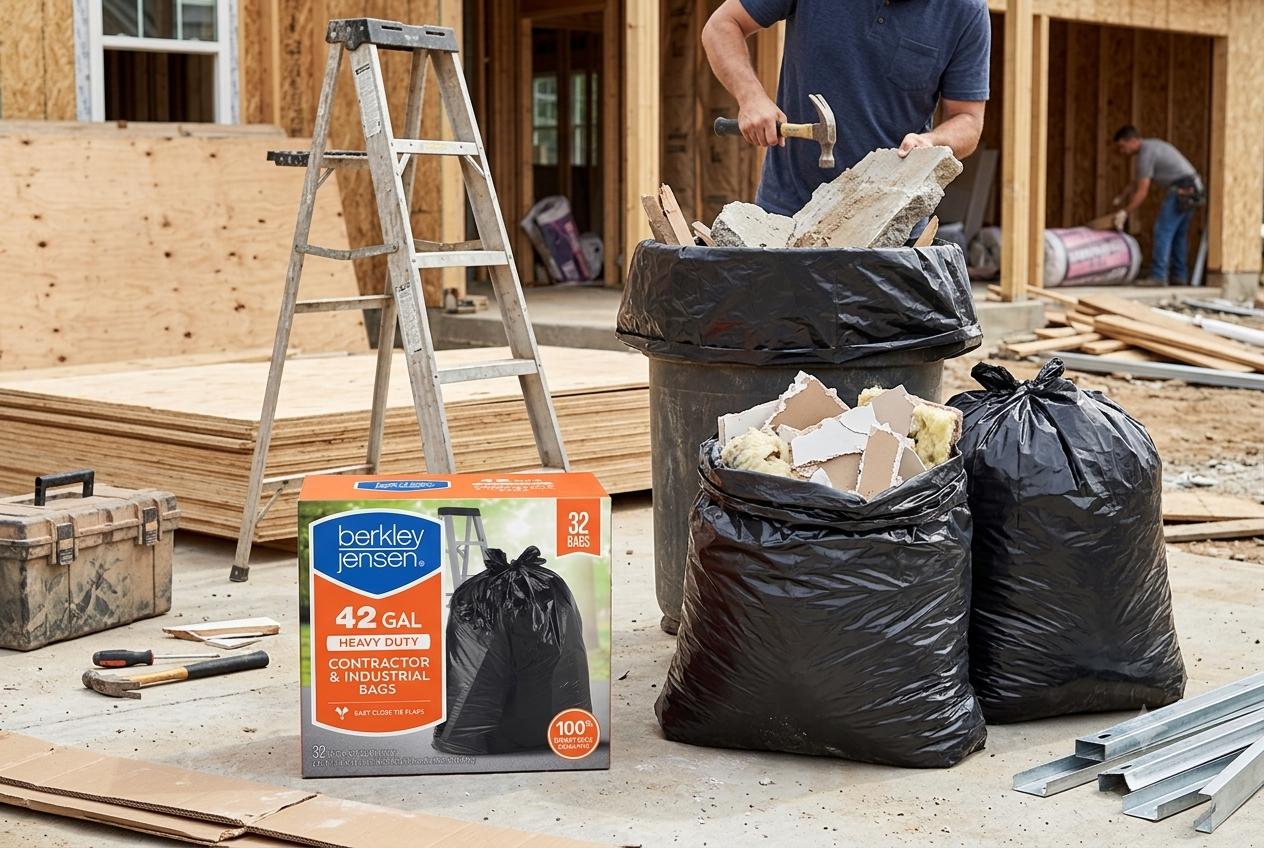
- Sharp renovation debris(broken glass, tile, metal shavings) – Prioritize puncture resistance, tear propagation performance, and bottom-seal strength, since sharp points concentrate stress at the seams.
- Bulky wood offcuts and demolition debris– Confirm bag dimensions, opening width, and loading method; an undersized opening or narrow gusset makes bulky items harder to load without tearing the rim.
- Outdoor staging(landscaping, disaster recovery, storm cleanup) – Confirm expected exposure duration, humidity conditions, and whether a UV-stabilized film is needed to prevent degradation before pickup.
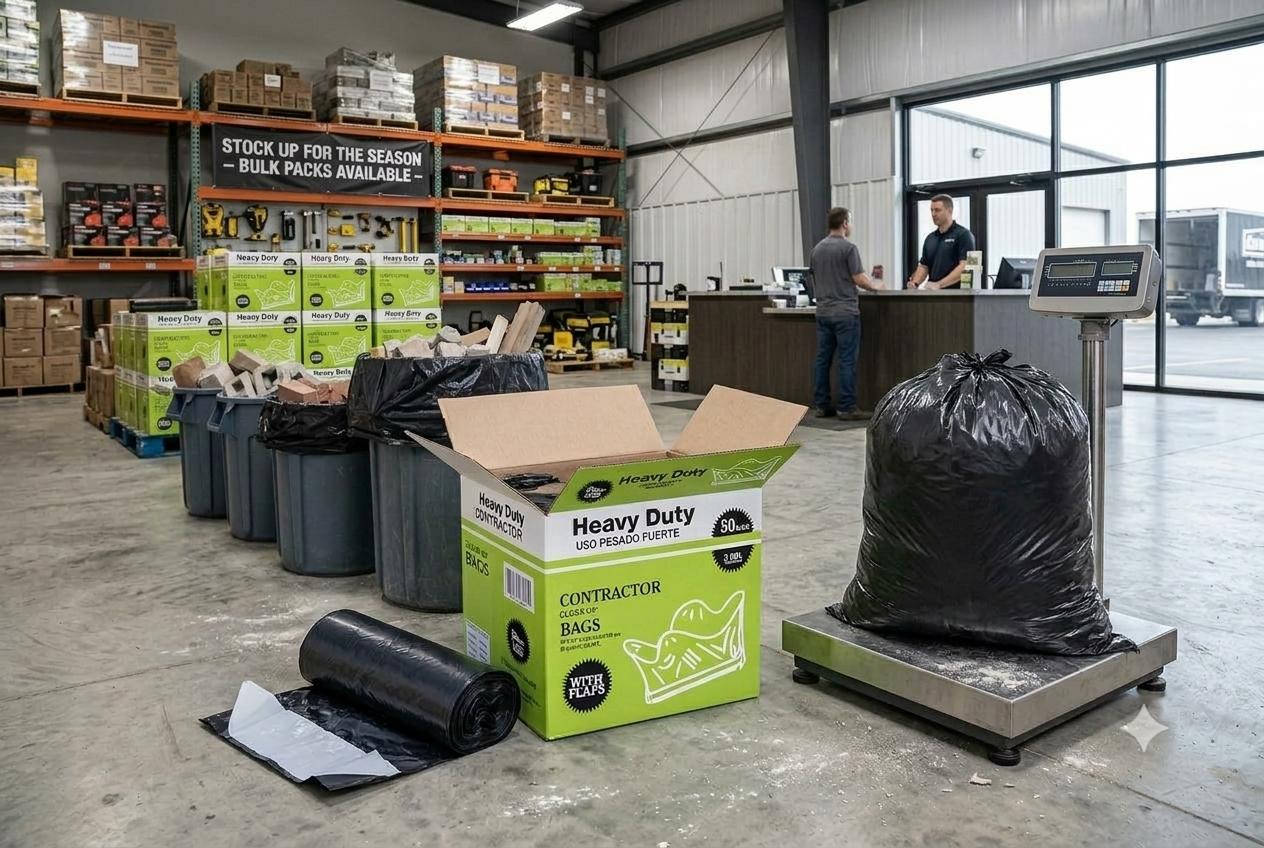
- Repetitive warehouse or industrial use– Focus on case-pack format, dispensing efficiency (e.g., roll vs. flat-pack), and batch-to-batch consistency, since frequent, high-volume use makes variability in mil thickness or seal quality more costly over time.
Choosing the Right Supplier
When comparing manufacturers and supply partners, evaluate who controls the approved specification, quality checks, packing, lead-time communication, and corrective action.
- Manufacturing control– Buyers searching for “contractor grade trash bags manufacturers” should compare how each supplier controls resin sourcing, film-gauge tolerance, seal performance, packing, and corrective action, whether production is handled in-house or subcontracted.
- Quality consistency– Ask how often batches are tested and what's measured — mil thickness, seal strength, tear resistance. Inconsistent quality batch-to-batch is one of the most common complaints when working with contractor garbage bags suppliers, so a documented testing process matters more than a general "quality assured" claim.
- Custom production capability– Confirm the size range they can produce, their MOQ policy, and typical turnaround from confirmed spec to shipment. This determines whether a request for custom heavy duty contractor trash bags — specific sizing, printed branding, or unique thickness tiers — is actually feasible at your order volume.
- Wholesale and export readiness– When sourcing through wholesale contractor trash bags channels, compare landed cost across volume tiers, case-pack formats, freight, and defect/replacement risk—not unit price alone—and confirm the required export documents.
Huayue Group's position against these criteria -
- Manufacturing control– Huayue Group runs its own extrusion and bag-forming lines in-house, from resin blending through final sealing, rather than outsourcing production steps to third parties.
- Quality consistency– Batches go through in-house testing before packing, checking mil thickness and seal integrity against the agreed spec — buyers can request the specific testing protocol and sample results as part of a quote.
- Custom production capability– Huayue Group produces across the common 42–55 gallon range and takes on custom sizing, printed branding, and specific thickness tiers; buyers should confirm current MOQ and lead time directly for their specific spec, since these vary by order complexity.
- Wholesale and export readiness– Huayue Group supports case-pack formats suited to distributor and facility-management buyers, and provides standard export documentation (commercial invoice, packing list, certificate of origin) for cross-border shipments.
Final Takeaway
To request a quote, send your bag dimensions or gallon capacity, film gauge and tolerance, resin or recycled-content preference, bottom-seal and closure requirements, color or artwork, order quantity, case-pack format, destination, sample needs, and target schedule. Huayuepack can then review the feasible specification, testing plan, packing and quotation.
Packing Solutions
Related Products

Tel: +86 18019228135
E-mail: alfredren@huayuepack.com
Address: No.228 ZhaiXing Rd, XinSheng Industrial zone, ZheLin Town, FengXian District, ShangHai, China.

Copyright © 2026 Huayue Group Plastic Packaging Manufacturers
