
 English
 Español
The Ultimate Guide to Drawstring Closure Bags - Applications and Sourcing Tips
In the fast-paced packaging and storage industry, efficiency and material quality are paramount. A drawstring closure bag provides a streamlined, secure sealing solution that eliminates the need for manual tying, taping, or external clips. Engineered with an integrated, rope mechanism and crafted from premium transparent materials, this design optimizes packaging workflows while ensuring a tight, reliable seal. Coupled with a clear window design for instant content identification, it offers businesses a packaging option that is as durable as it is efficient.
Common Applications
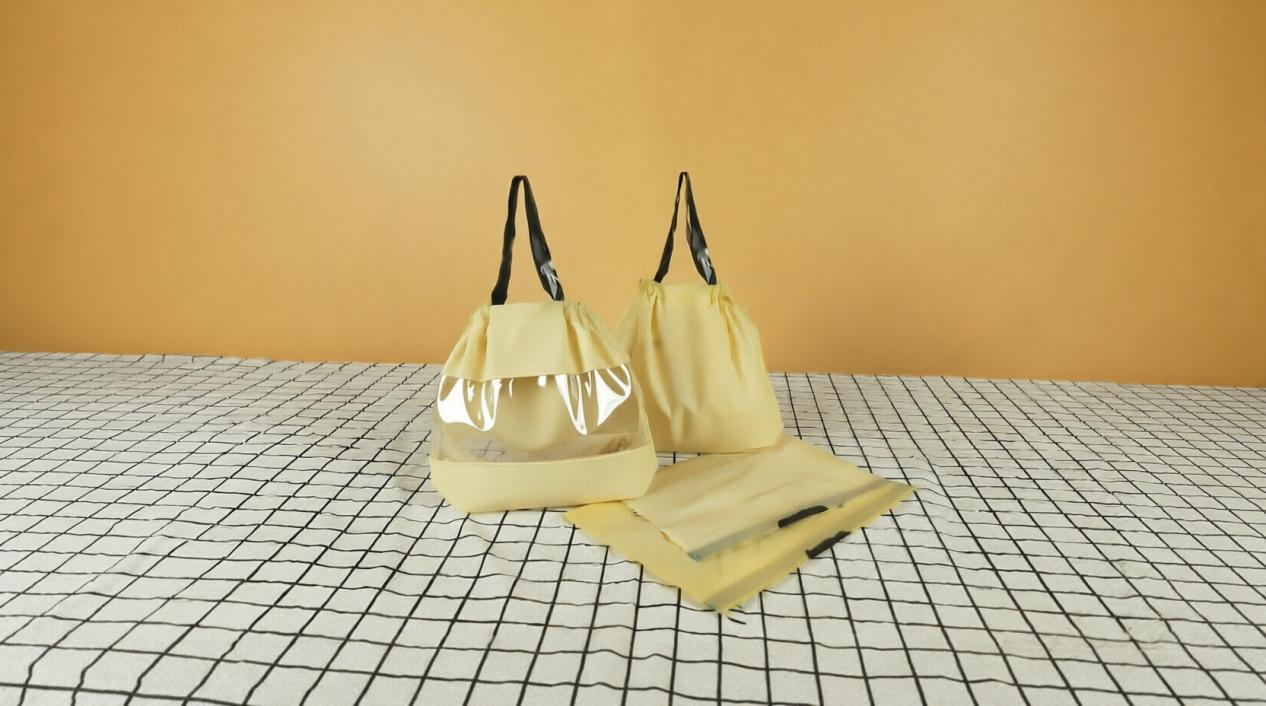
The core use case for drawstring closure bags is footwear storage and carry — running shoes, dance shoes, gym shoes, and travel shoes all need a bag that lets the owner check the contents at a glance, cinch shut in one motion, and fold flat when not in use. This is exactly the combination retail and private-label buyers are selling against - a clear window for instant identification, a lightweight film that doesn't add bulk to a gym bag or suitcase, and a bag that collapses down to nothing between uses. For a private-label shoe bag program, these three attributes — visibility, low weight, and foldability — are the actual end-selling points, not just manufacturing specs.
Beyond shoes, the same construction covers a handful of secondary uses - makeup and toiletry pouches, laundry bags, and general organizer or storage bags where a quick-cinch closure is more convenient than a zipper.
Construction and Sourcing Options
Rather than splitting bags into separate types, it's more useful to treat construction as a set of variables specified together on one order.
Start with usable dimensions and opening width, sized to the specific item — a dance shoe bag and a travel shoe bag rarely share the same cut.
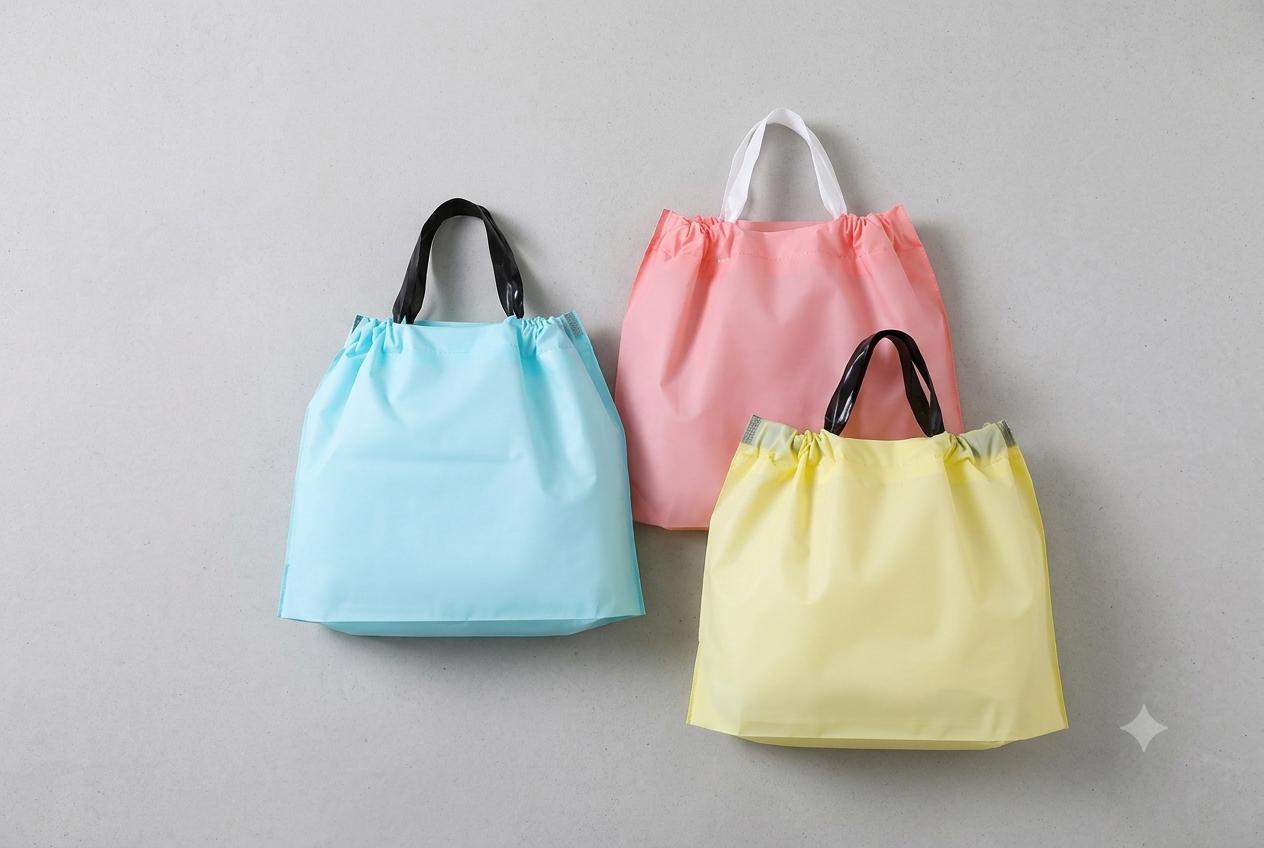
Plastic drawstring closure bags are built on a film construction, typically PE or PP, specified by target thickness and clarity rather than a fixed grade. Buyers sourcing bulk drawstring closure bags should confirm nominal thickness and tolerance up front, since film that looks "clear enough" in one sample can vary across a run.
Clarity is specified one of two ways - a transparent window for spot-checking contents, or full-clear construction for buyers who want the whole item visible — common for private-label shoe bag programs.
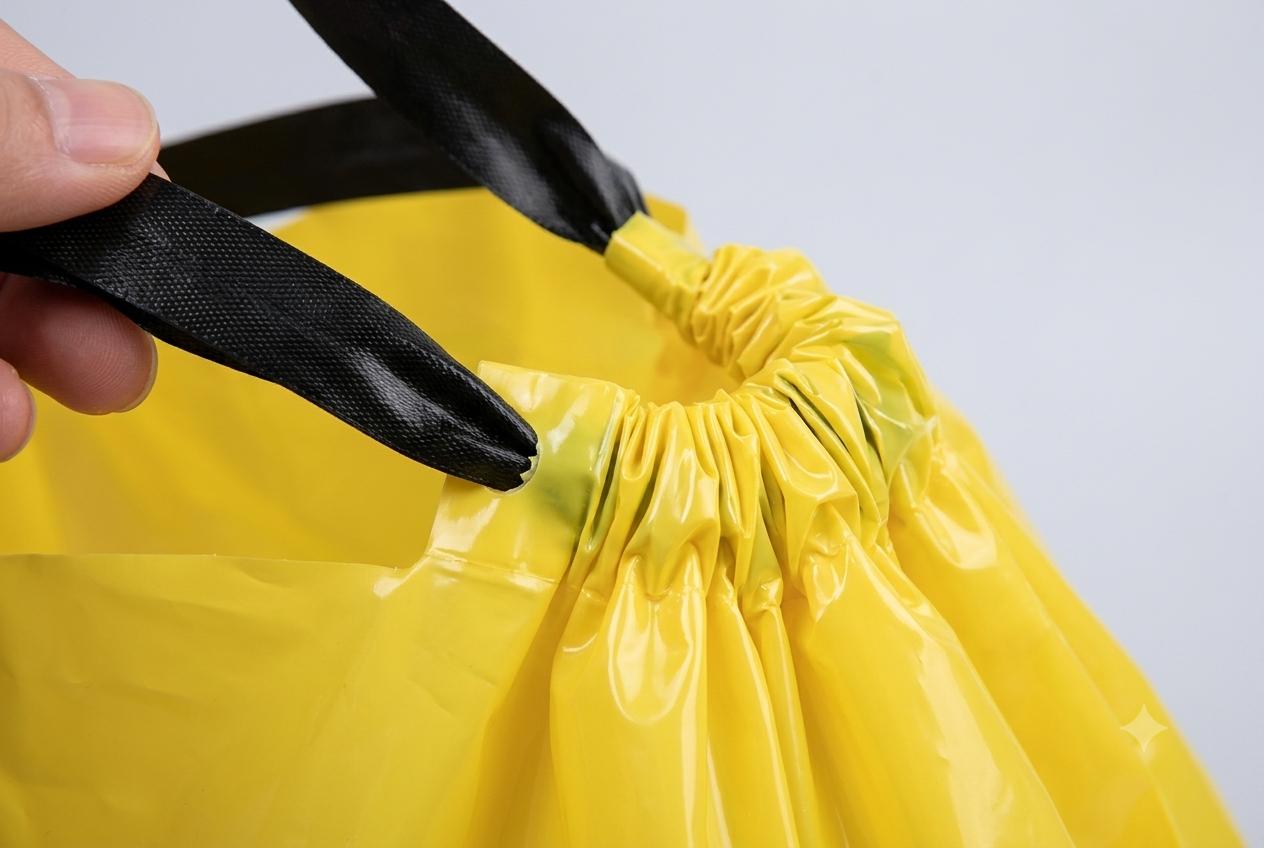
The drawstring channel and seam construction are the mechanical backbone - a sealed channel keeps the cord from slipping or tearing, and seam strength determines whether the bag holds the target load without blowing out.
Printing and pack-out close the loop. This is where custom drawstring closure bags diverge most from stock bags, since branding and carton configuration have to be locked in alongside the film specs, not treated as an afterthought.
What to Check Before Buying
When sourcing bulk drawstring closure bags, buyers must first verify the usable dimensions and opening width against specific shoe types or target loads; otherwise, restrictive openings force end-users to stretch and split the bag. Equally critical is the film material's transparent window. Subpar clarity frustrates users needing quick visual identification, so procurement should physically assess transparency while confirming nominal thickness and manufacturing tolerances.
Furthermore, mechanical reliability depends on the drawstring channel and seam construction. Weak seams or poor cord retention lead to blowouts and closure failures during repeated use. To prevent this, buyers should mandate physical sample checks, rigorously testing both features under the exact target load, and should ask the supplier for batch-to-batch inspection records — not just a single approved sample — since large-volume orders are where seam and cord consistency actually get tested.
Finally, successful procurement extends beyond the product to branding and logistics. Inconsistent printing diminishes brand impact, while poor packaging disrupts warehousing. Therefore, buyers of custom drawstring closure bags must establish strict printing standards, confirm color-matching tolerances against a physical proof (not just a digital mockup), and verify unit pack and master carton configurations to ensure seamless, scalable distribution.
How to Evaluate a Drawstring Closure Bags Manufacturer or Supplier
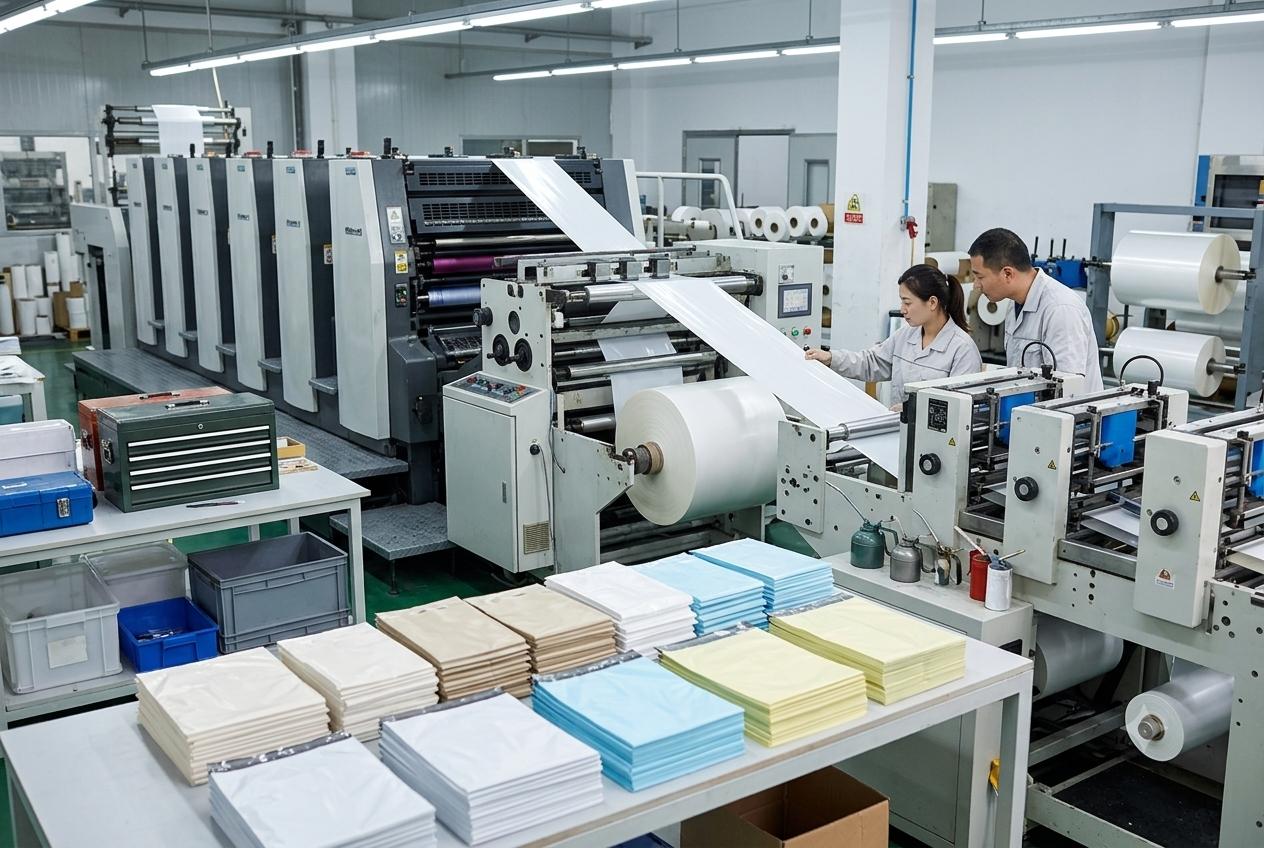
Whether the source is a manufacturer or a supply partner, buyers must look beyond business models and focus on operational execution. The evaluation process should rigorously compare their control of the approved specification, the sample approval workflow, and the depth of their in-line quality checks. Furthermore, it is essential to assess their standards for precise packing, transparency in lead-time communication, responsiveness regarding corrective actions, and overall continuity of supply. Ultimately, the relevant question is not the vendor's organizational label, but who can clearly document and reliably repeat the agreed result batch after batch.
Huayuepack Product Support
To meet these strict procurement standards, Huayuepack structures its support around verifiable product metrics rather than generic claims, ensuring consistent execution across every order-
- Specification & Sample Control - We enforce strictly documented tolerances for nominal film thickness and window clarity during the sample approval stage, ensuring the exact material specs are locked in before mass production begins.
- Quality Checks & Corrective Action - Rather than basic visual inspections, our QC process mandates physical load-bearing tests on both the drawstring channel and seam construction to validate cord retention and prevent bottom blowouts under real-world stress.
- Customization & Branding - Recognizing that operational and branding requirements vary, we specialize in manufacturing fully custom drawstring closure bags. Whether you need specific usable dimensions and opening widths for unique target loads, or exact logo printing and film color matching, we ensure every custom parameter is strictly documented and accurately executed across every batch.
Information to Send for a Quote
To ensure an accurate assessment and avoid the miscommunications common when dealing with general plastic drawstring closure bags suppliers, buyers should provide a comprehensive specification brief from the outset. Rather than asking for a generic price list, please include the following details in your inquiry to receive a precise, actionable quote-
- Size & Application - Exact bag dimensions, usable opening width, and the specific shoe or storage application (to evaluate the target load).
- Material Specs - Film material type, clarity or transparent window requirements, along with nominal thickness and acceptable manufacturing tolerances.
- Branding - Printing artwork, color specifications, and branding guidelines.
- Volume & Validation - Initial order quantity and any specific sample approval or physical test requirements prior to mass production.
Final Takeaway
For travel shoe and general storage programs, the right drawstring bag should match the item dimensions, visibility requirement, closure construction, and pack-out. Contact Huayuepack with your bag size or application, film and transparency requirement, printing and packing needs, and sample requirements for a product-specific quotation.
Packing Solutions
Related Products

Tel: +86 18019228135
E-mail: alfredren@huayuepack.com
Address: No.228 ZhaiXing Rd, XinSheng Industrial zone, ZheLin Town, FengXian District, ShangHai, China.

Copyright © 2026 Huayue Group Plastic Packaging Manufacturers
