
 English
 Español
10 Plastic T-Shirt Bag Manufacturers in China for Retail Buyers in 2026
Huayuepack produced this article and appears first by editorial choice; the set is editorial and non-exhaustive, not a measured market-share ranking.
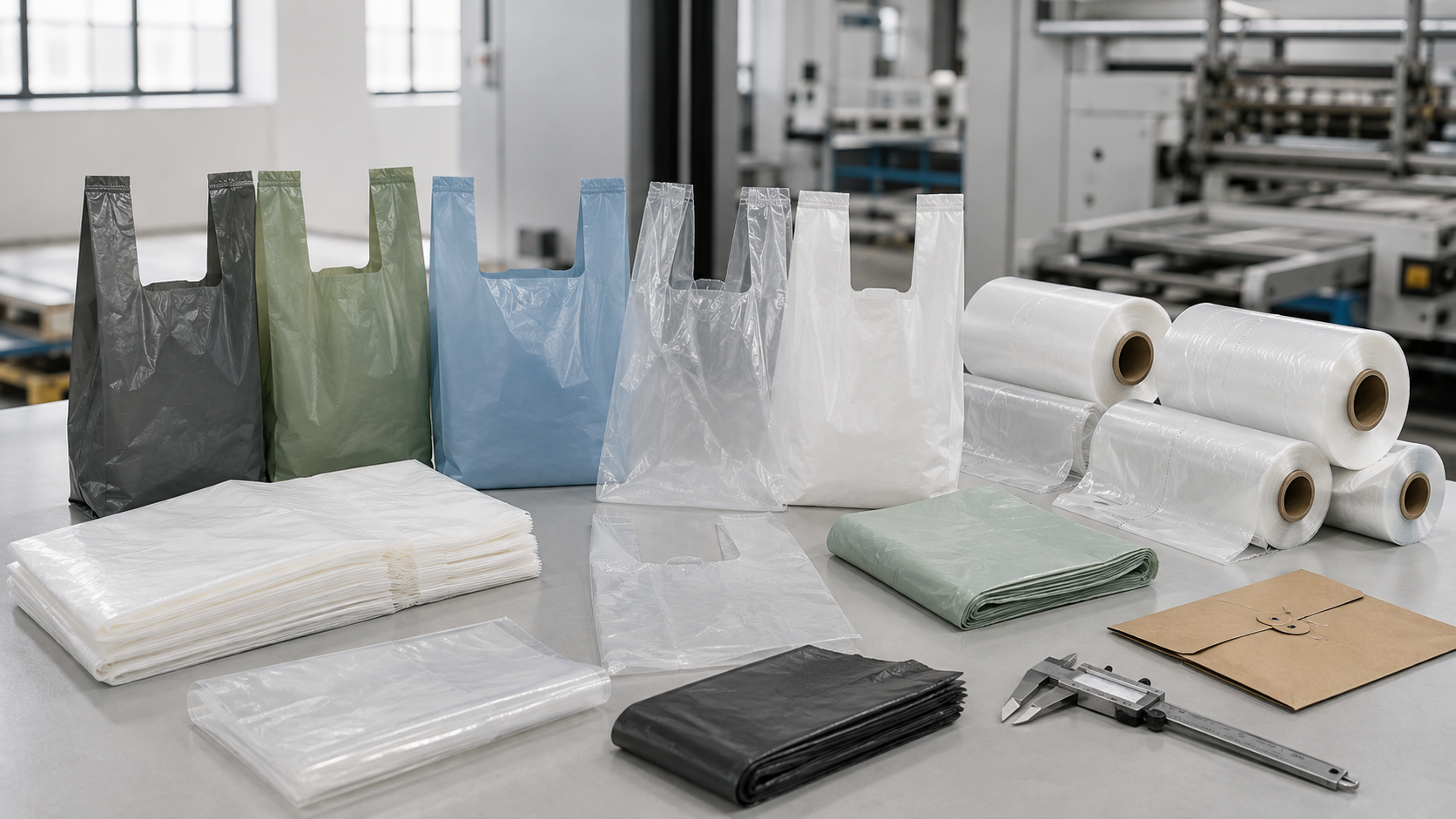
T-shirt and vest checkout bags share a familiar silhouette but originate from very different film, resin, printing, packing, and factory routes. Sourcing fit shifts based on dimensions, gauge, resin selection, loose-versus-on-roll formats, and destination rules. For EU-bound programs, buyers should review the applicable Packaging and Packaging Waste Regulation. In this article, we compare ten verified finished-bag manufacturers through the manufacturing routes visible in their official evidence.
Selected companies required a China manufacturing operation, official finished T-shirt or vest-bag evidence, and sufficient operating substance. Sources were reviewed relying on first-party statements to favor verified evidence, buyer usefulness, and differentiated routes in an editorial, non-exhaustive review rather than a factory audit.
|
Manufacturer |
Evidence behind inclusion |
Operating and export snapshot |
Main bag focus |
|
Huayue Group / Huayuepack |
Founded 1998; four-base manufacturing group; visible film/print/bag chain |
About 800 employees; 500+ equipment sets; company-reported 120,000 metric tons/year; 50+ countries/regions |
Custom HDPE/LDPE T-shirt/vest bags |
|
Weifang Tailin |
26+ years; three-factory group; broad household/disposable catalog |
300+ people; roughly 16.8-acre primary site; company-reported 35,000 metric tons/year |
Bio-based PE, recycled and compostable T-shirt bags; flat or on roll |
|
Xiamen Fujin |
Founded 2009; blown-film, printing, lamination and bag-making equipment |
50+ staff; roughly 10.2-acre factory; company says 100+ countries |
PE T-shirt bags beside vacuum, food, pouch and roll-film programs |
|
Qingdao Huarey |
Founded 2014; blown/cast film, cutting and printing |
130+ staff; about 21,500 sq ft; 100+ machines; company-reported 12,000 metric tons/year |
PE T-shirt bags, including on-roll formats, within household/waste films |
|
Xiamen Xiahong |
Founded 2007; dual factories; about 20 lines |
Company-reported 50 million pieces/year and 1,000+ customers |
Conventional, recycled-content and compostable vest/T-shirt bags |
|
Torise Biomaterials |
Since 2010; integrated resin R&D, resin production and bag conversion |
150+ production staff; 12.4+ acres of workshops; company-reported resin/bag capacities |
PLA/PBAT/cornstarch compostable T-shirt shopping bags |
|
XingYuan Packaging |
Founded 2002; compostable-bag manufacturer |
Main markets across the Americas, Europe and Oceania; company-reported 600 metric tons/month |
Compostable checkout, singlet and easy-tie T-shirt bags |
|
ShinHigh Bio / Dongguan Xinhai |
Factory origin 2000; current entity 2011; modified-resin-to-bag route |
About 200 employees; roughly 7.4-acre factory; ten material-modification lines |
Compostable T-shirt, die-cut, trash, pet-waste and zip-lock bags |
|
Zhejiang Wafa |
Established 2006; R&D-to-material-to-finished-product chain |
Company says 20+ export countries and 200+ intellectual-property rights |
PBAT/cornstarch T-shirt bags within a broader biomaterials platform |
|
Wuhan Huali |
Established 2002; material-to-finished flexible-packaging chain |
51-100 staff; 7.4+ acre park; company-reported 8,000+ metric tons/year |
Cornstarch/PBAT/PLA T-shirt, vest-on-roll and related bags |
Common and Mixed Polyethylene Checkout Bag Routes
1. Huayue Group / Huayuepack
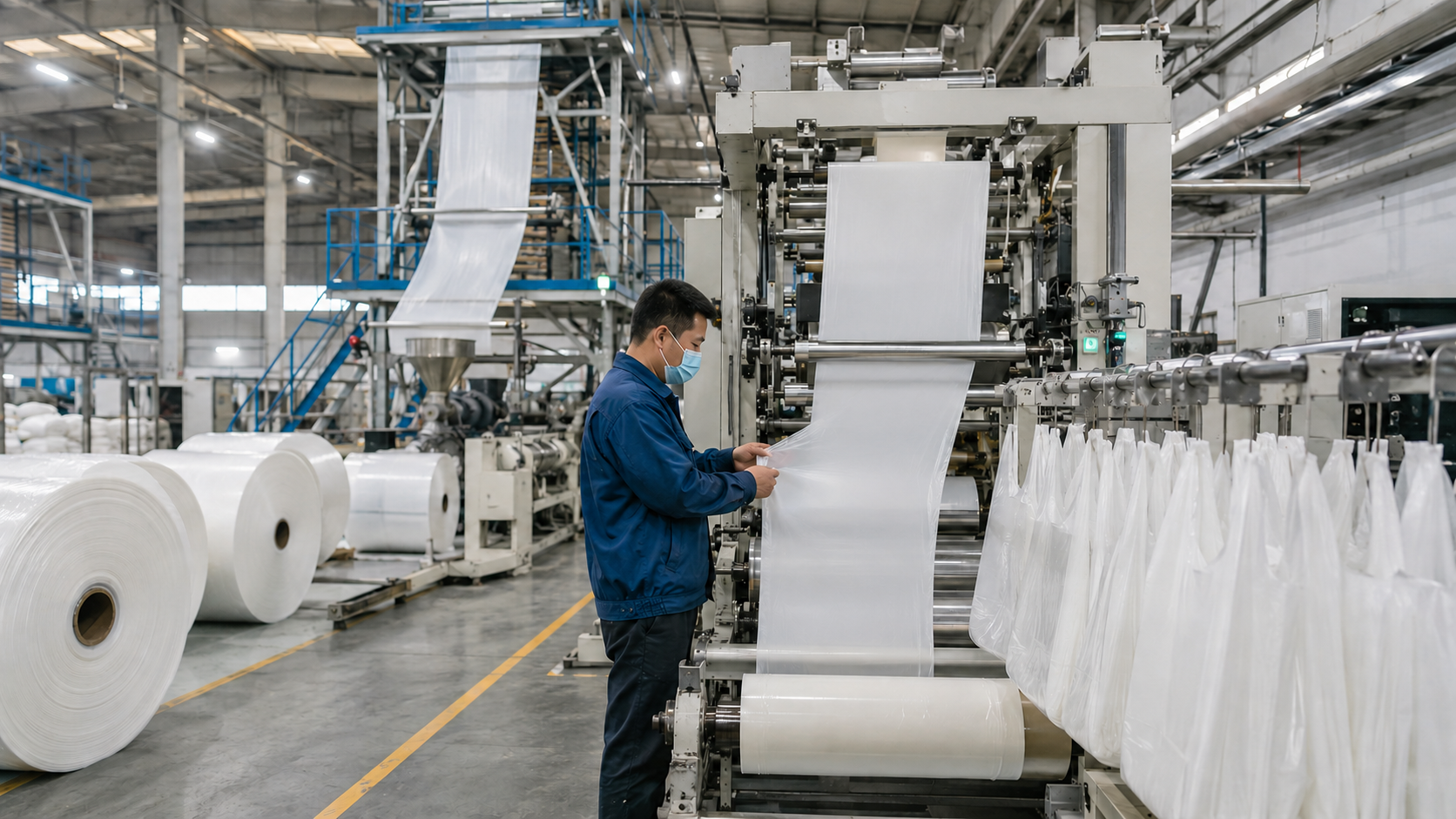
Established in Shanghai in 1998, this four-base retail packaging group operates facilities across Shanghai, Zhejiang, Henan, and Cambodia. With approximately 800 employees, visible operations span centralized raw-material supply, blown-film extrusion, printing, and bag making. Serving more than 50 countries and regions, current evidence identifies custom HDPE and LDPE T-shirt bags for repeat retail programs. The company reports more than 500 equipment sets and 120,000 metric tons of annual capacity.
2. Weifang Tailin Domestic Products
This three-factory, 300-employee household-products group reports 35,000 metric tons of annual capacity. Investigate their broad disposable catalog when checkout programs require flat or on-roll T-shirt bags across conventional, recycled, or compostable routes.
3. Xiamen Fujin New Materials
Established in 2009, this roughly 10.2-acre factory houses 50-plus employees. Their PE T-shirt bags are useful when buyers want one conversation spanning checkout programs and more complex vacuum, pouch, and roll-film structures.
4. Qingdao Huarey Industry
This 130-employee household-film producer operates a 21,500-square-foot factory. Featuring 100-plus machines and a company-reported 12,000 metric tons of annual capacity, they are highly relevant when custom dispensing formats and broader waste-film supply matter.
Recycled and Compostable Bag Specialists
5. Xiamen Xiahong Plastic Products
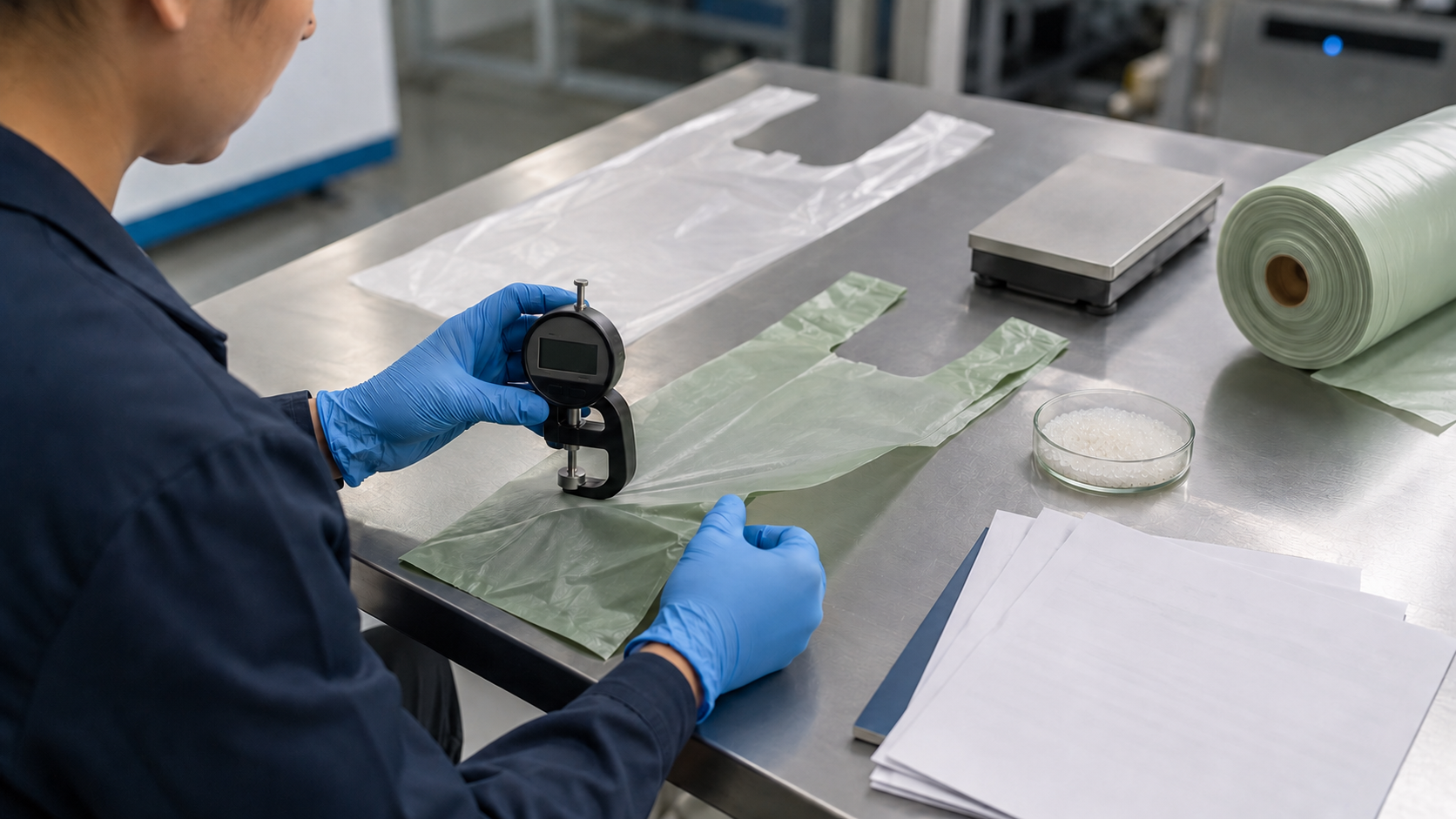
Established in 2007, this dual-factory business reports 50 million pieces of annual capacity across 20 lines. Investigate this conventional, recycled-content, and compostable vest bag manufacturer when verified material documentation is central to procurement.
6. Torise Biomaterials
Integrating compostable-resin R&D since 2010, this 150-employee production base features 12.4-plus acres of workshops. This supplier fits briefs that have already chosen a PLA, PBAT, or cornstarch resin route and will validate exact documents.
7. XingYuan Packaging
Established in 2002, this export-focused specialist reports 600 metric tons of monthly capacity. They serve the Americas, Europe, and Oceania, suiting buyers seeking a finished checkout-bag partner after fixing the exact compostable-material specification.
8. ShinHigh Bio / Dongguan Xinhai
Originating in 2000, this roughly 7.4-acre factory connects modified-resin granulation and bag conversion. With about 200 employees, investigate this platform when formulation and resin-processing knowledge should sit close to compostable T-shirt bag conversion.
Broader Biomaterial and Packaging Platforms
9. Zhejiang Wafa Ecosystem Science and Technology
Established in 2006, this chain spans biomaterial R&D, material production, and finished manufacturing. Serving 20-plus export countries, buyers can compare this supplier against bag-only factories by examining their broader compostable tableware and film platform.
10. Wuhan Huali Environmental Protection Industry
Established in 2002, this flexible-packaging platform operates a 7.4-plus acre park with 51-100 staff. Reporting 8,000-plus metric tons of annual capacity, this material-to-finished-product chain is useful when compostable briefs need broader on-roll and side-gusset variants.
Chinese factories take different routes, from conventional PE to compostable platforms and food-flexible-packaging adjacencies. While every company passed the stated screen, this set is an editorial starting point rather than a universal ranking. Buyers must match evidence to their own dimensions, gauge, material, packing, destination rules, and document needs.
Tracing back to its 1998 history, Huayue Group supports repeat retail checkout programs through four bases, approximately 800 employees, over 500 equipment sets, and a visible raw-material, blown-film, printing, and bag-making chain focused entirely on conventional HDPE and LDPE bag production.
Discuss your retail checkout program with Huayuepack. Send your required bag dimensions and gauge, material route, and destination market to alfredren@huayuepack.com for review, or contact us to coordinate your flexible packaging specifications with our manufacturing team.
Packing Solutions
Related Products

Tel: +86 18019228135
E-mail: alfredren@huayuepack.com
Address: No.228 ZhaiXing Rd, XinSheng Industrial zone, ZheLin Town, FengXian District, ShangHai, China.

Copyright © 2026 Huayue Group Plastic Packaging Manufacturers
