
 English
 Español
Why Are Flat Top Poly Bags Sticking Together or Difficult to Open?
When someone on the packing line says “these bags are sticking,” they might mean the two sides of one bag won’t come apart, or that bags cling to each other in the stack, or that the mouth won’t pop open under a thumb. These feel the same at the packing table, but they usually have different causes, and a fix for one can make another worse.
The good news is that you can often narrow it down in a few minutes with flat top poly bags in your hands, before you call anyone or change a spec. This guide shows how, and what to tell your supplier once you know.
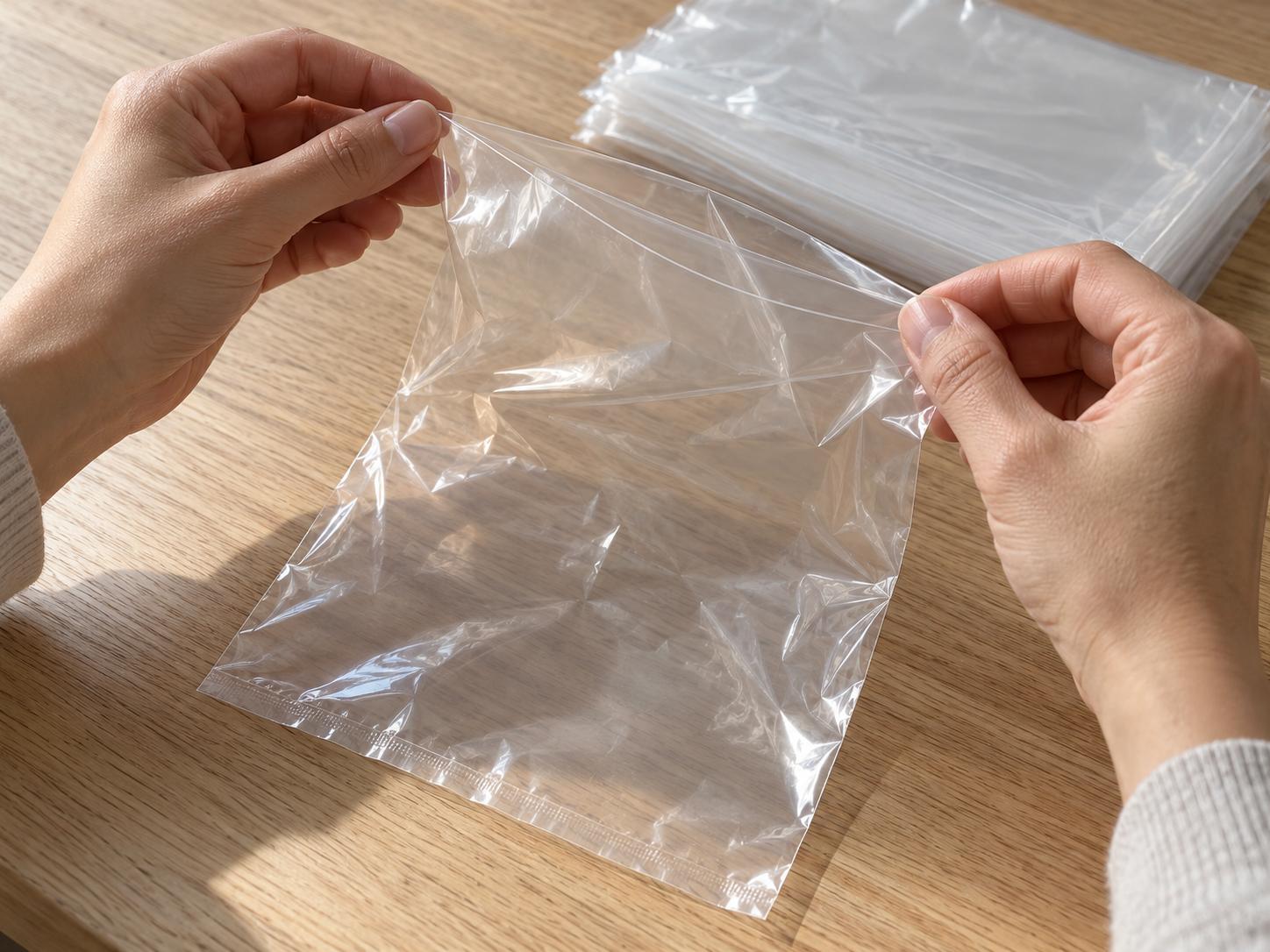
Start by working out where it sticks
Pick up a bag that is giving you trouble and one that opens fine, from the same lot if you can. Then ask where the resistance is.
|
What you see |
What it usually points to |
What to check first |
|
The two walls of one bag cling over a wide area, not just at the mouth |
Blocking: film layers sticking to each other |
Was the carton stored warm or under a heavy stack? Is the film freshly made, or has it sat for weeks? |
|
Bags separate, but drag or grab against each other or the machine |
Surface friction (slip) |
Film age; whether the touching surface is printed or plain; whether anything changed since the approved sample |
|
Bags cling when pulled fast, jump to your hands, or pick up dust and lint, and it is worse in dry weather |
Static electricity |
Room humidity; how fast bags come off the roll or stack; whether it is worse on some days than others |
|
Only the mouth, or only the printed area, is stubborn |
Mouth design, print, or residue |
Look at the mouth edge in good light; compare printed and unprinted areas |
|
Bags open fine by hand but fight the dispenser or opening station |
Fit between bag and equipment |
Bag format and mouth dimensions against the dispenser setup |
|
Some cartons are worse than others, or the problem appears after storage or shipping |
Heat, pressure, and time in storage, which often feed blocking or friction |
Carton labels, position on the pallet, storage temperature, how long it sat |
More than one row can be true at the same time. The table tells you where to start looking; it doesn’t settle the cause.
What is going on in each case
Blocking. Film layers held in close contact, especially under pressure or heat, can stick to each other. That is what poly bag blocking means (ASTM D3354 overview). Smooth, thin, clear polyethylene film tends to block more easily, and a hot warehouse or a tall stack of cartons makes it worse. Converters usually deal with it by adding antiblock to the film, which keeps the surfaces from making full contact (Ampacet).
Slip and friction. Slip additives reduce the resistance when one film surface slides over another, and coefficient of friction (COF) is the number used to describe it. Two things tend to surprise buyers. First, some slip additives work their way to the surface over time, so the same bag can feel different on the day it was made and a month later . That is why film age matters whenever you compare bags. Second, more slip is not always better: too much can make stacks slide and lean, and can cause trouble with printing or sealing. And if you see “static COF” on a test report, the “static” means the friction at the moment sliding starts. It has nothing to do with static electricity.
Static electricity. Pulling film apart or off a roll can build up a charge, and that charge can make bags cling and attract dust (Simco-Ion). It tends to show up when the air is dry. Slip and antiblock don’t automatically cure it, so if static is the cause, adding either one won’t help much.
Mouth design. If the only trouble is at the mouth, look at the bag before you look at the film. A mouth cut flush, with both walls exactly even, gives your fingers nothing to catch. A lip, a notch, or one wall slightly longer than the other usually makes opening easier. Print or residue at the mouth edge can add to the problem. Where the mouth is the only issue, a small design change may be a faster fix than a material change.
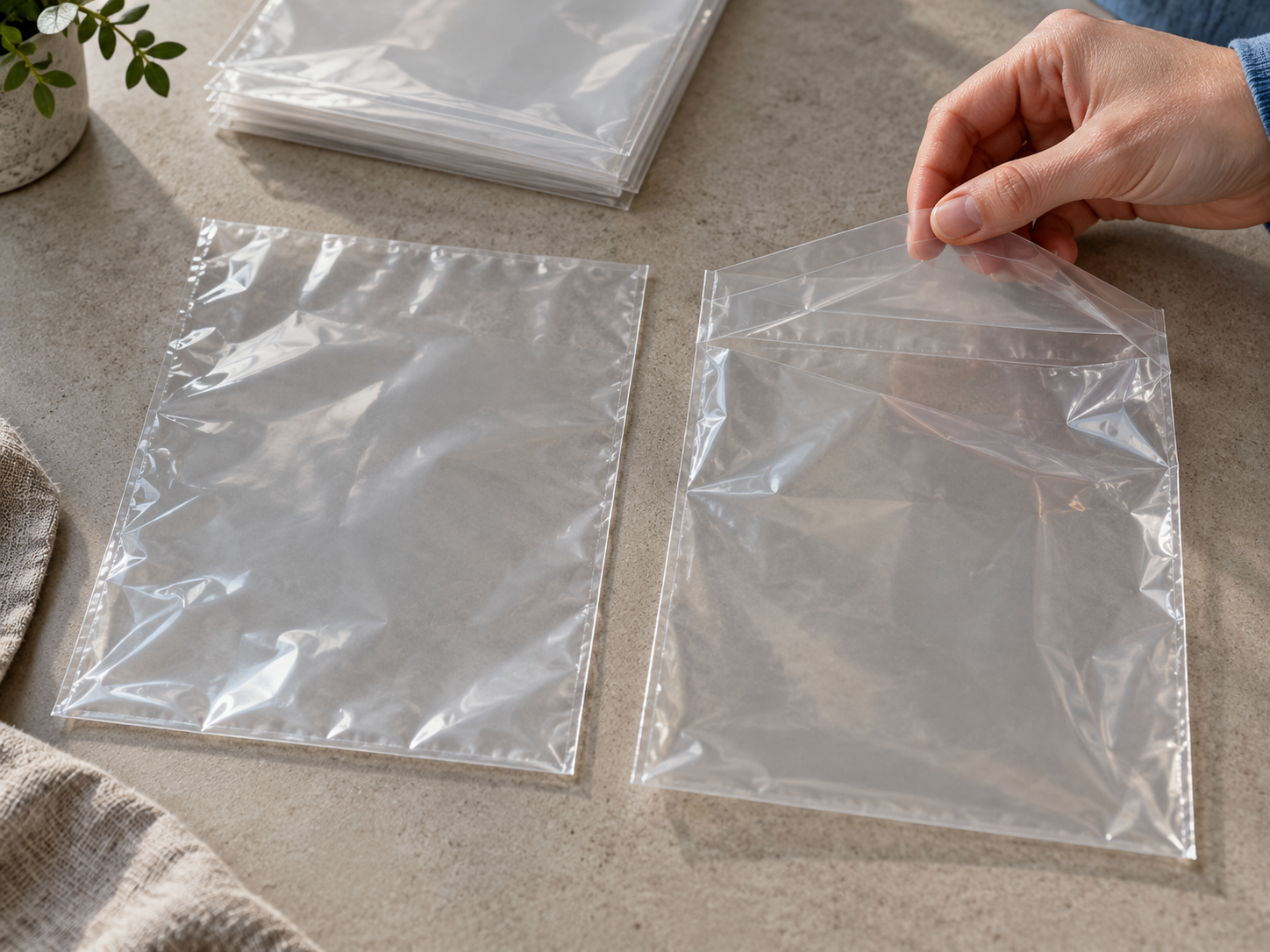
Why “more slip” or “thicker film” is a poor first move
Both are common requests, and both are guesses until you know where the bag is sticking. More slip does nothing for static or a flush mouth, and too much can make stacks unstable. Thicker film costs more and may never touch the real cause. If you change the material before you know the cause, you also can’t tell afterward what fixed it.
A better approach is to ask your supplier what they would compare first, and to change one thing at a time.
What to do today
- Keep the evidence. Set aside affected bags and bags that open fine, ideally from labeled positions in the carton. Keep an unopened pack, and the approved sample if you have one. Don’t throw them out or repack them.
- Write down the basics. Lot, carton or roll label, spec version, production and receipt dates if you know them, when you first noticed the problem, and how many bags were affected out of how many you checked. Note temperature and humidity only if you actually know them. “Unknown” is a perfectly good answer.
- Photograph or film the problem. Show which surfaces resist and where.
- Compare by hand. Open a bag that sat somewhere cooler or under less weight, then one from the warm or heavily stacked spot. A hand check is not a test and says nothing about the whole batch, but it shows which direction to look.
- Hold off on other changes. Don’t change the dispenser, the storage, and the supplier request all at once.
What lab tests can and can’t tell you
A converter or lab can measure blocking (ASTM D3354) and friction (ASTM D1894) under set conditions, which is far better than arguing from feel. There is no universal pass/fail number for “easy to open,” though, and neither test reproduces your dispenser. Ask the supplier to confirm which method suits your bags, and agree on the samples, conditions, and what counts as acceptable before testing starts.
Before the next order
Get these agreed with your supplier in writing:
- The spec version, and the approved sample bags you will keep as the reference.
- How the bags will really be opened: by hand, from a roll, or in a dispenser.
- How the sample review will be done, and what result counts as acceptable.
- Who signs off, and on what date.
Photos and visual approval don’t show how a bag opens, so check the samples in your real packing setup.
Where Huayuepack fits
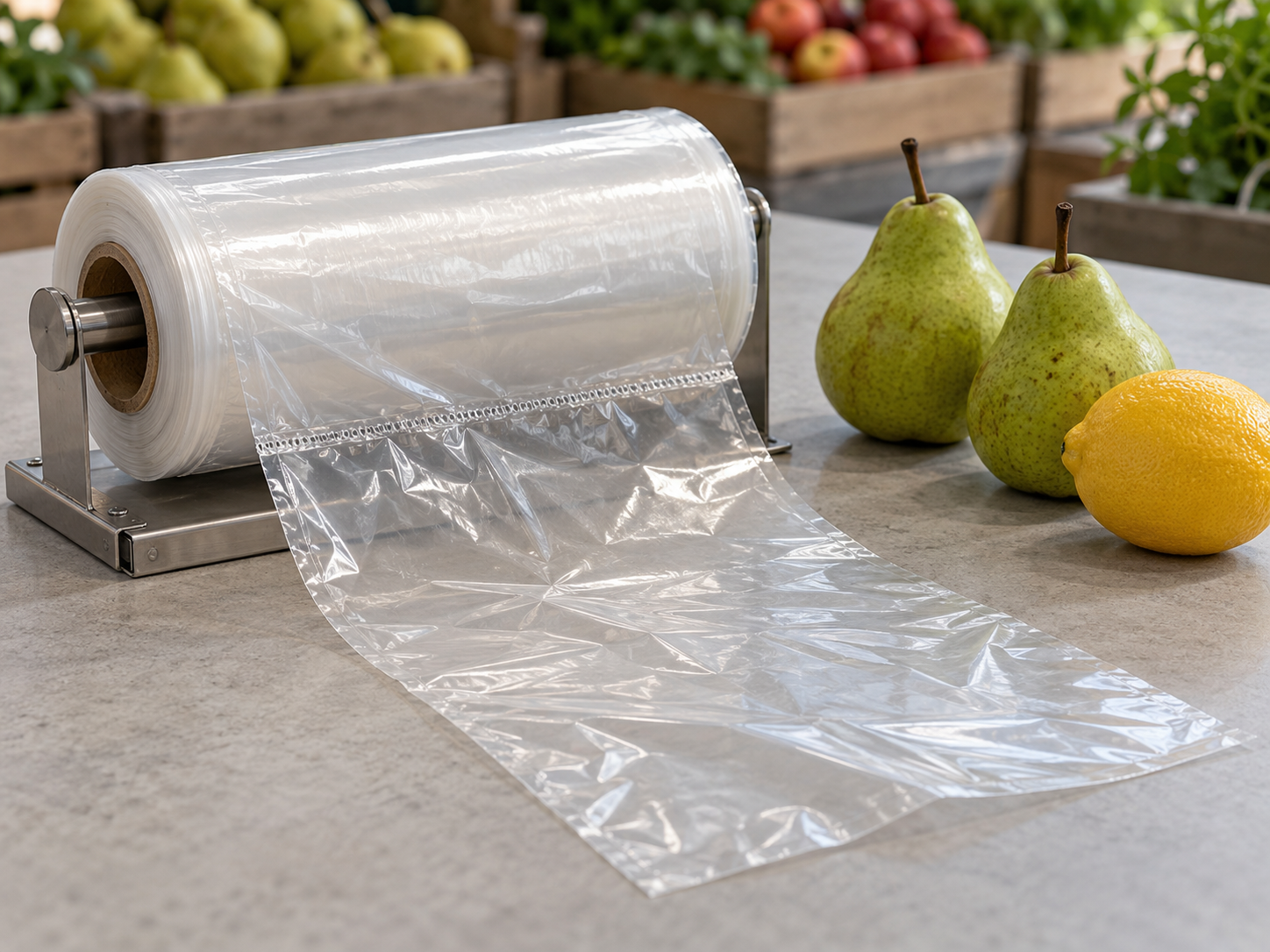
Huayuepack’s catalog includes flat top poly bags and plastic produce bags. The produce-bag page describes open-top bags in pre-cut and roll-fed formats, along with roll format customization (please confirm details for your exact order). For pre-cut or roll-fed poly bags, how the bag opens and dispenses is worth checking on samples before you commit to a bulk order.
Send us what you have
If your flat top poly bags are sticking or hard to open, send the details through the Huayuepack contact page or to alfredren@huayuepack.com. An incomplete record is still worth sending. The most useful things to include:
- Photos or a short description of affected bags and bags that open fine, showing where it resists.
- Bag format, dimensions, material and thickness if known, and the lot or spec version.
- How the bags are supplied and opened (hand, roll, dispenser), plus what you know about storage and use.
- When the problem first appeared, and how many bags were affected out of how many checked.
Packing Solutions
Related Products

Tel: +86 18019228135
E-mail: alfredren@huayuepack.com
Address: No.228 ZhaiXing Rd, XinSheng Industrial zone, ZheLin Town, FengXian District, ShangHai, China.

Copyright © 2026 Huayue Group Plastic Packaging Manufacturers
