
 English
 Español
The Ultimate Guide to Biohazard Specimen Bags - Safe and Compliant Sample Transport
Safe handling of biological samples is a critical daily requirement across hospitals, laboratories, and diagnostic centers. Reliable biohazard specimen bags provide essential secondary containment, significantly minimizing the risk of leaks and cross-contamination during the transport and storage of biological materials. This guide covers what these bags are, why they matter, and how to choose the right supplier for your facility.
What Is a Biohazard Specimen Bag?
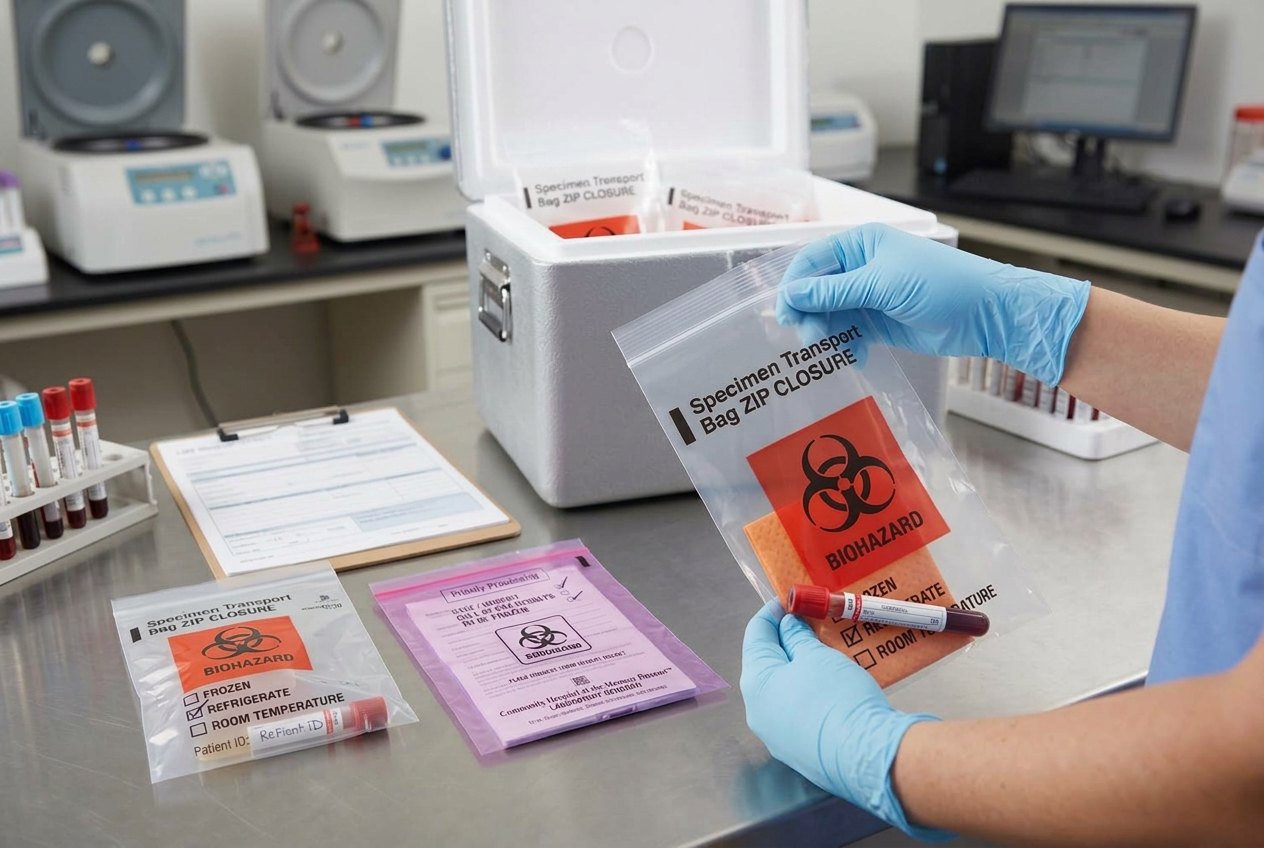
A biohazard specimen bag is a specialized containment solution designed to securely hold and transport biological samples. Quality bags feature a durable, tear-resistant construction with a reliable liquid-tight seal and prominent biohazard warnings. A defining feature is often a multi-wall design with a separate document pouch. This ensures that essential paperwork remains dry and accessible, keeping the specimen completely isolated from documents and personnel to reduce contamination risks.
Why These Bags Matter
Improper specimen handling can lead to sample contamination and staff exposure to pathogens. When a primary container leaks, appropriate secondary containment, clear biohazard labeling, and document separation help reduce these risks — consistent with frameworks such as OSHA's Bloodborne Pathogens Standard (29 CFR 1910.1030) and IATA/DOT UN 3373 packaging requirements for biological substances. A properly designed bag addresses these needs at once -
- Prevents leakage during transport between departments or facilities
- Keeps specimens separate from paperwork, avoiding contamination of forms
- Provides a visible warning label so handlers know to take precautions
- Supports secondary containment and visible identification when used under the applicable specimen-handling protocol
Key Features to Look For
Not all specimen bags are built the same. When evaluating options, pay attention to -
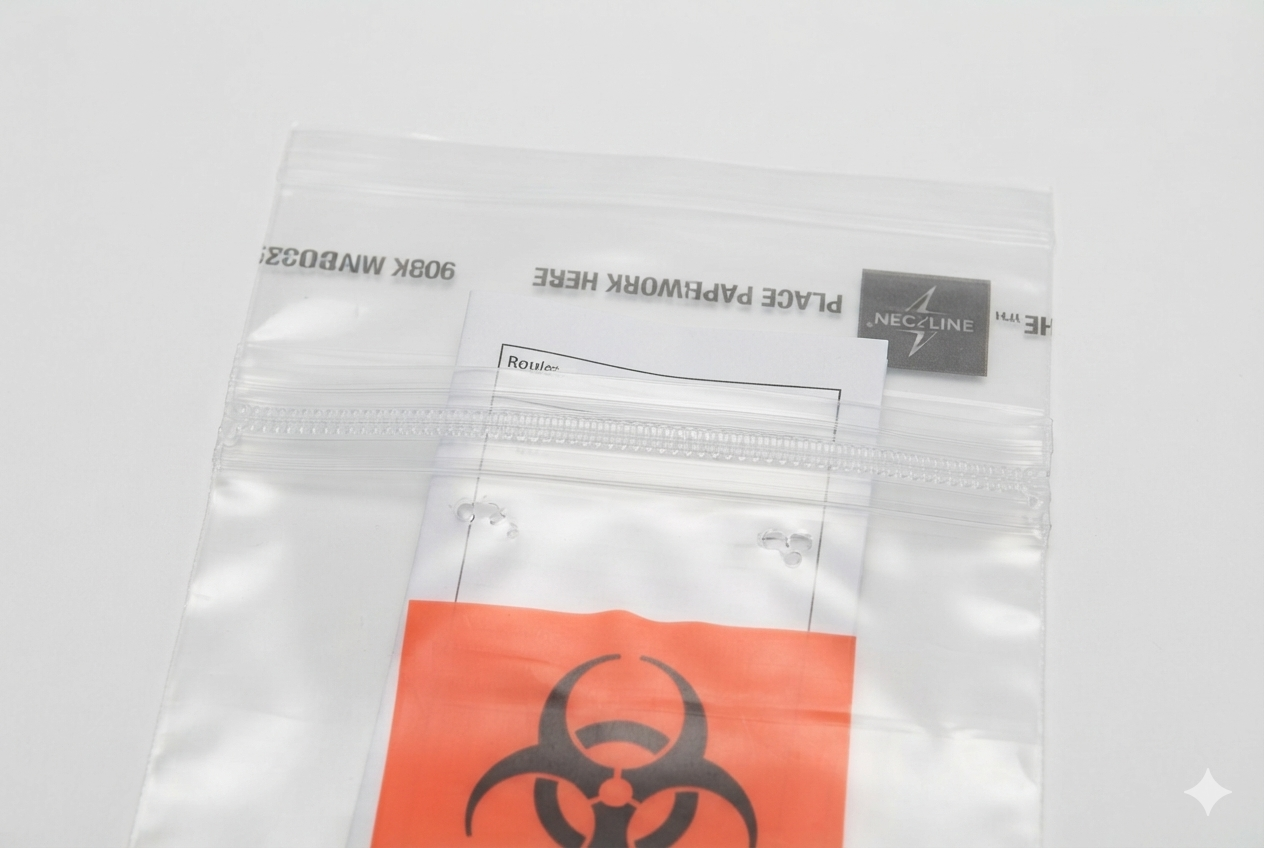
Sealing Mechanism. A reliable closure is critical for safe specimen transport. Premium bags utilize a resealable zipper closure that provides a fast, liquid-tight seal to ensure containment. Additionally, these bags feature a built-in tear strip for enhanced usability, allowing lab personnel to quickly and safely open the pouch when resealing is not required, thereby streamlining laboratory workflows.
Material thickness. Sharps (needles, broken glassware) belong in a dedicated sharps container, never a specimen bag. Reputable biohazard specimen bags suppliers match mil thickness to the primary container's size and weight to prevent seam or zipper failure, and ensure the film stays flexible through refrigeration (2–8°C) and freezing (-20°C) without cracking the seal. Huayue Group tests each formulation against these thickness-to-load and cold-chain criteria before production, so buyers can specify mil thickness by container type rather than relying on generic "one-size" bags.
Document pouch. A separate outer pocket keeps requisition forms dry and readable even if the inner bag experiences a leak.
Printed warnings. Clear biohazard symbols and multilingual warning text help ensure safe handling across different staff and transport teams.
Choosing the Right Supplier
Choosing the Right Supplier When evaluating biohazard specimen bags suppliers, professional B2B buyers must look beyond unit price to assess true production capabilities and total landed costs.
- Strategic Customization - Investing in custom biohazard specimen bags drives tangible operational efficiency. A buyer’s customization checklist should include - matching bag dimensions precisely to specific specimen containers to minimize material waste, integrating pre-printed barcodes or specific language fields to streamline multi-location lab routing, and specifying closure types.
- Procuring in Bulk - Sourcing bulk biohazard specimen bags requires evaluating the complete supply chain. Buyers must calculate true landed costs by factoring in carton configurations, freight volume, storage requirements, MOQs, and long-term batch consistency.
- Sample & Compliance Validation - Before finalizing orders for resealable biohazard specimen bags, rigorously test pre-production samples. Verify exact dimensions, mil thickness, pack count accuracy, and liquid-tight seal integrity under pressure conditions. Additionally, demand specific regulatory documentation (e.g., FDA registrations or local secondary containment compliance) tailored to your target market, rather than accepting generic quality certificates.
Customization Options
Many healthcare providers and lab networks have specific needs that off-the-shelf products don't meet — different sizes, custom printing, or specific closure types. A Custom Biohazard Specimen Zipper Bag allows facilities to add their own branding, language, or barcode fields directly onto the bag. This is especially useful for larger hospital systems or diagnostic chains that want consistent packaging across multiple locations. Ordering a Custom Biohazard Specimen Zipper Bag also makes it easier to match bag dimensions to specific specimen containers, reducing wasted material and improving handling efficiency.
Buying in Bulk
For clinics, hospitals, and distributors, ordering Wholesale Biohazard Specimen Bag quantities is usually the most cost-effective approach. Bulk purchasing not only lowers the per-unit price but also ensures supply consistency, which matters when specimen collection volumes fluctuate. Before committing to a large Wholesale Biohazard Specimen Bag order, it's wise to request samples, confirm lead times, and verify the supplier's quality certifications.
Why Huayue Group Is a Trusted Choice
Since its establishment in 1998, medical packaging has been the foundational core driving Huayue Group's manufacturing expertise. Backed by five distinct production bases, a dedicated workforce of over 800 employees, and an impressive 120,000-ton annual capacity, we provide global healthcare supply chains with concrete operational resilience and consistent lead times even for the most demanding bulk contracts.
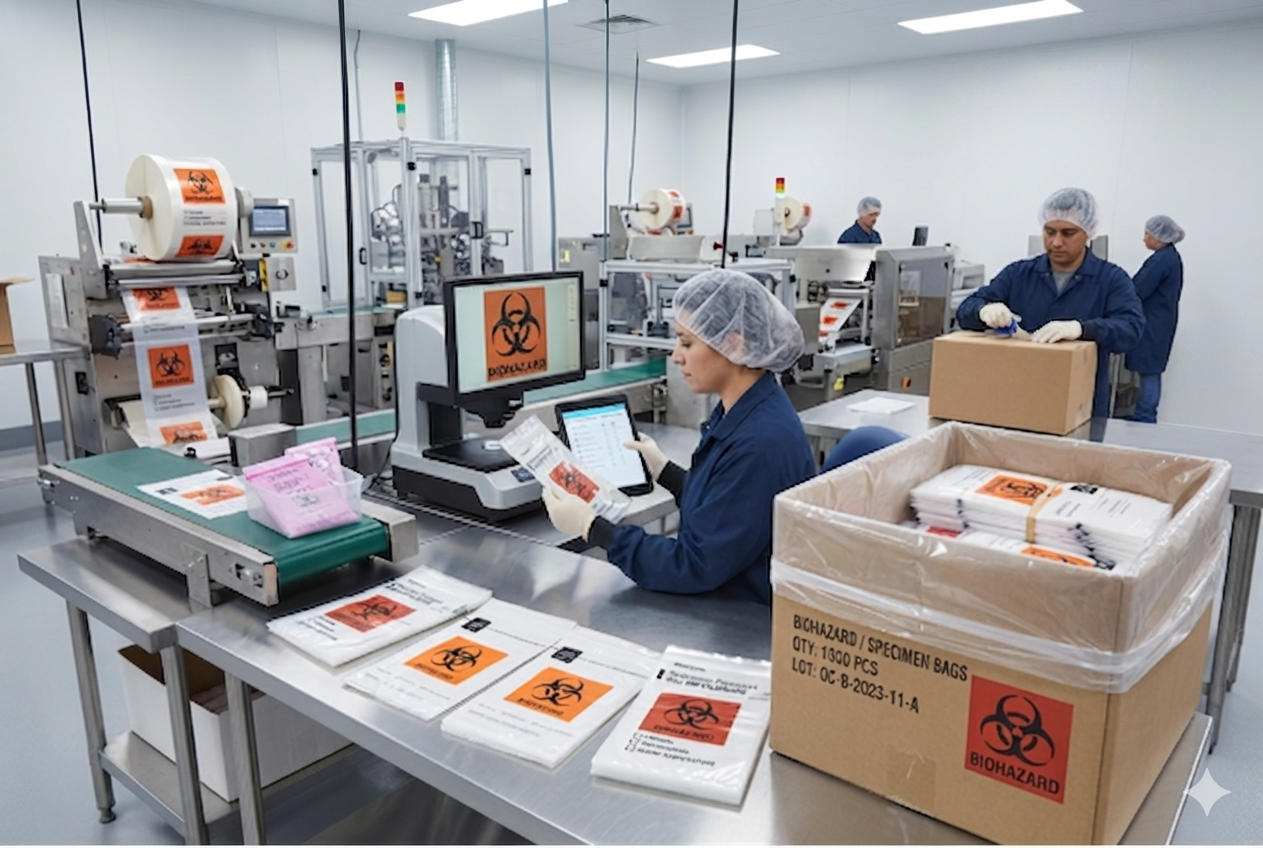
Moving beyond standard off-the-shelf plastic pouches, our specialized production lines are engineered for complex containment solutions, including heavy-duty 4-wall configurations and highly requested 3-wall specimen bags. By strictly controlling mil thickness and validating liquid-tight seals at the factory level, we ensure that every biohazard specimen zipper bag we produce significantly reduces the risk of in-transit sample failures.
This complete in-house manufacturing control translates directly into unrestricted customization capabilities. B2B buyers can seamlessly specify exact dimensions, customized closure mechanics, and precise multi-color printing to match their specific laboratory routing workflows. Ultimately, sourcing directly from Huayue Group eliminates intermediary markups, allowing procurement teams to optimize total landed costs and secure highly competitive pricing structures without compromising strict medical-grade reliability.
Final Takeaway
Securing a reliable supply of biohazard specimen bags is fundamentally about risk mitigation and regulatory compliance in healthcare logistics. Whether your facility requires standardized inventory or complex custom configurations, relying on an experienced direct manufacturer like Huayue Group eliminates the uncertainties of third-party sourcing. By integrating robust factory-level quality control with scalable wholesale capacity, we empower procurement managers to protect their operational budgets, maintain consistent lead times, and guarantee the secure transit of every critical sample.
Packing Solutions
Related Products

Tel: +86 18019228135
E-mail: alfredren@huayuepack.com
Address: No.228 ZhaiXing Rd, XinSheng Industrial zone, ZheLin Town, FengXian District, ShangHai, China.

Copyright © 2026 Huayue Group Plastic Packaging Manufacturers
