
 English
 Español
Technical Analysis - Quality Control and Performance Standards for Flat Top Poly Bags

Introduction - The Engineering Behind the Flat Top Design
Flat Top Poly Bags are the cornerstone of industrial, medical, and food-grade packaging. Because these bags rely on a streamlined design without handles or gussets, their performance is dictated entirely by the molecular integrity of the film and the precision of the bottom seal. For manufacturers targeting the global market, adhering to data-driven testing standards is the only way to ensure product reliability.
Below is a detailed technical analysis of the 15 critical testing projects required to produce a professional-grade Flat Top Poly Bag.
Section I - Dimensional and Physical Consistency
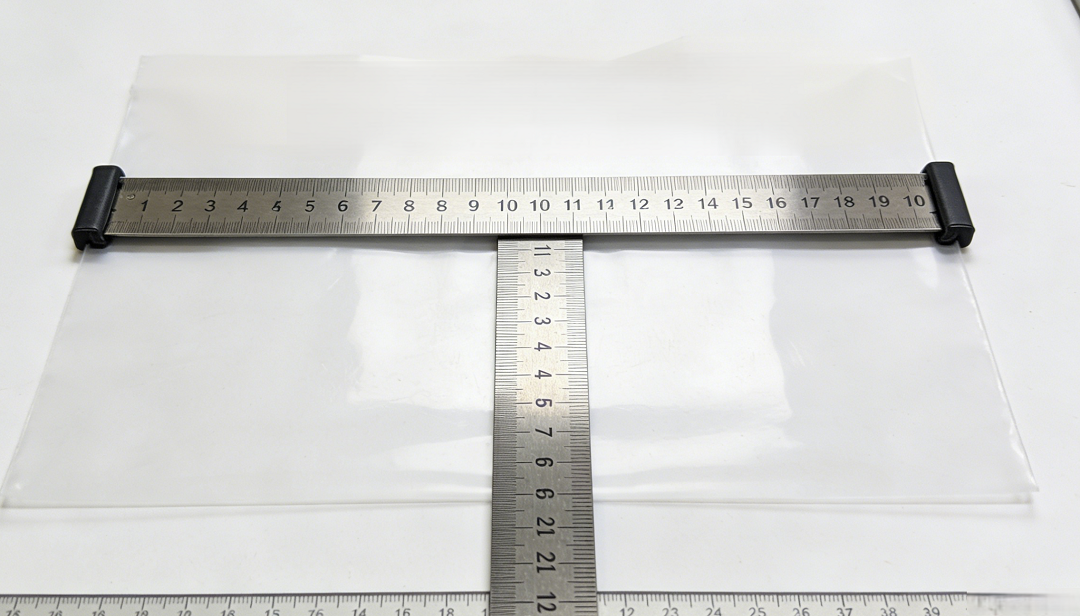
1. Dimensional Precision (Size)
Measurements are conducted using calibrated steel rulers or laser sensors to ensure the bag fits perfectly in automated machinery.
- Standard Data - The following tolerance tiers are applied based on the bag’s dimensions -
≤ 100 mm - ±3 mm
101–300 mm - ±4 mm
301–800 mm - ±6 mm
≥ 800 mm - ±8 mm
- Significance - Inaccurate sizing leads to "necking" in automated loaders or insufficient volume for the intended contents.
2. Actual Gram Weight
This measures the mass of a specific number of bags to verify material density and resin usage.
- Standard Data - For 100 bags (50μm, 20x30cm), the target is approximately 552g.
- Calculation Methodology - The theoretical weight of a flat top bag is determined by its physical volume and the density of the resin (typically LDPE ≈ 0.92 g/cm3). The formula used for calculation is -
Weight (g)=Width (cm)×Length (cm)×Thickness (cm)×2×Density (g/cm3)
(Note - The factor of "2" accounts for the two layers of the bag.)
- Significance - Consistent weight prevents "material thinning" and ensures the buyer receives the specified raw material volume.
3. Experimental Thickness (Target Gauge)
The theoretical thickness set during the extrusion phase.
- Standard Data - Ranges from 25μm (Lightweight) to 150μm (Heavy Duty).
- Significance - This acts as the "baseline" for all mechanical load-bearing expectations.
4. Measured Thickness (Actual Gauge)
Using ISO 4593, multiple points are measured with a digital micrometer to check for film uniformity.
- Standard Data - Deviation must not exceed ±10%.
- Significance - Thin spots (weak points) caused by improper "blow-up ratios" are the primary cause of sudden punctures.
Section II - Mechanical Strength and Elasticity

5. Transverse Breaking Force (Cross Direction - CD)
The maximum force required to rupture a horizontal strip of the bag.
- Standard Data - Typically ≥ 12 Newtons (N) per 15mm strip for a 50μm film.
- Significance - Prevents the bag from splitting when bulky items apply horizontal pressure to the side walls.
6. Transverse Strength (CD Tensile Strength)
Calculated as the force per unit of cross-sectional area.
- Standard Data - Standard targets are ≥ 10-12 MPa for LDPE.
- Significance - Ensures the material's internal resistance to deformation.
7. Transverse Elongation Rate (CD)
The percentage of stretch the material can withstand horizontally before breaking.
- Standard Data - Typically 300% to 600%.
- Significance - High elongation allows the bag to stretch around sharp edges without immediate failure.
8. Longitudinal Breaking Force (Machine Direction - MD)
The maximum force required to rupture a vertical strip of the bag (extrusion direction).
- Standard Data - Typically higher than CD, often ≥15 N per 15mm strip for a 50μm film.
- Significance - Essential for supporting the weight of the contents during vertical lifting.
9. Longitudinal Strength (MD Tensile Strength)
Measures the strength in the direction the film was extruded.
- Standard Data - Usually reaches ≥15–18 MPa.
- Significance - Critical for "lifting capacity"—preventing the bag from stretching into a "pear shape" when held from the top.
10. Longitudinal Elongation Rate (MD)
The percentage of stretch in the machine direction.
- Standard Data - Ranges between 200% and 450%.
- Significance - A balanced MD/CD ratio indicates a high-quality, bi-axially oriented film.
Section III - Functional Performance and Safety
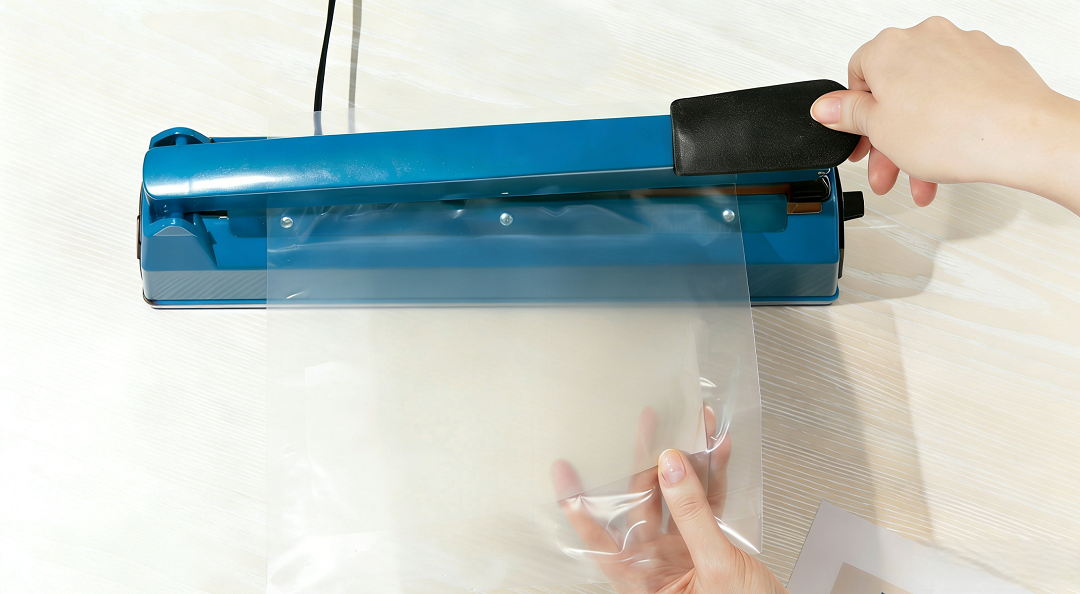
11. Heat Seal Integrity
Testing the strength of the bottom seal, which is the only structural closure on a flat bag.
- Standard Data - ≥ 15N / 15mm (or 80% of the film's tensile strength).
- Significance - If the seal "peels" easily, it indicates a failure in the heat-sealing temperature or pressure settings.
12. Opening Force (Block Resistance)
Measures how easily the two layers of the bag can be separated.
- Standard Data - Opening force should be ≤ 0.05 N.
- Significance - High "blocking" makes bags impossible to open quickly on a production line or for end-users.
13. Puncture Resistance
Simulates sharp objects (like hardware or bone-in meats) pressing against the film.
- Standard Data (ASTM F1306) - Target is ≥ 8-10 N.
- Significance - Prevents sharp-edged products from piercing the packaging during transit.
14. Coefficient of Friction (COF)
Measures the "slipperiness" of the bag surface.
- Standard Data (ASTM D1894) - Target Kinetic COF is 20 – 0.30.
- Significance - Too slippery, and stacks will fall over; too "sticky," and they won't feed into automated machines.
15. Haze and Luminous Transmittance (Optical Clarity)
Measures how clear the bag is for product display.
- Standard Data (ASTM D1003) - Haze < 10%, Transmittance > 85%.
- Significance - Essential for retail presentation and barcode readability through the plastic.
16. Total Migration (Safety & Hygiene)
Ensures no harmful chemicals leach from the plastic into the contents.
- Standard Data - ≤ 10 mg/dm² (per FDA or EU standards).
- Significance - A mandatory requirement for food-contact and medical-grade Flat Top Poly Bags.
Conclusion
Quality assurance for Flat Top Poly Bags requires a balance of mechanical strength, user-friendly functionality, and safety compliance. By adhering to these 15 testing benchmarks, manufacturers can ensure that their products provide the durability and professional quality required by global industries.
Packing Solutions
Related Products



Tel: +86 18019228135
E-mail: alfredren@huayuepack.com
Address: No.228 ZhaiXing Rd, XinSheng Industrial zone, ZheLin Town, FengXian District, ShangHai, China.

Copyright © 2026 Huayue Group Plastic Packaging Manufacturers
