
 English
 Español
How to Sourcing Office Can Liners for Paper Waste
If your office bins hold ordinary dry paper that goes out with the general trash, sourcing office can liners is simple: measure the bin, buy light HDPE can liners in the matching size, and test one pack before you order in bulk. Three situations change the answer: paper headed for recycling or a shredding service, loose shredded paper, and bins that have quietly turned into general waste bins. They’re covered at the end.
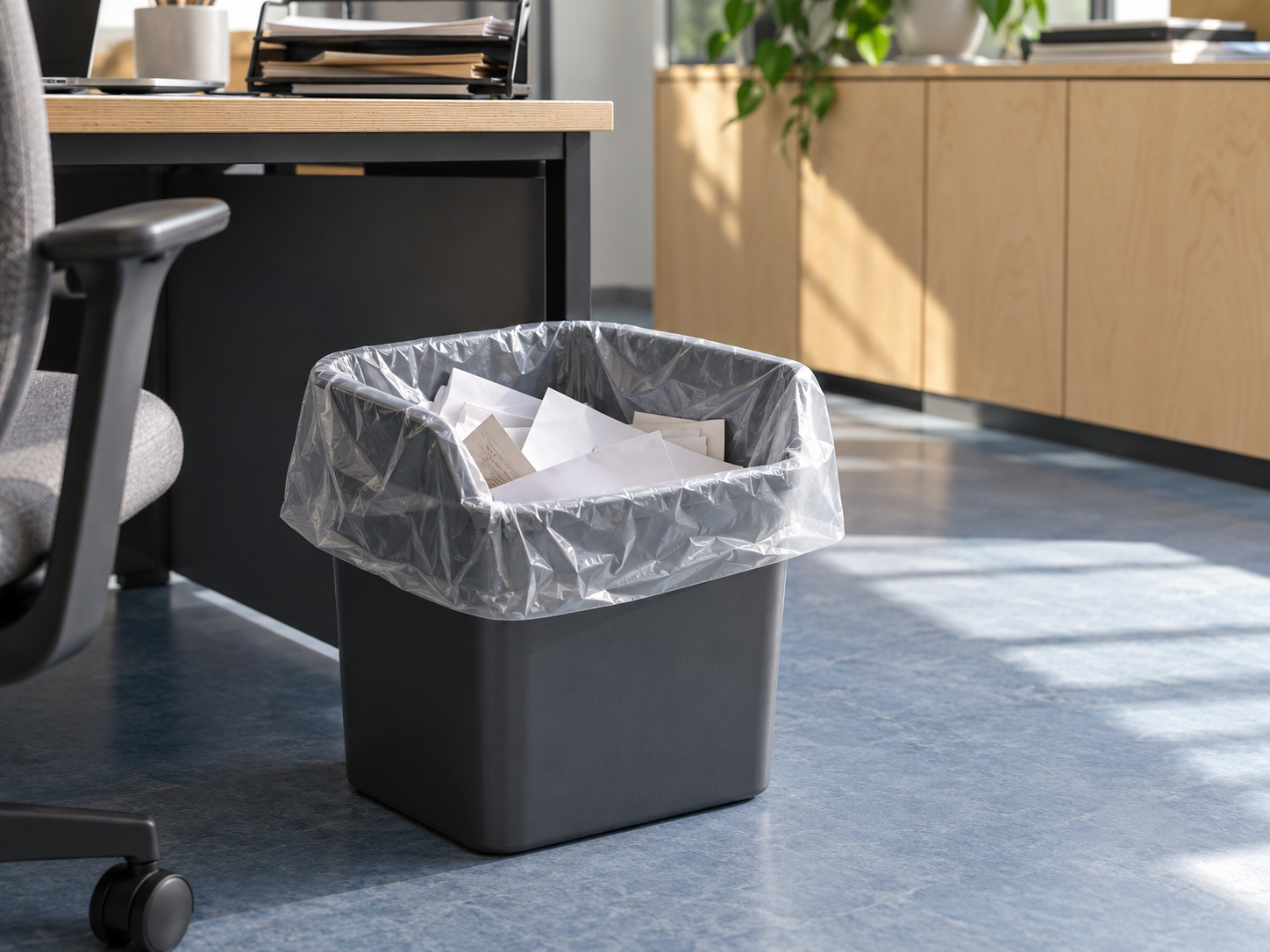
Step 1: Measure the bin, not the label
Gallon and litre labels are rough, and they vary from one bin maker to the next. Three measurements settle the size:
- Opening length and width (or diameter, for a round bin)
- Height
- Whether the bin has a rim or lip the bag needs to fold over
Then work out the bag size. Bag sizes are given flat, side to side:
- Width: the length plus the width of the opening for a rectangular bin. For a round bin, use half the circumference, which is about 1.6 × the diameter.
- Length: the bin height, plus half the opening’s width, plus 4–6 in. (10–15 cm) of overhang for folding over the rim and tying.
Example: a desk bin with a 14 × 10 in. opening and a 15 in. height needs a bag about 24 in. wide (14 + 10) and 24 in. long (15 + 5 + 4). That’s a 24 × 24 in. bag, or roughly 61 × 61 cm.
If you land between sizes, go up rather than down. A slightly large bag folds over the rim without trouble, while a small one gets pulled into the bin as it fills.
Step 2: Choose the material and thickness
Two films cover almost every office liner:
- HDPE is thin, crisp and strong for its weight. It suits dry, soft waste, which describes most office paper. Its weak spot is sharp corners, which can poke through and start a split.
- LDPE is softer and stretchier, and it resists punctures and tears better. It usually costs more because the film is thicker.
These are common starting points, not load ratings:
|
What goes in the bin |
Starting point |
|
Loose sheets, envelopes, light packaging |
HDPE, about 6–10 microns |
|
Stapled stacks, binders, folders, torn cardboard |
HDPE, about 10–14 microns, or LDPE, about 0.7–1.0 mil (18–25 microns) |
What damages a liner in a paper bin is rarely the weight. It’s the edges: staples, binder clips, folder corners. A bin packed with stacked paper is also heavier than it looks, so lift a full one before you settle on a thickness.
On color, clear film lets cleaners see what’s inside at a glance, and black hides it. Either works for general trash.
Step 3: Choose the format
|
Format |
Best for |
Watch out for |
|
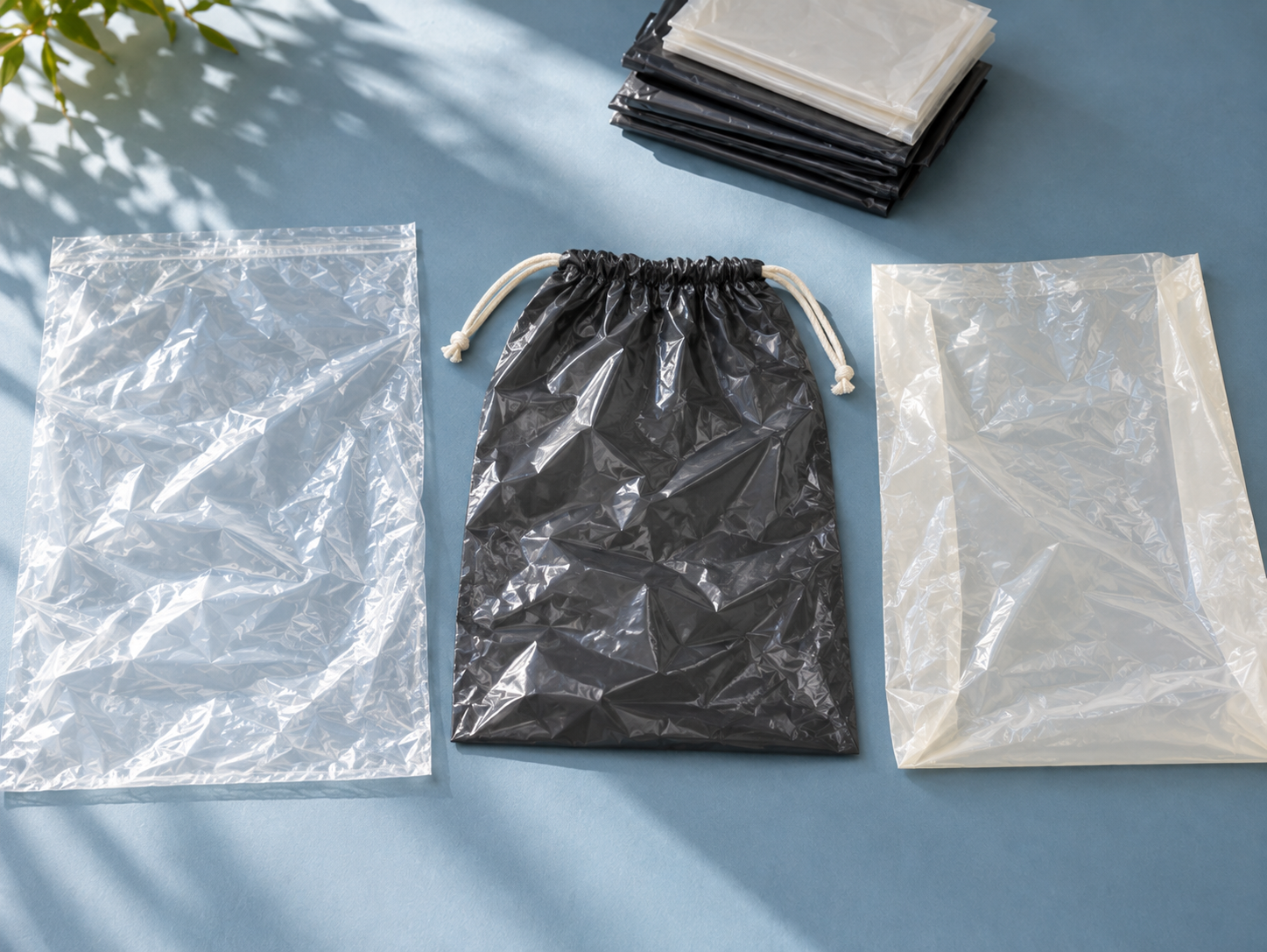
Flat-top (plain open top) |
Dry paper in desk-side bins, at the lowest cost per bag |
Needs enough overhang to tie, and can slip down into the bin |
|
Drawstring can liners |
Shared bins that get lifted and carried, such as copy areas |
Costs more per bag |
|
Gusseted |
Tall or boxy bins where a flat bag leaves the corners loose |
Check how the supplier states the size, flat or opened out |
Step 4: Test one pack in your own bin
Before a bulk order, line a real bin with a sample of your office can liners and run it through your cleaners’ normal routine. Check four things:
- Fit. The bag sits down to the bottom and stays over the rim while the bin fills.
- Closing. There’s enough material above the contents to tie or draw closed.
- Lifting. A full bag comes out and gets carried to the cart or collection point without splitting at staples or corners.
- Handoff. It works with your actual route, whether that’s a cart, a trolley or straight to a larger bin.
If a sample fails, change the size or format first and the thickness second. A thicker bag won’t fix one that’s too small or can’t be closed.
When the paper isn’t ordinary trash
Recycling or confidential paper. Ask the recycler or shredding service before you buy anything. Find out whether a liner is allowed at all, what type, and how the paper has to be handed over. An ordinary trash liner isn’t an automatic substitute, and a clear bag doesn’t make paper recyclable or secure. US readers can start with the EPA’s recycling guide, which points to local and office programs.
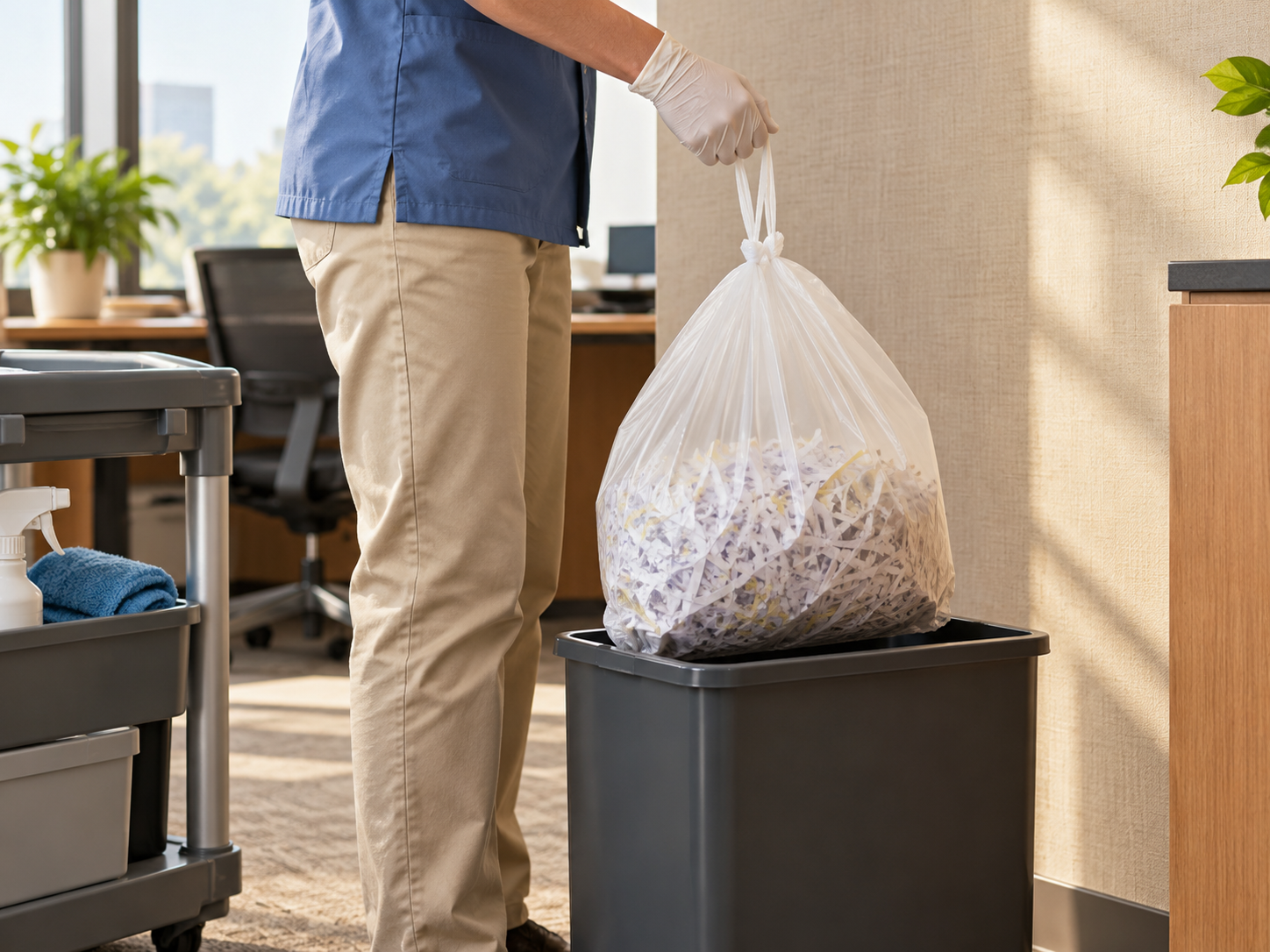
Loose shredded paper. The problem with shreds is escape, not strength. They slip out at the mouth of the bag, so a drawstring liner with extra overhang works better than a plain open top. Close the bag before you lift it, and don’t fill it to the brim. Then test the full sequence: fill, close, lift, carry. If the shreds are going to recycling, confirm with the collector that they accept shredded paper, since programs differ.
Bins that have changed. Once wet cups, food residue or rough items start landing in a paper bin, it’s no longer a paper bin. Specify it as a general waste bin instead. Sharp, hazardous or clinical waste needs a proper separate collection route, not a thicker bag.
Get a specification
If you’d like help matching wholesale can liners to your bins, contact Huayuepack or email alfredren@huayuepack.com with:
- What goes in the bin
- Bin dimensions or photos
- How bags are closed and removed
- The quantity you need
We’ll suggest a size, material, thickness, closure and packing to match, and confirm availability and pricing. You can also browse our garbage bags, which cover drawstring, flat-top and gusseted formats, with custom size and packaging options.
Packing Solutions
Related Products

Tel: +86 18019228135
E-mail: alfredren@huayuepack.com
Address: No.228 ZhaiXing Rd, XinSheng Industrial zone, ZheLin Town, FengXian District, ShangHai, China.

Copyright © 2026 Huayue Group Plastic Packaging Manufacturers
