
 English
 Español
Biodegradable Bags - A Comprehensive Guide to International Compliance and Certification

With global environmental regulations continuously tightening, biodegradable bags have become a key replacement for traditional plastic bags, widely used in packaging, retail, food, and logistics industries. However, the term “biodegradable” is not self-defined in international markets—it must be verified through authoritative certification systems.
Different countries and regions have strict requirements regarding the degradation environment, material composition, degradation timeline, ecological safety, and labeling of biodegradable bags. For manufacturers and suppliers aiming to enter international markets, a systematic understanding of mainstream certifications is essential for compliant export and sustainable growth.
1. Why Compliance Certification is a “Hard Barrier” for Biodegradable Bags
In overseas markets, biodegradable bags must pass authoritative standards to avoid trade and legal risks. For example, the European Union’s Single Use Plastics Directive (SUP) mandates that biodegradable plastics sold in the EU must have EN 13432 or equivalent certification. Similarly, state-level regulations in the US, such as California’s plastic bans, require BPI certification or ASTM standard verification.
Compliance certification is crucial not only for legal compliance but also for market acceptance, procurement decisions, brand reputation, and export viability. Without proper certification, products risk rejection, return shipments, or fines. Therefore, certification is not just a “document”—it is a core capability for international competitiveness.
2. EU Certification - EN 13432 as the Core Standard
The EU is among the strictest regions globally in regulating biodegradable packaging, with EN 13432 as the core standard.
2.1 Overview of EN 13432
Developed by the European Committee for Standardization (CEN), EN 13432 evaluates whether packaging materials can fully biodegrade in industrial composting environments.
Key requirements include -
- Biodegradability - At least 90% of the material must fully degrade into CO₂, water, and biomass within 180 days under industrial composting conditions.
- Disintegration - No solid residues larger than 2 mm.
- Environmental Safety - Strict limits on heavy metals and harmful substances, ensuring the final compost is safe for agriculture.
- Composting Performance - Degradation products must not adversely affect soil fertility or microbial activity.
2.2 Certification Bodies and Labels
- TÜV Austria - Offers OK Compost(industrial composting) and OK Compost HOME (home composting) certifications.
- DIN CERTCO - Widely used certification body across Europe for industrial and retail products.
3. United Kingdom Certification - BS EN 13432 and PPT Compliance
Since departing the European Union, the UK has transitioned to its own regulatory markers while maintaining technical parity with EU standards.
- Core Standard - The UK utilizes BS EN 13432. This is the British adoption of the European EN 13432 standard, ensuring the same requirements for biodegradability and disintegration.
- Plastic Packaging Tax (PPT) - Manufacturers must be aware of the UK’s PPT, which applies to plastic packaging produced in or imported into the UK that does not contain at least 30% recycled plastic.
- Marking Requirements - Depending on the product type, the UKCA (UK Conformity Assessed) mark may be required for goods placed on the market in Great Britain.
4. Switzerland Certification - Rigorous Labeling and Market Surveillance
Switzerland is not an EU member but is a member of the European Free Trade Association (EFTA) and maintains very high environmental benchmarks.
- Standard Recognition - Switzerland highly recognizes the EN 13432 standard and certifications from bodies like TÜV Austria and DIN CERTCO.
- Labeling Precision - Swiss authorities maintain rigorous market surveillance regarding the distinction between "Industrial" and "Home" compostable labels. Misleading consumers about where a bag can be composted is a significant legal risk.
- Federal Oversight - Compliance is governed by the Federal Office for the Environment (FOEN), which emphasizes the "polluter pays" principle.
5. Norway Certification - Grønt Punkt and Reporting Systems

As an EFTA member and part of the European Economic Area (EEA), Norway integrates most EU environmental directives but has specific domestic reporting obligations.
- Standard Recognition - Norway adheres strictly to EN 13432 for biodegradable and compostable packaging.
- Grønt Punkt (Green Dot Norway) - Exporters often must participate in the Grønt Punkt This involves specific reporting requirements to ensure that the lifecycle of the packaging—including its end-of-life degradation—is accounted for within the national waste management infrastructure.
- Environmental Regulations - Norway is particularly sensitive to marine pollution, making the verification of "no microplastic residues" a critical part of market entry.
6. North American Certification - Unified Standards for the US and Canada
In the North American market, certification for biodegradable bags is highly integrated, with both the United States and Canada adhering to the same ASTM technical benchmarks.
6.1 ASTM D6400 and D6868 Standards
- ASTM D6400 - Applies to purely compostable plastic products, ensuring complete degradation without toxic residues in industrial composting facilities.
- ASTM D6868 - Applies to coated or composite materials.
- Canada Market - Environment and Climate Change Canada (ECCC) and local municipalities utilize ASTM D6400 as the primary standard for compostability claims, making it the essential technical hurdle for the Canadian market.
6.2 BPI (Biodegradable Products Institute) Certification
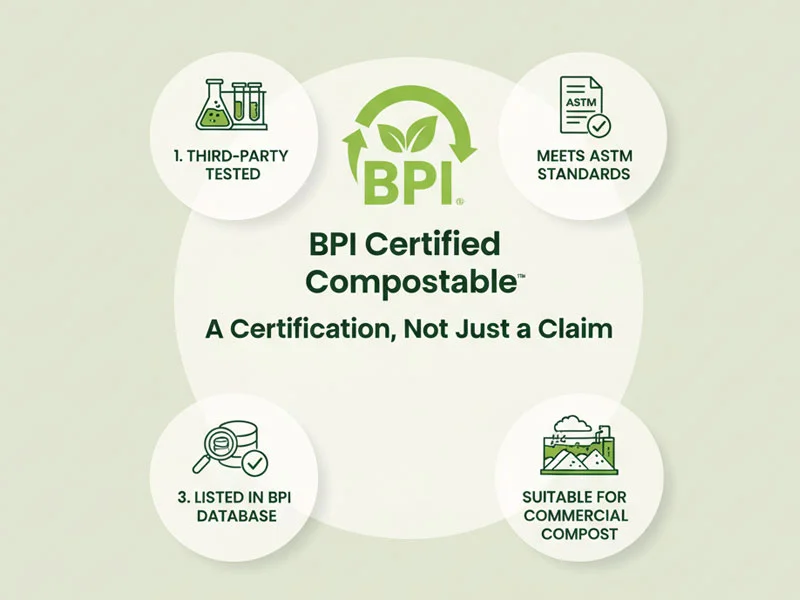
BPI is the leading certification organization for both the US and Canada. BPI certification is often a prerequisite for acceptance by composting facilities across North America and is a legal requirement for labeling products as "compostable" in many US states and Canadian provinces.
7. Australia and New Zealand - Industrial vs. Home Composting
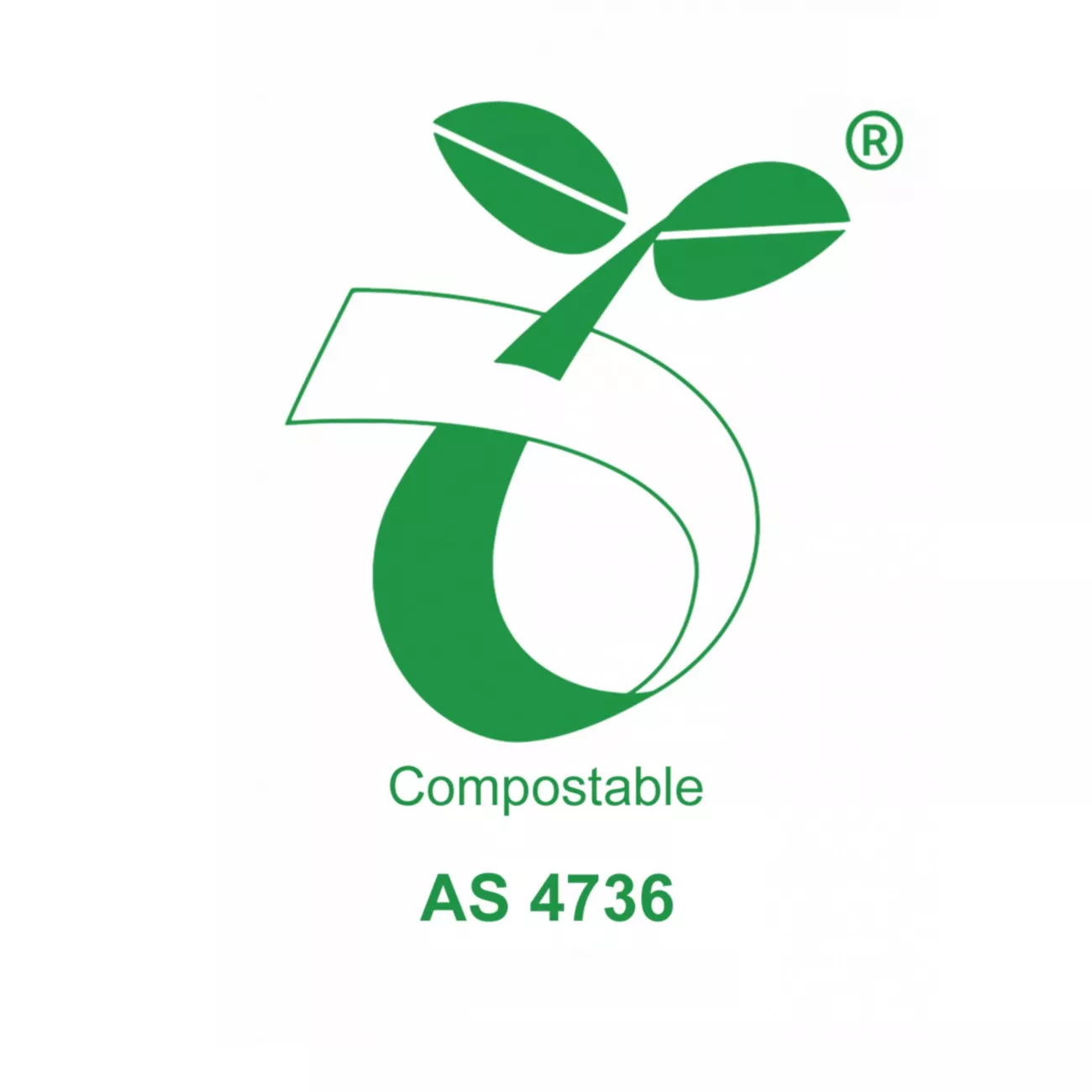
7.1 AS 4736 – Industrial Composting
Certification for biodegradable bags intended for industrial composting, ensuring complete degradation and safe residues in controlled compost facilities.
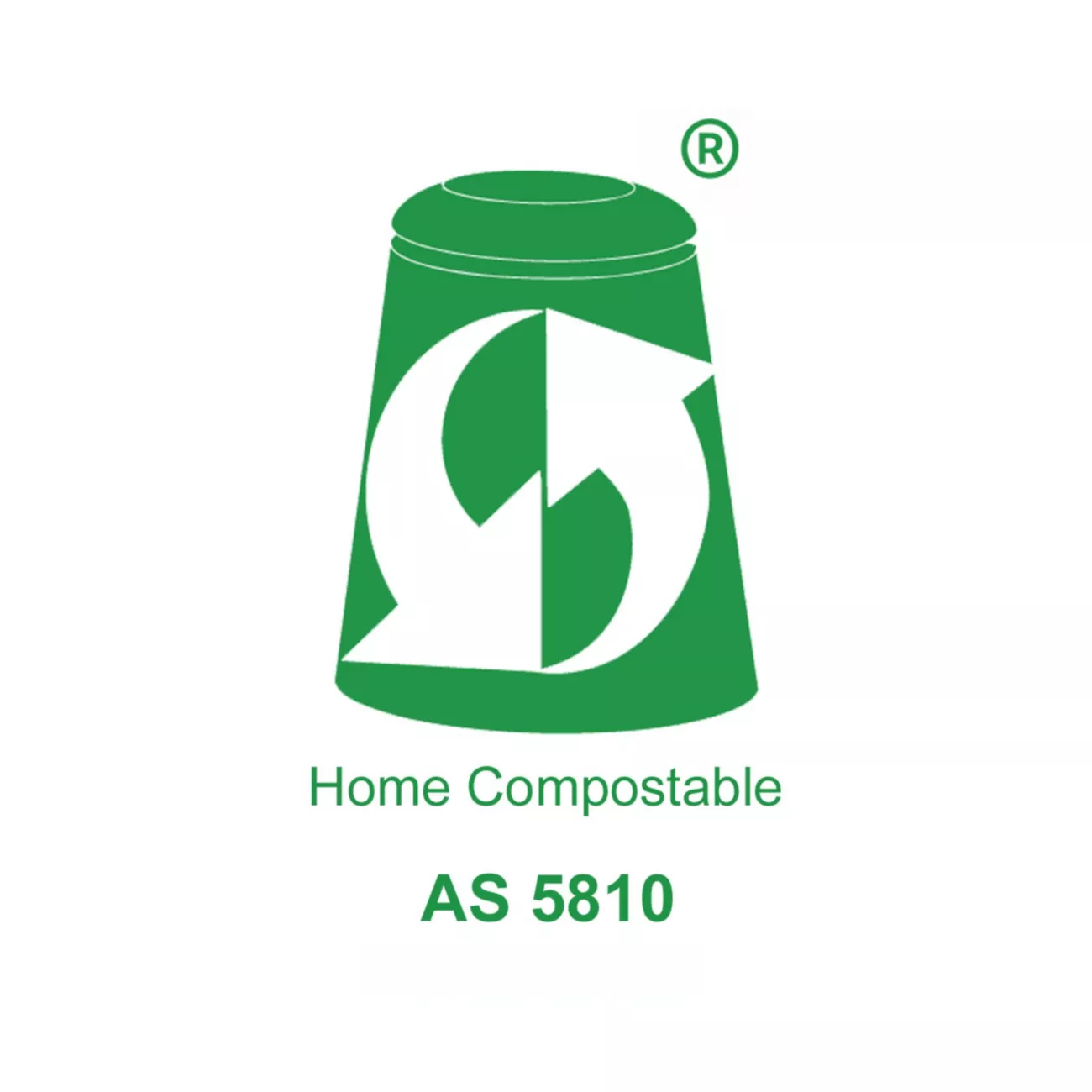
7.2 AS 5810 – Home Composting
Specifically designed for home composting environments, requiring bags to fully degrade under household compost conditions without leaving harmful residues.
This system is unique internationally, clearly distinguishing industrial and home composting applications, and is ideal for high-end markets and home-use products.
8. Common Compliance Pitfalls and Risk Mitigation
Manufacturers often face risks due to technical misunderstandings or "Greenwashing" claims -
- Pitfall 1 - Confusing "Bio-based" with "Biodegradable."Being plant-based (e.g., Bio-PE) does not mean a product will biodegrade. Mitigation - Distinguish between bio-content percentage (ASTM D6866) and end-of-life degradability.
- Pitfall 2 - Use of "Oxo-degradable" Additives.These materials merely fragment into microplastics and are banned in the EU, UK, and parts of North America. Mitigation - Use only certified fully biodegradable materials like PLA or PBAT.
- Pitfall 3 - Overstated Marketing Claims.Using "100% Biodegradable" without specifying the environment (e.g., Marine vs. Industrial) can lead to legal action. Mitigation - Ensure all labels match the specific scope of the third-party certification.
9. Four Key Dimensions of Biodegradable Bag Compliance
Beyond national certification standards, compliance can be analyzed in five key dimensions -
9.1 Degradation Environment
Certifications specify where the bag can degrade -
- Industrial composting - high temperature, high humidity, active microorganisms
- Home composting - lower temperatures, longer degradation periods
- Soil biodegradation - directly in farmland or soil
- Marine biodegradation - safe decomposition in seawater, no microplastics
Clearly defining the degradation environment avoids misleading claims and aligns with actual usage.
9.2 Degradation Time and Residue Control
- Industrial composting - 90–180 days to complete degradation
- Home composting - may require longer
- Must not leave microplastic residues
- Degradation products must be safe for soil and plants
9.3 Material Type and Biobased Content
- Biodegradable - can naturally decompose
- Compostable - suitable for composting
- Biobased - percentage of renewable material
Some markets require ASTM D6866 biobased content testing to differentiate petroleum-based biodegradable materials from natural ones.
9.4 Labeling and Marketing Compliance
- Labels must match certification scope
- “100% biodegradable” claims require third-party verification
- Avoid greenwashing and regulatory risks
10. How Companies Can Build a Systematic Compliance Strategy
- Identify target markets– define export countries and use scenarios
- Match certification systems– select appropriate standards and agencies
- Material selection– ensure degradability and ecological safety at the source
- Standardize labeling and marketing– prevent greenwashing
- Periodic re-testing and updates– maintain ongoing compliance
A systematic compliance strategy reduces trade risk and strengthens brand credibility with buyers and consumers.
Conclusion - Certification as the “Universal Language” of Biodegradable Bags
With global environmental regulations tightening, compliance certification has become a core measure of a biodegradable bag’s international competitiveness.
Products capable of competing internationally must combine material compliance, complete certification, standardized marketing, and matched usage scenarios. Mastering global certification standards and regulatory updates is essential for companies seeking to establish and expand their international presence.
Packing Solutions
Related Products



Tel: +86 18019228135
E-mail: alfredren@huayuepack.com
Address: No.228 ZhaiXing Rd, XinSheng Industrial zone, ZheLin Town, FengXian District, ShangHai, China.

Copyright © 2026 Huayue Group Plastic Packaging Manufacturers
